Ernst Bamert and the Pigeons
Holistic animal health care practitioner Ernst Bamert, dedicates his work with Hamburgertierhelfer e.V. (Association of Animal Helpers Hamburg) to the care of city pigeons. But what exactly does that mean: caring for city pigeons?
Text and photos: Michael Orth
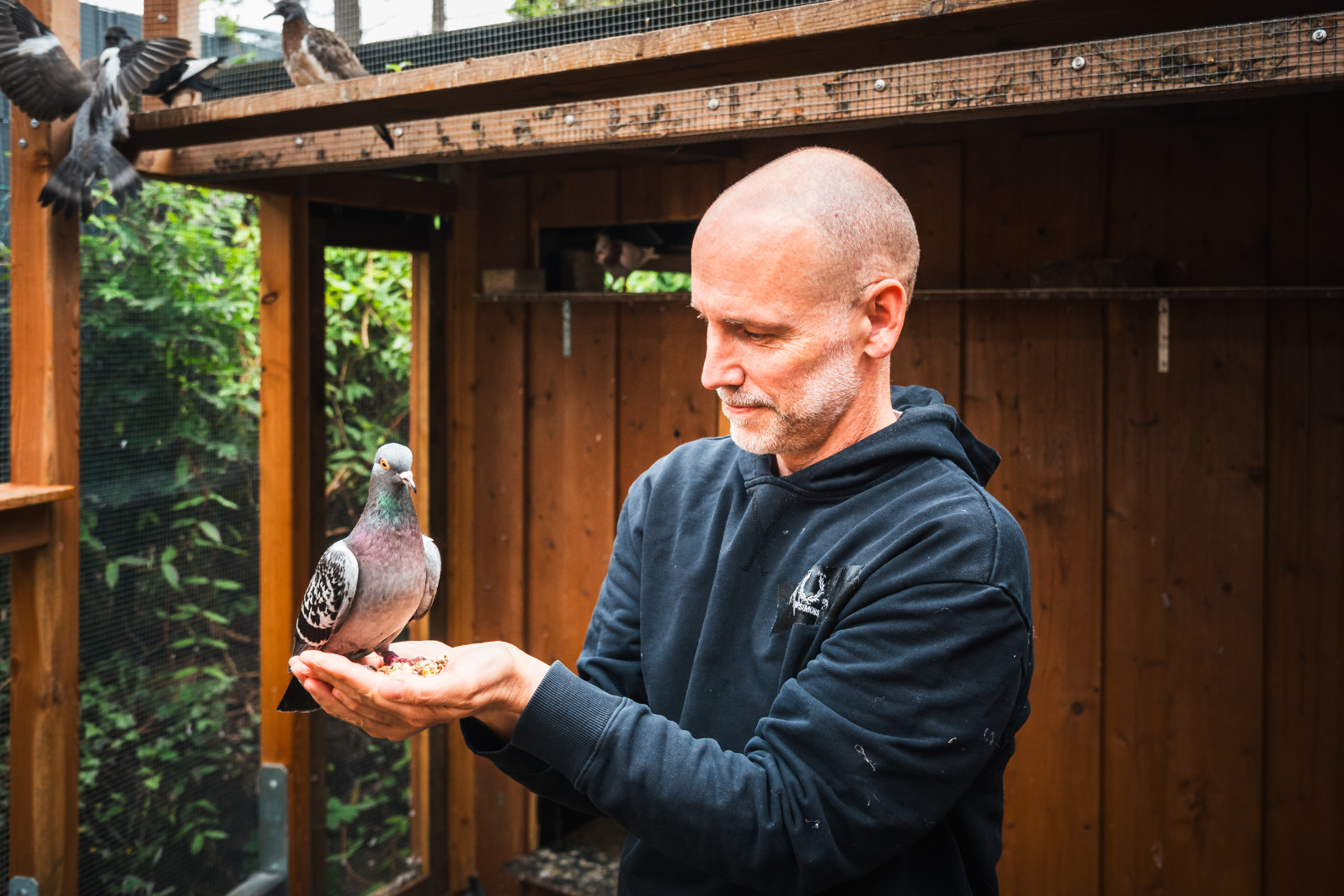
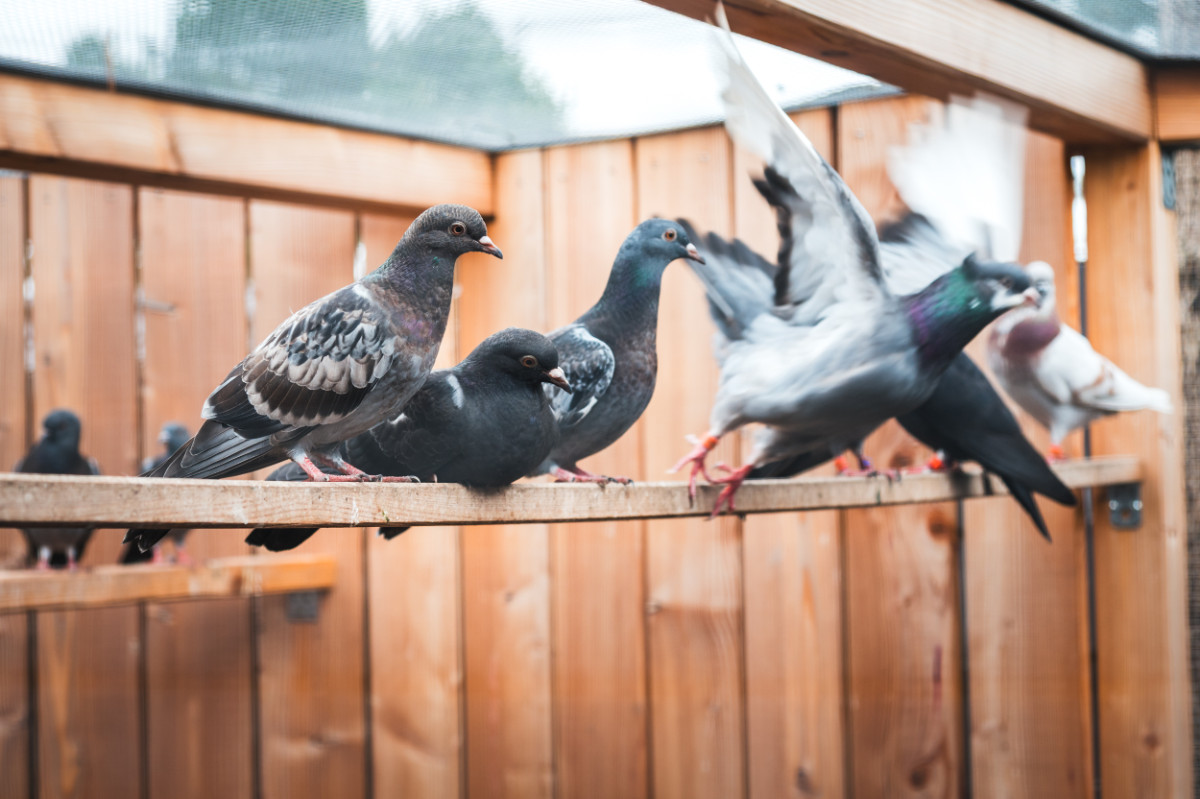
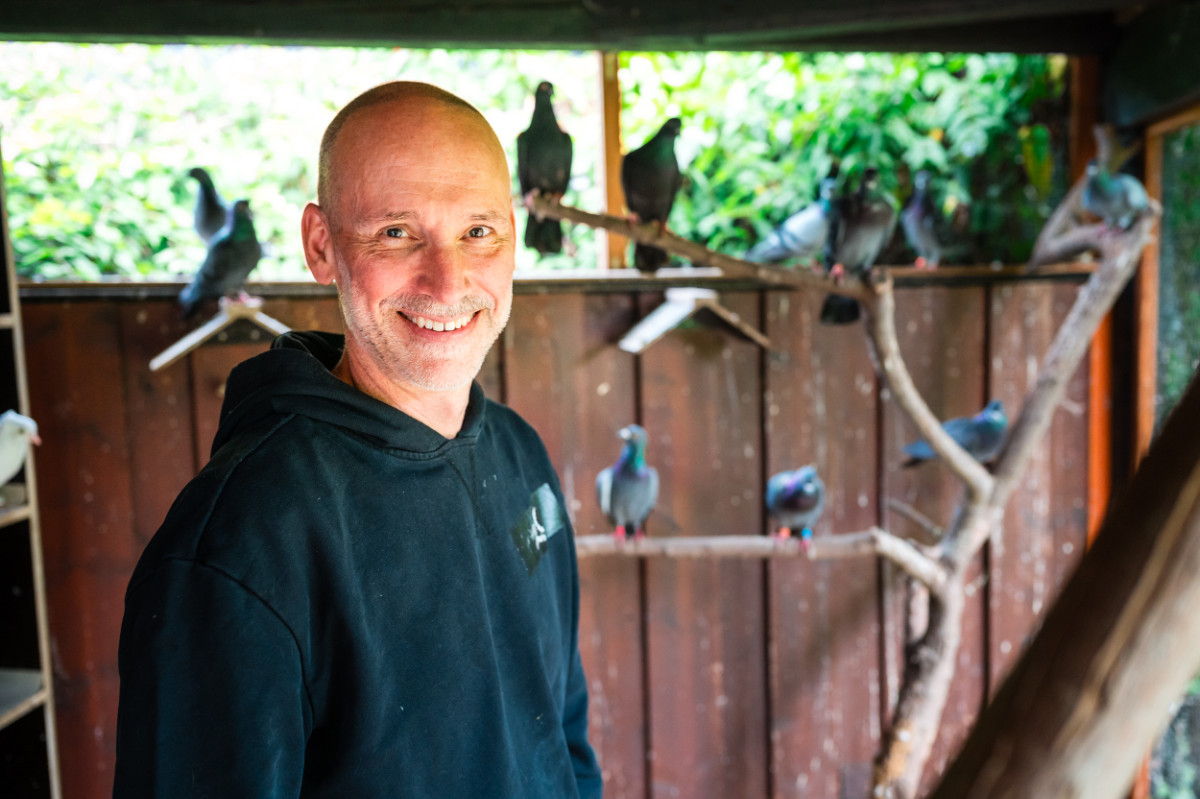
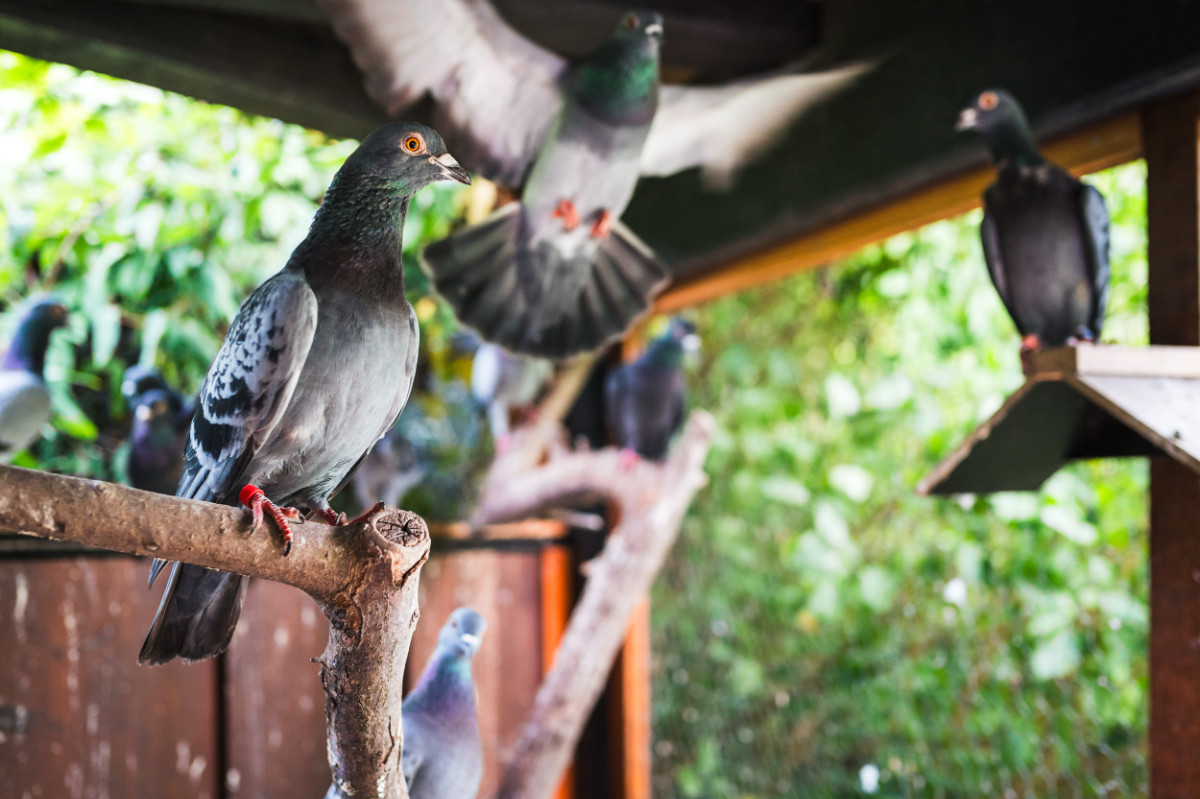
He opens the door slowly and carefully. They have all realized that he is coming in. Some are sitting still, others are stretching their necks and looking, and some are fluttering back and forth.
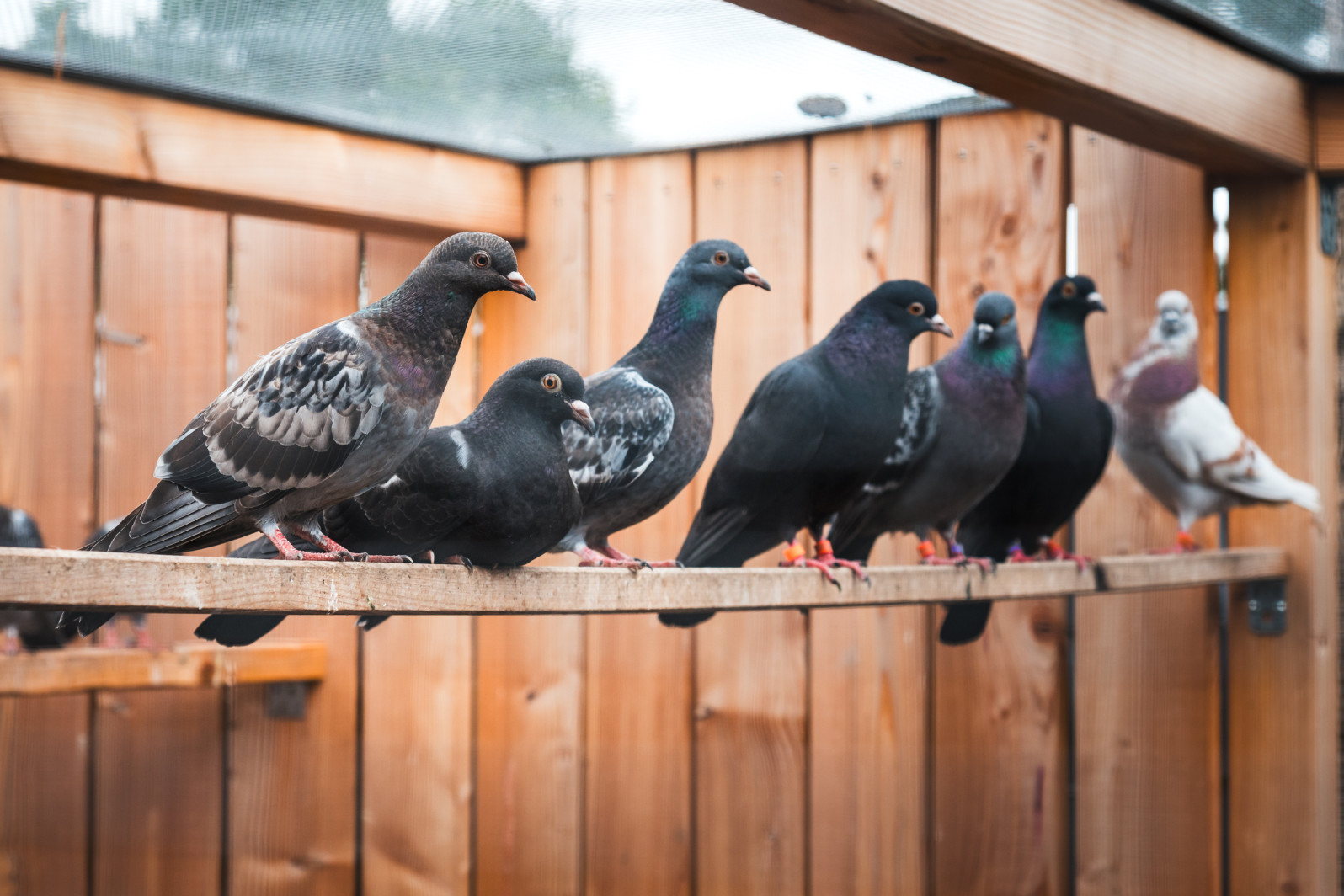
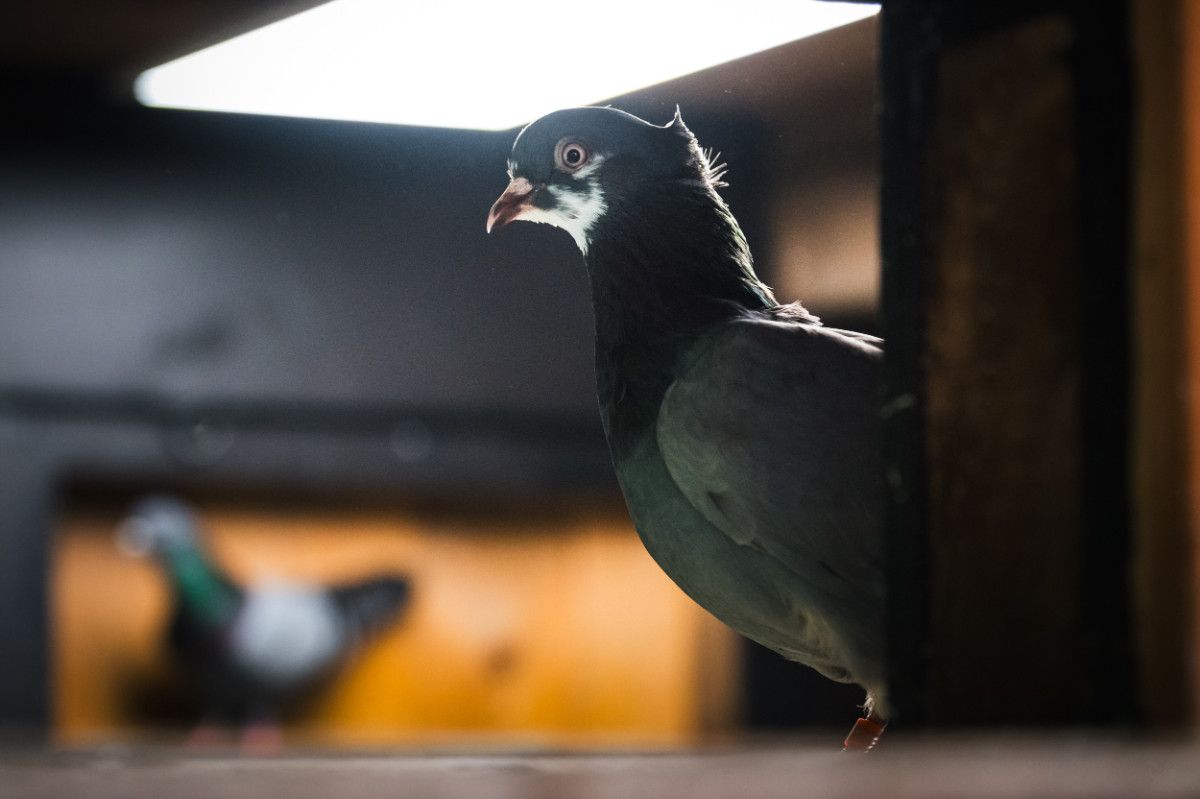
‘They all react very differently. Because all of them are different,’ says Ernst. ‘They don’t just each have their own individual markings, making them look different. They also behave very differently. There are,’ he points at one of the pigeons, ‘a few here who were hand-reared, I know them better and they know me better. But all of them recognize me’ he says as he takes a few slow steps into one of the aviaries, ‘pigeons can tell apart our faces.’
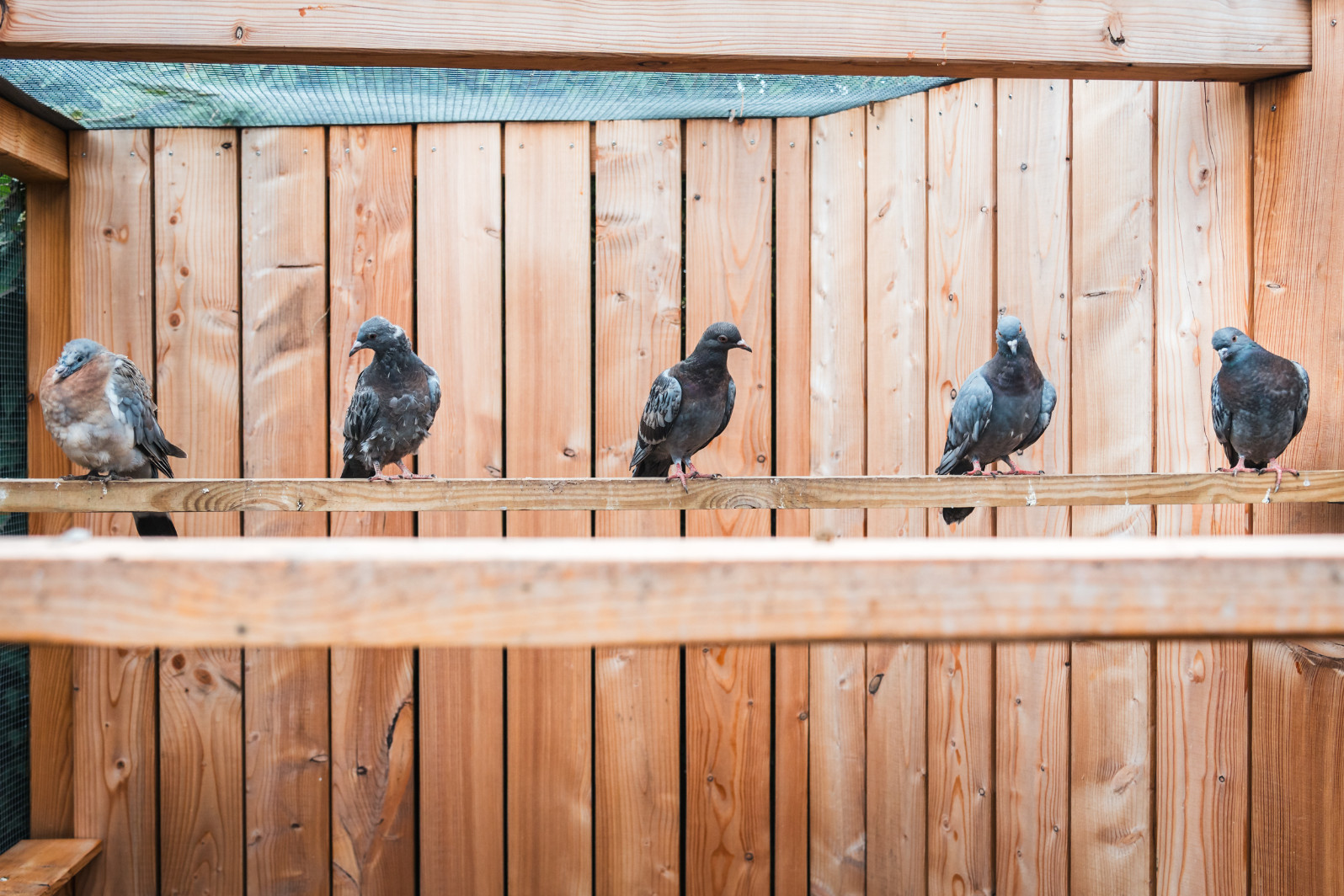
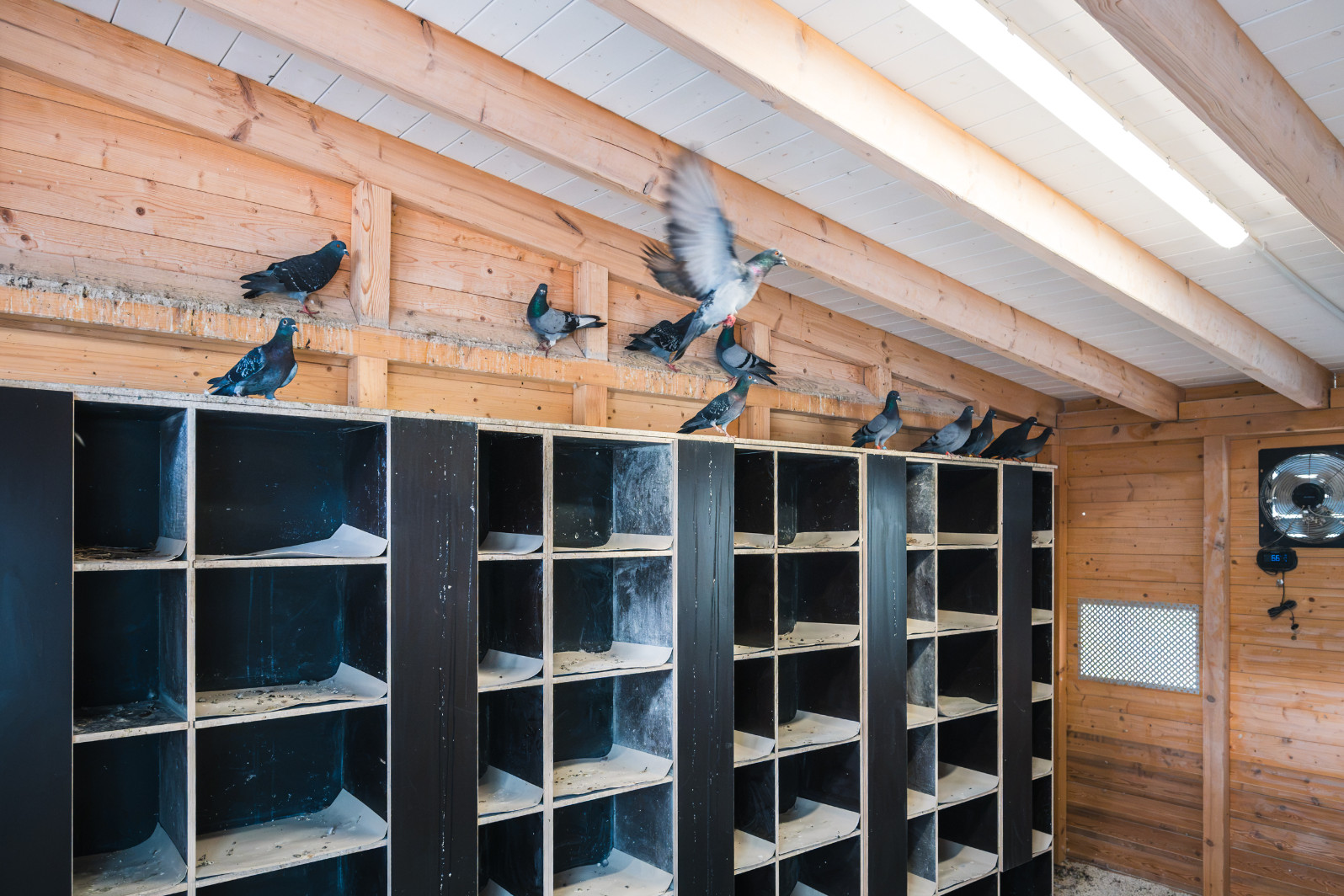
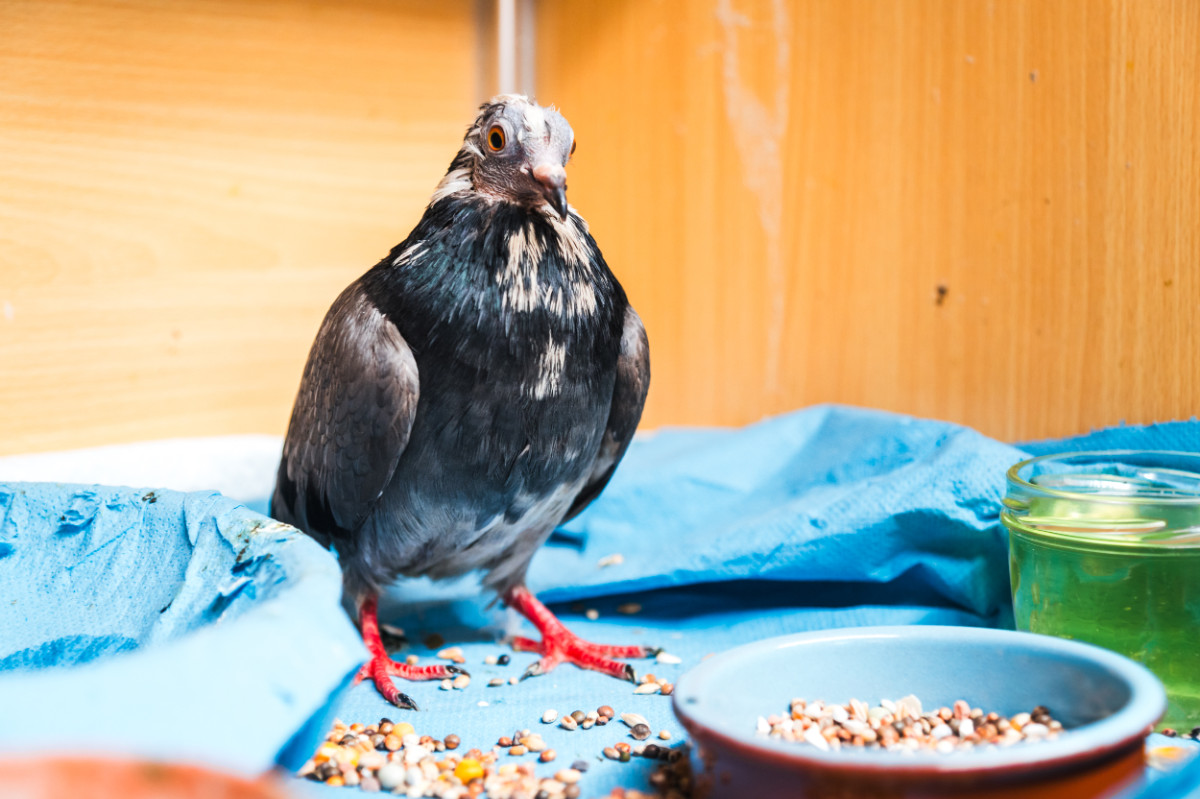
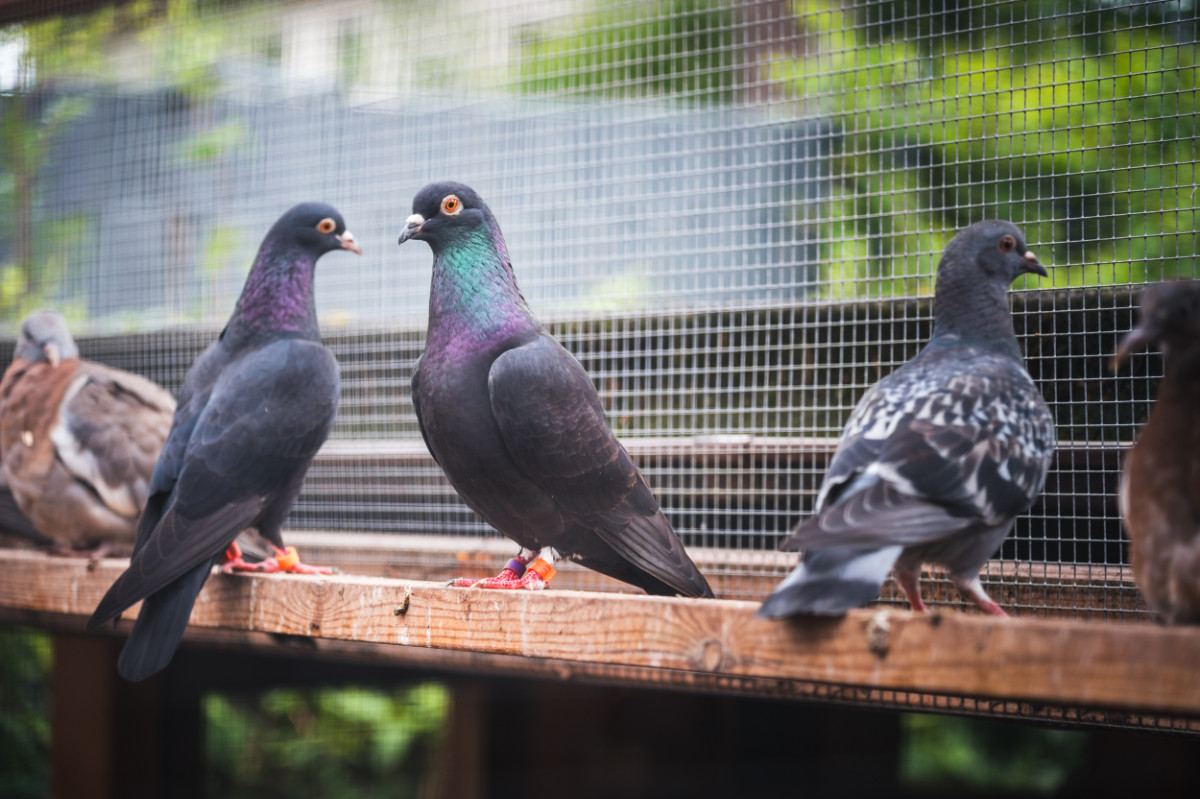
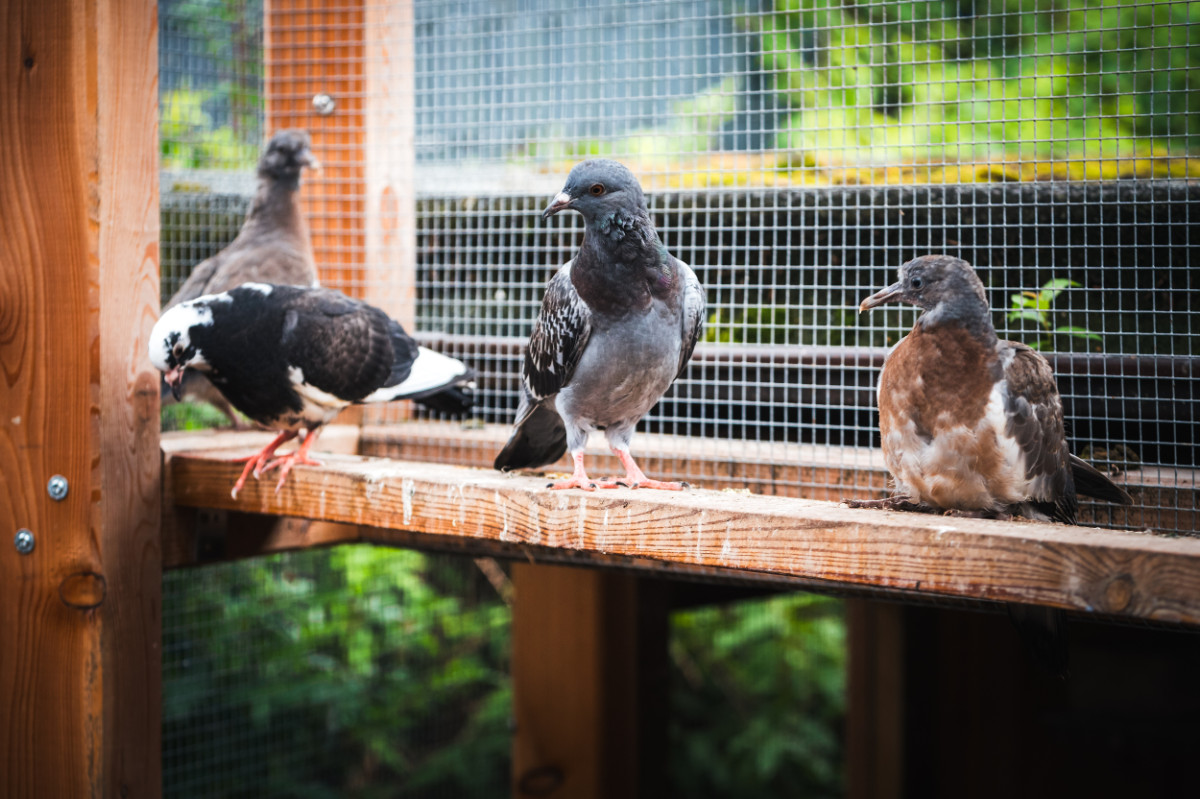
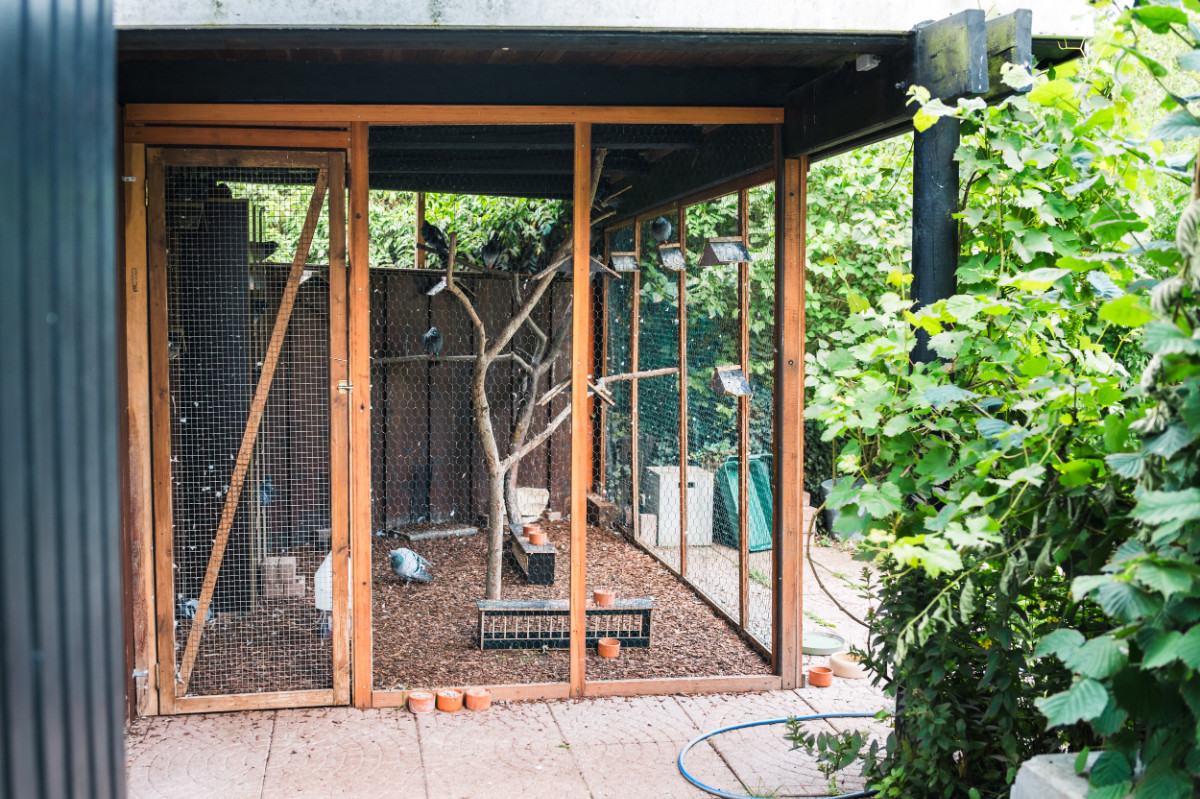
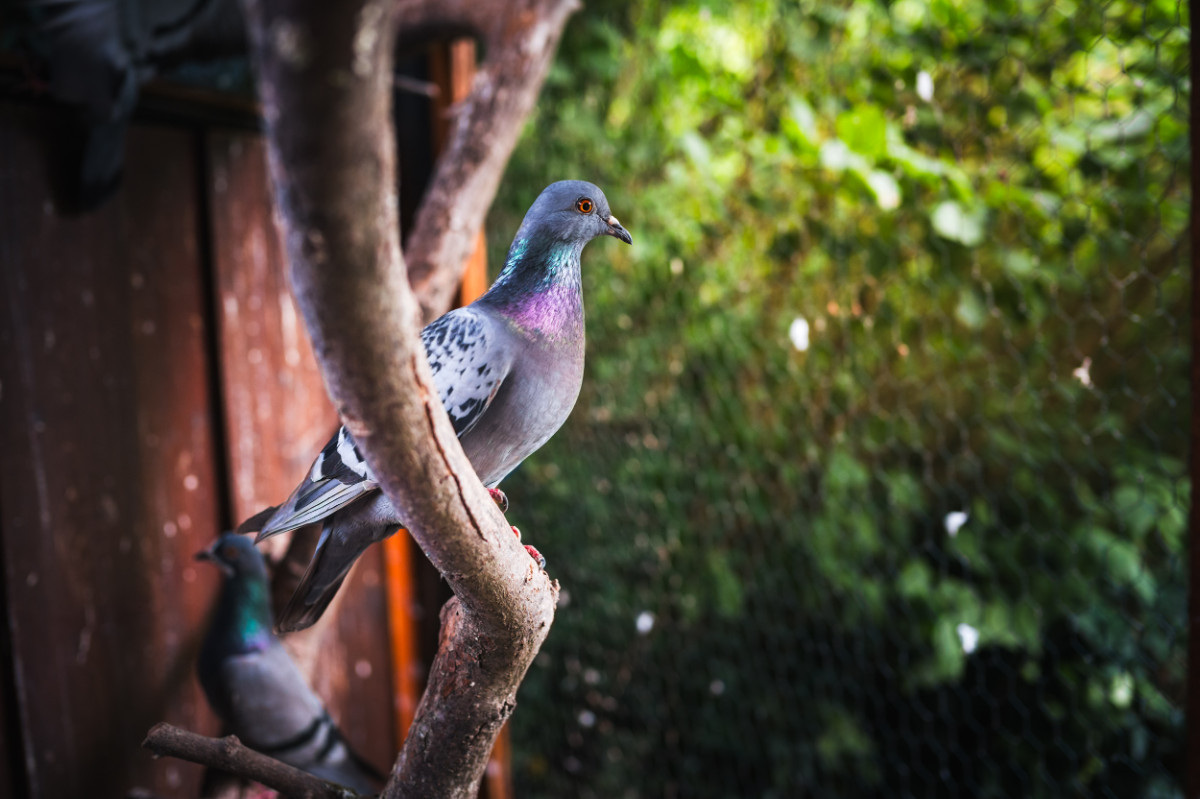
And Ernst recognizes them, each and every one of the 60 pigeons that currently live in his two aviaries. Many of them have been injured so badly they would no longer be able to survive in the wild.
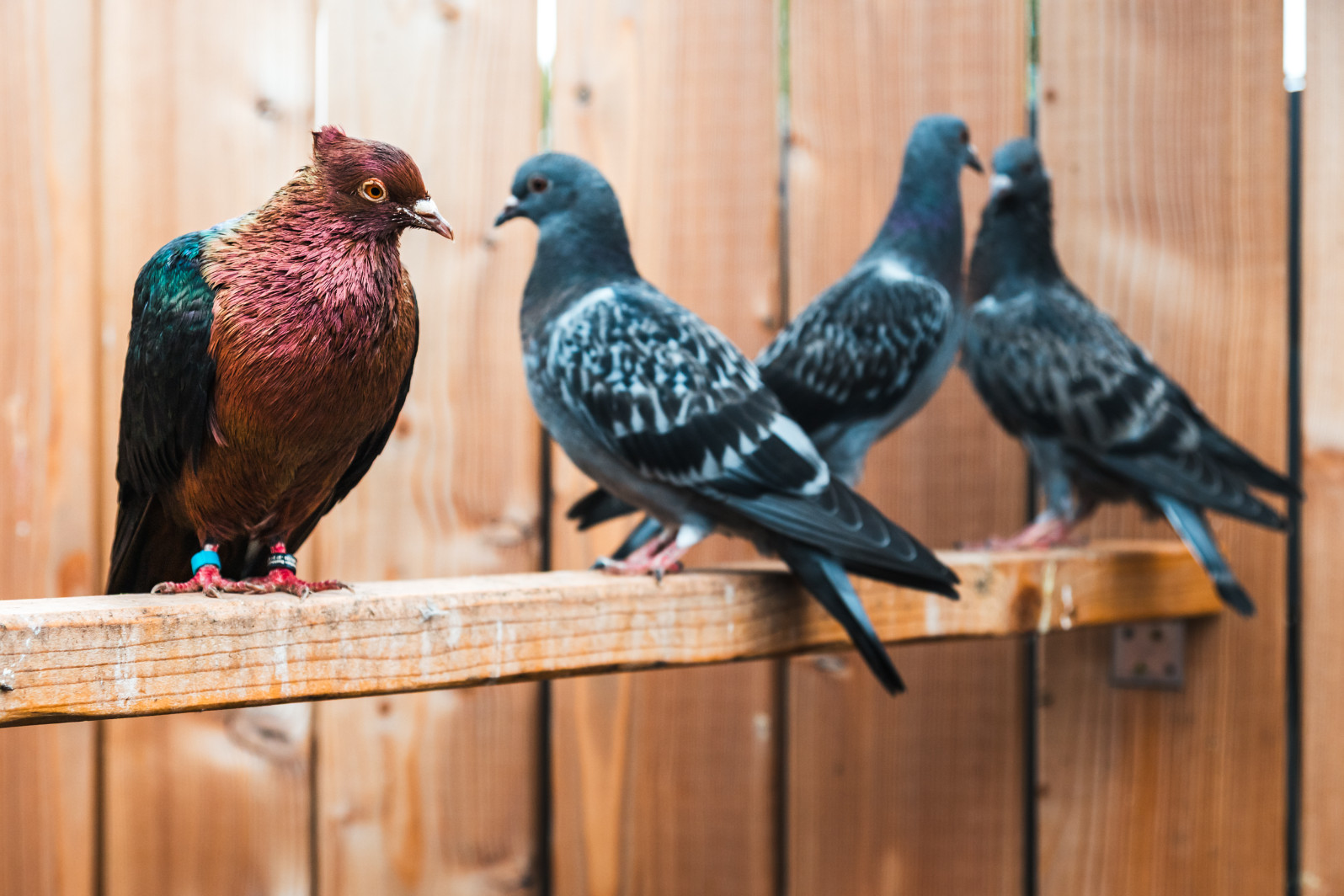
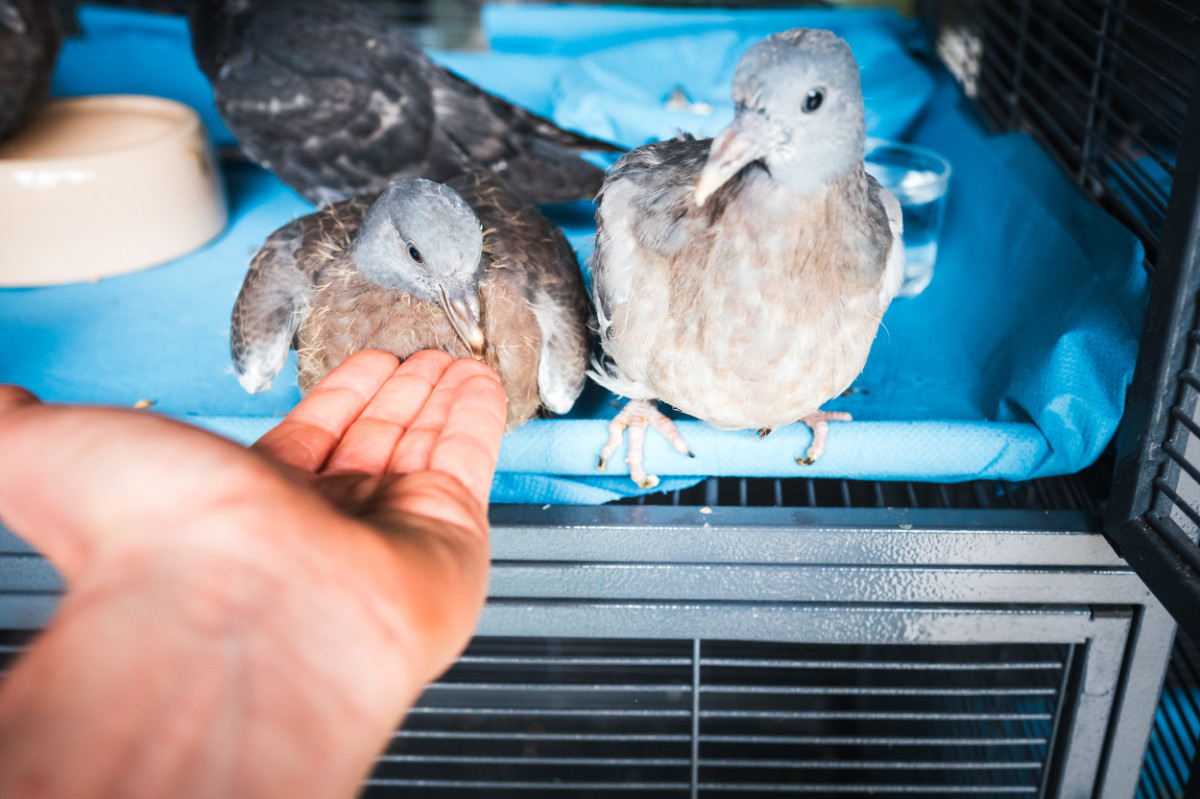
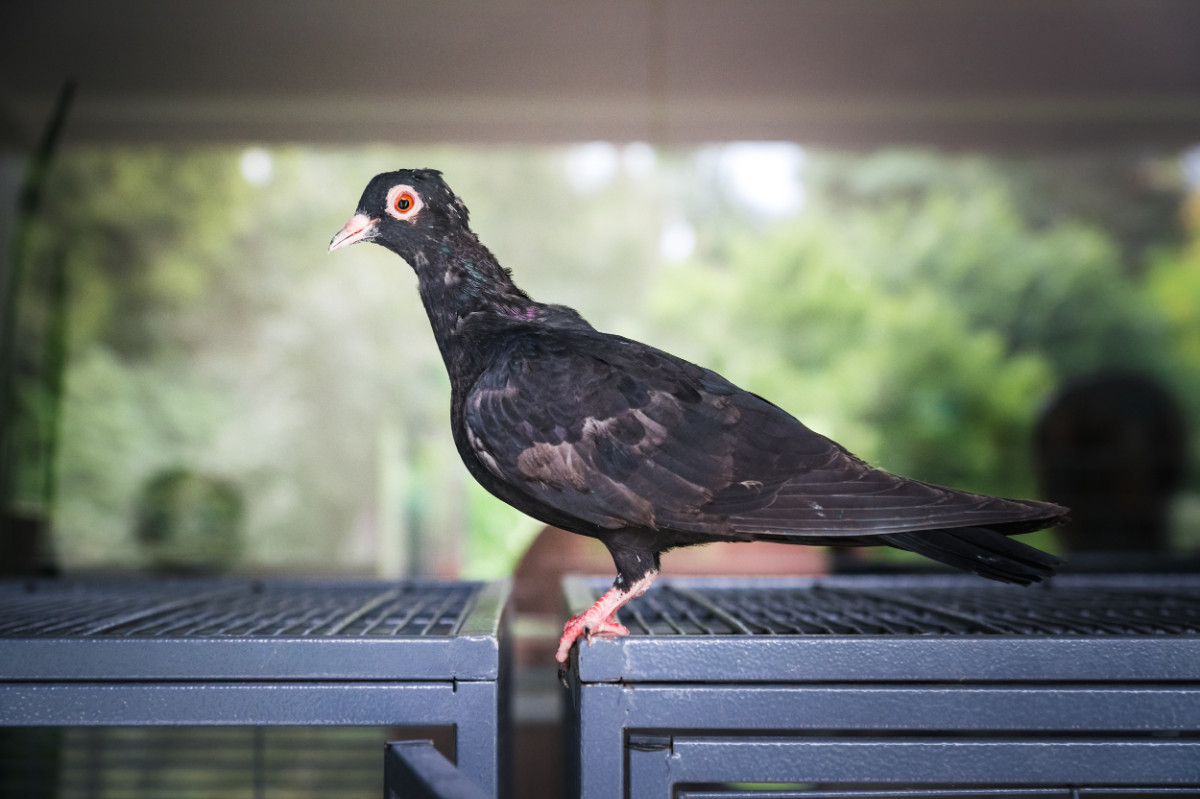
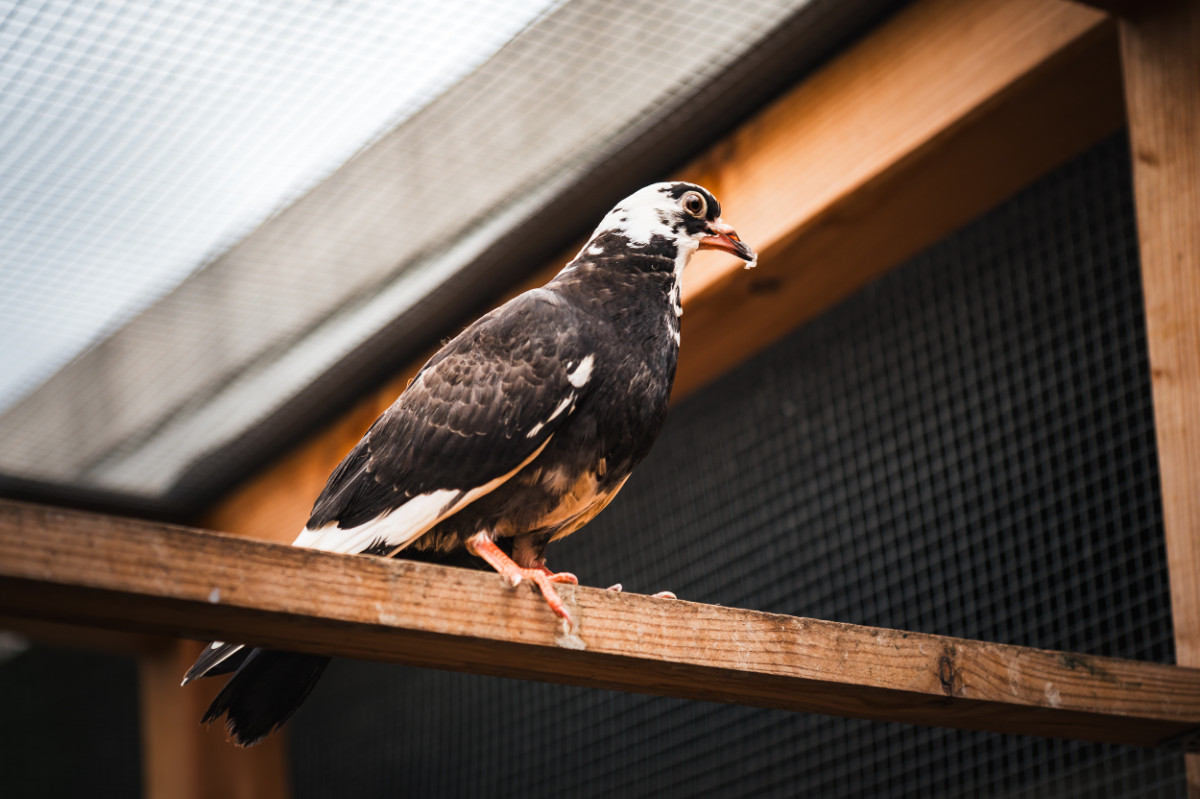
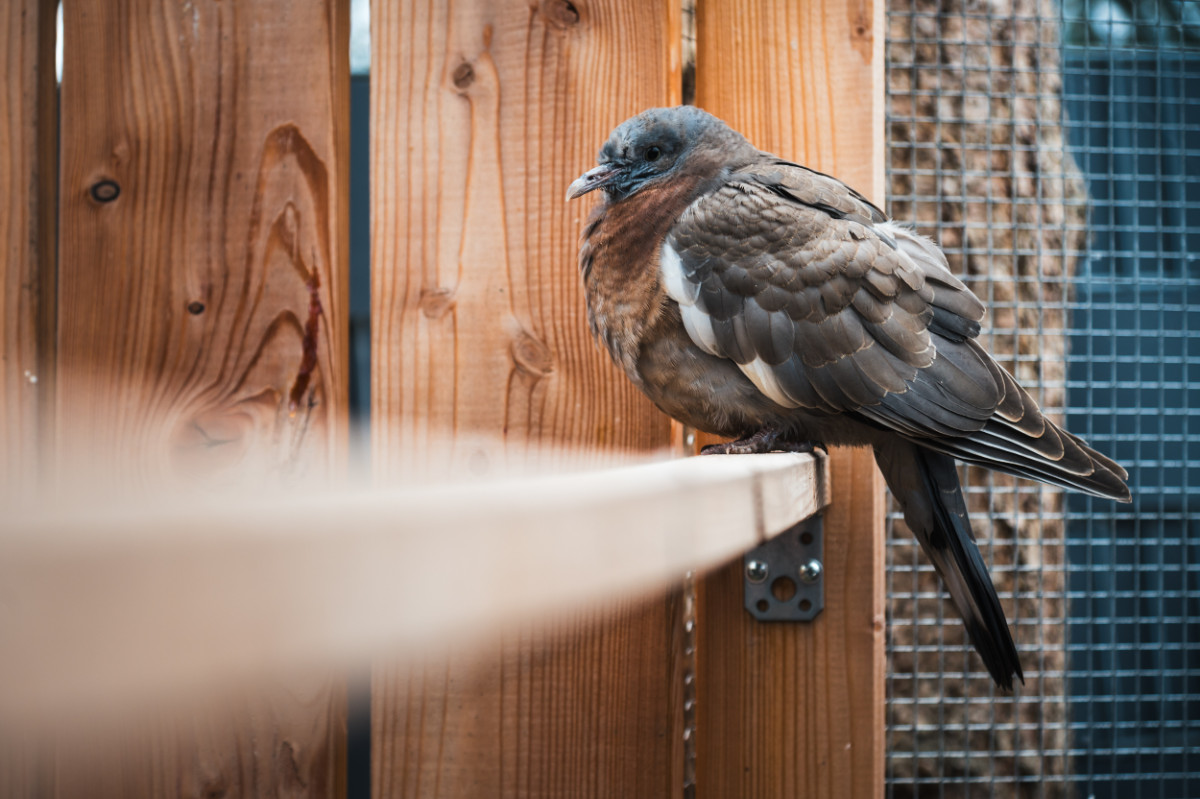
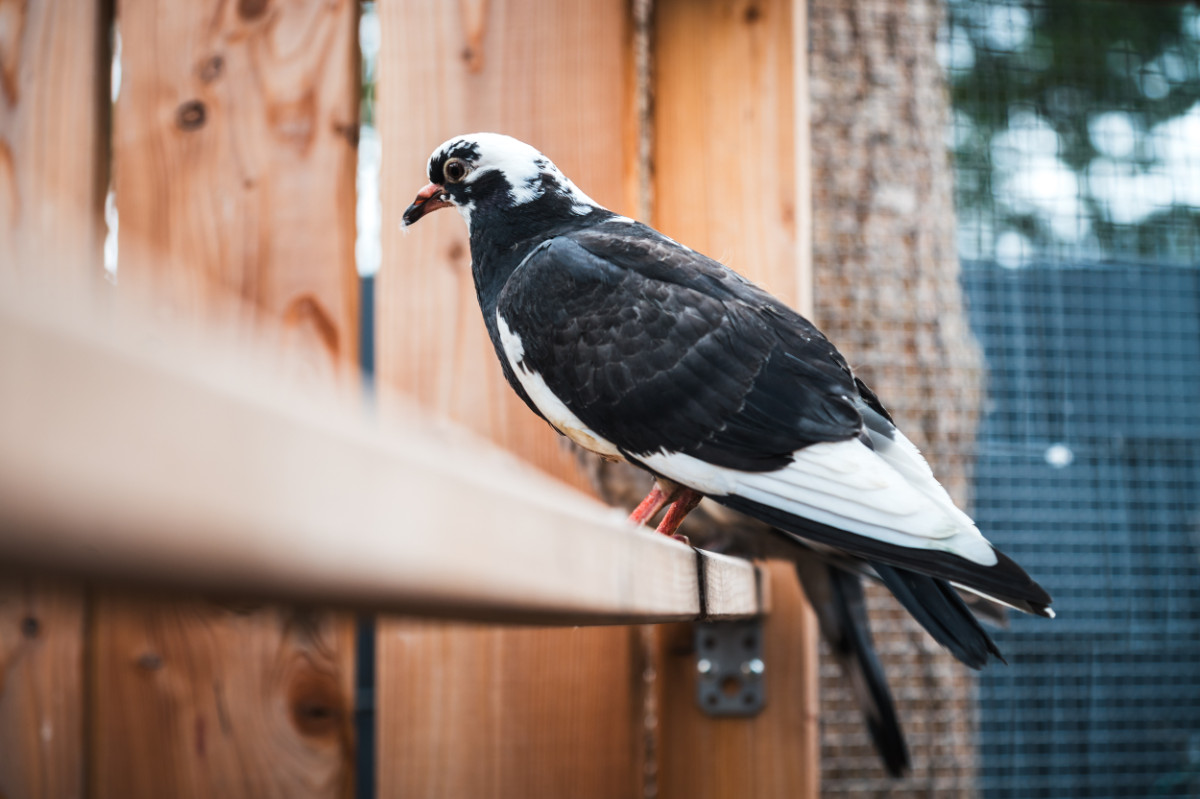
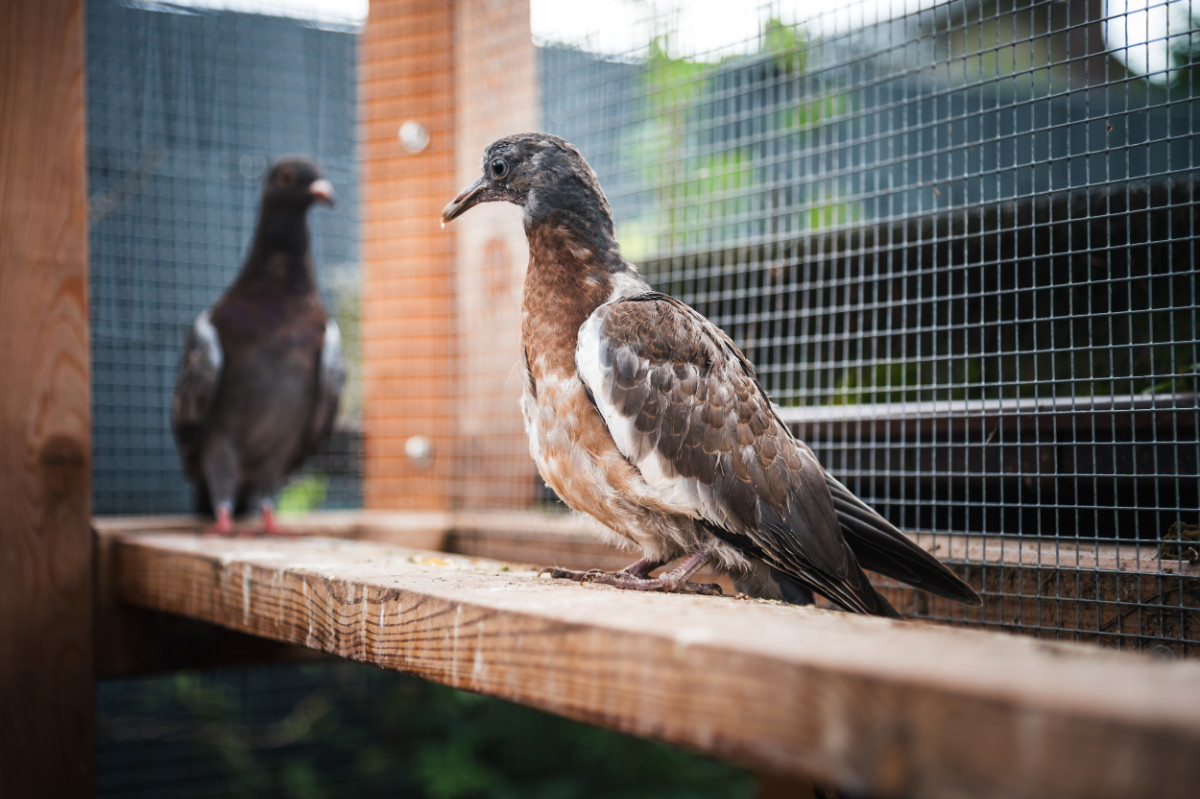
‘That handsome black one there,’ he says with a gentle smile, ‘I got as a chick last summer, after a bridge cleaning. I gave him to a bonded pair. Pigeons make great foster parents. This one here stayed away for almost a year. Then three weeks ago he was just back. And there are Hyentschi und Fipsl.’ Hyentschi was a tiny, unbelievably hungry chick, but despite his huge appetite he always stayed small — and even today as a grown pigeon, he is still notably delicate. Fipsl on the other hand is a hand-reared young pigeon, who was fighting for his life for a long time. He, too, found a safe home in the handicapped-aviary.
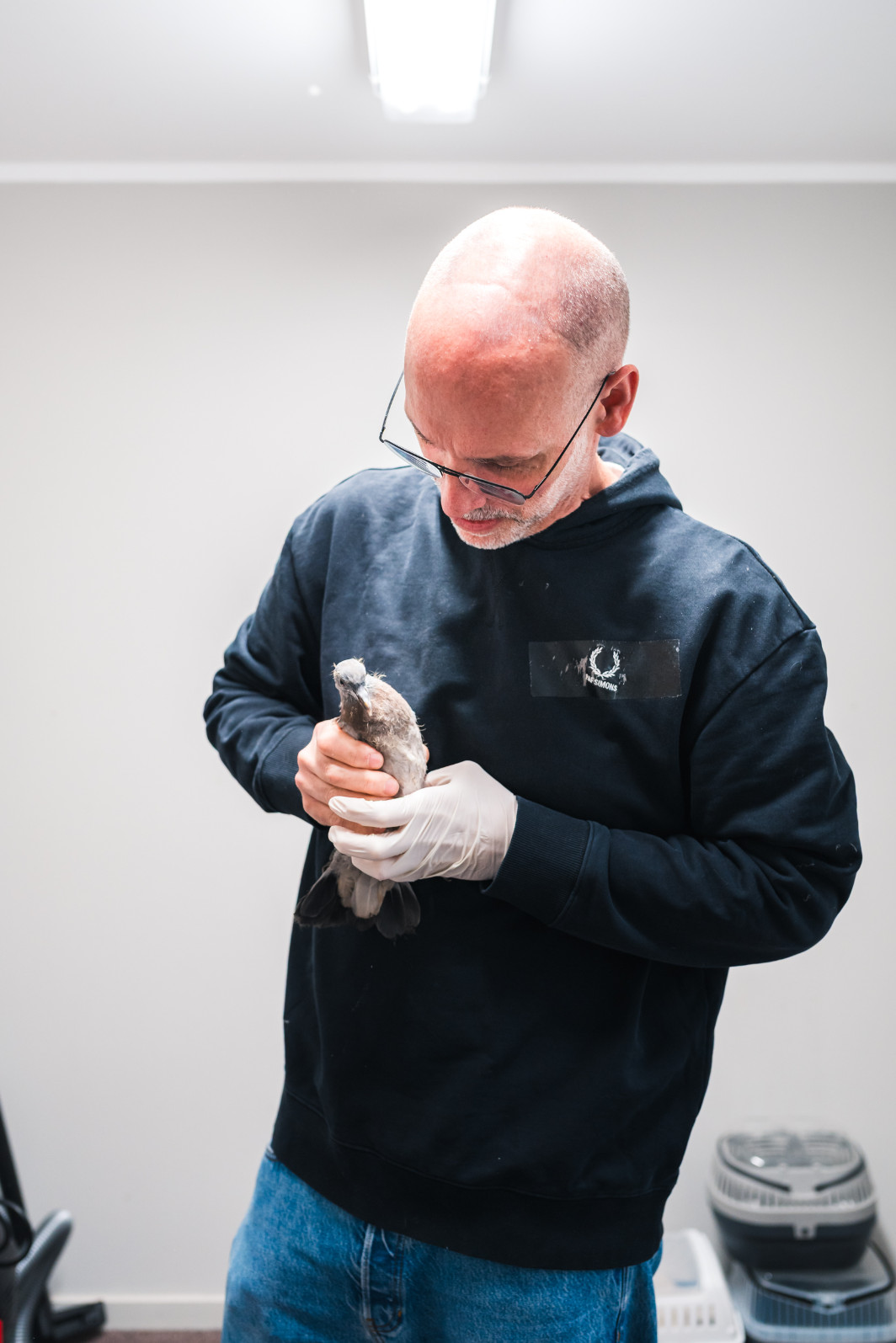
Ernst, who has an holistic animal health care practice in Hamburg, started Hamburger Tierhelfer e.V. (Animal Helpers Hamburg) nine years ago. The organization helps people, who find themselves in difficult circumstances, so that their pets continue to be taken care of and can receive medical attention should they fall sick. Pet owners, who have little or no funds available, can also receive holistic treatment or consultations for their animals.
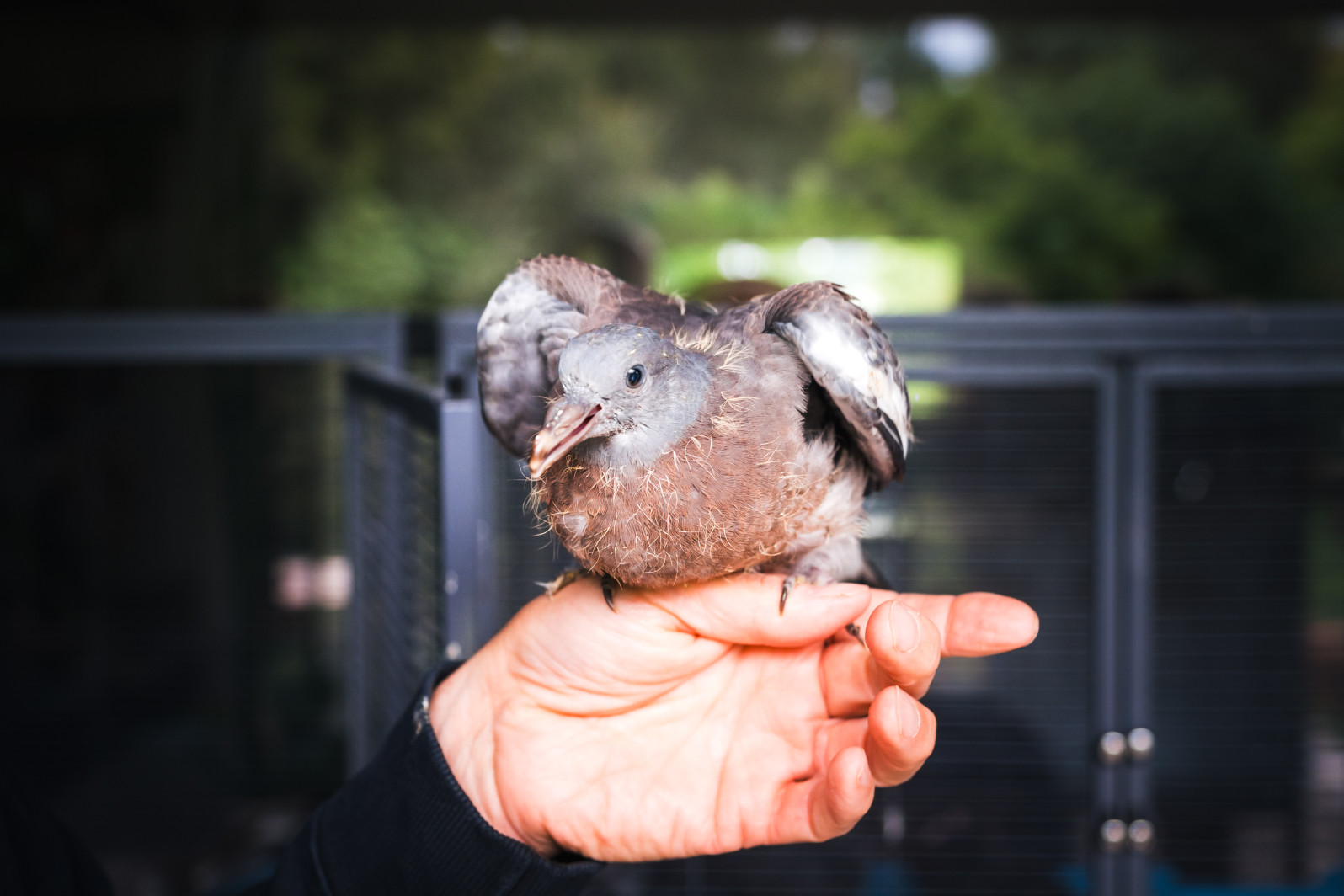
The pigeon part of it all just sort of happened in 2022. That’s true, but also not the whole story. As a child in the Swiss countryside, Ernst already cared for a pair of English Fantails, built a pigeon coop and soon also had ducks, geese and chickens. He nearly even ended up with a parrot. ‘We often have soft spots for particular animals,’ he said. ‘I like birds. Maybe because we are similar in nature. I also like to roam around aimlessly, could be somewhere different every hour, am always alert and like to observe.’
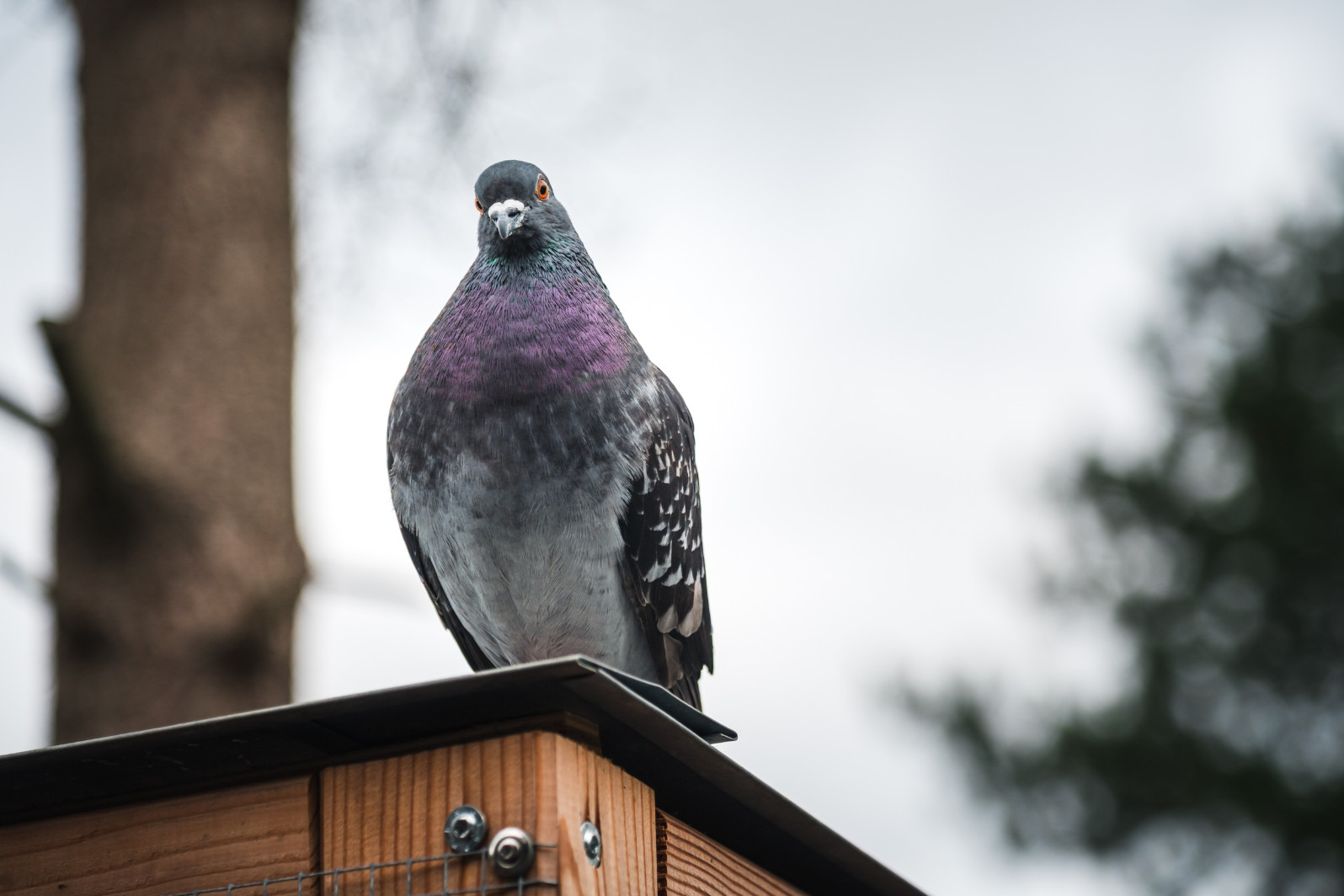
Four years ago he observed countless pigeons fluttering around and sitting on the window sills and gutters of a former industrial complex in Hamburg. But it was clear they were not really comfortable there. He approached two animal activists who were there as well. ‘Out of nowhere I just said: If you help me set up a coop here, I’ll make sure it’s taken care of.’ That’s how it started.
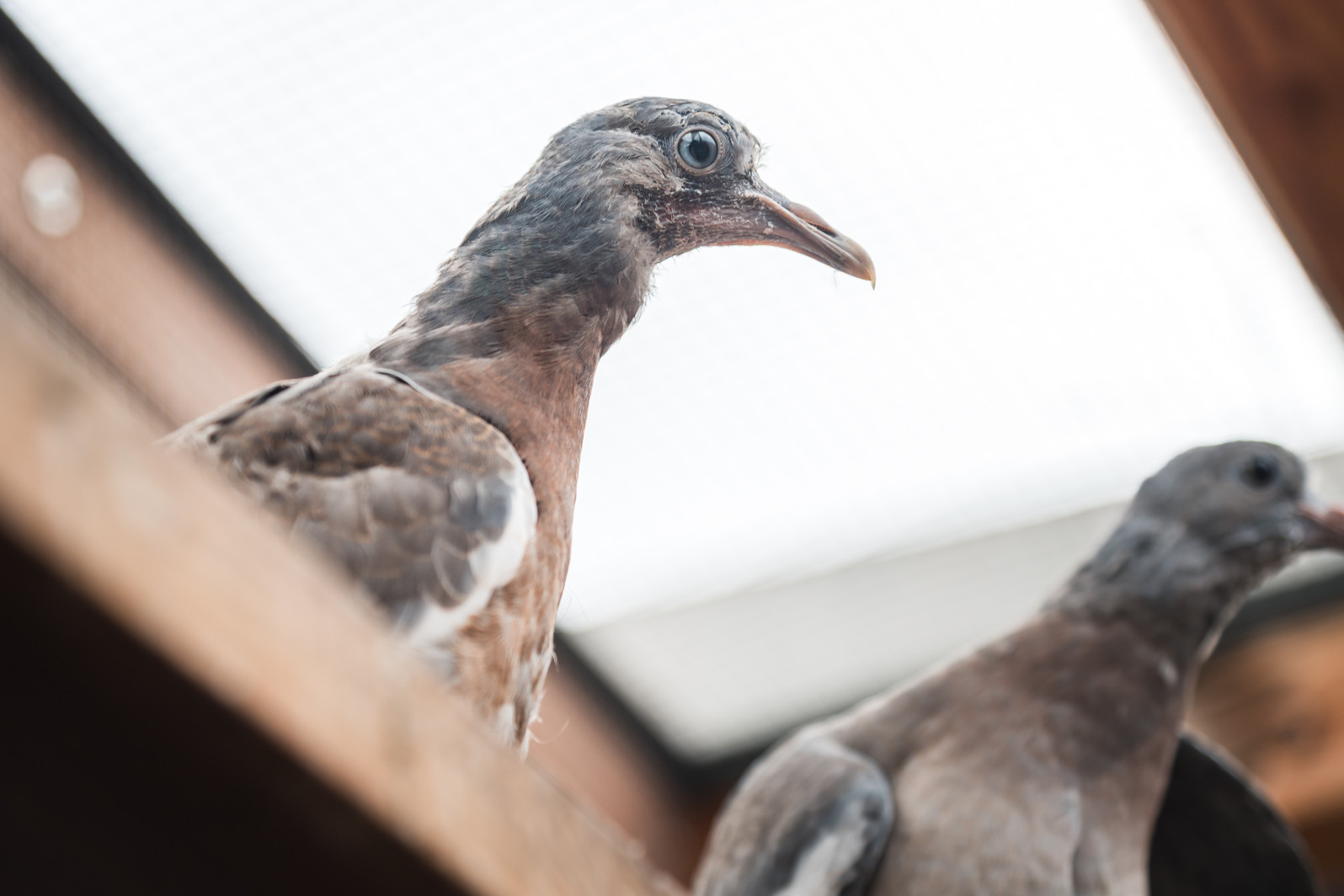
Two years later there is an aviary behind his house and his shed has been converted into a second one. Here he stands quietly, arms reached out, hands inviting the birds. They look down at him for a moment as if debating whether to accept the invitation. Then the first pigeon hops onto his hand, and immediately you can sense that the animal’s trust is a gift that brings Ernst Bamert more joy than anything else, and that it is this joy that drives him.
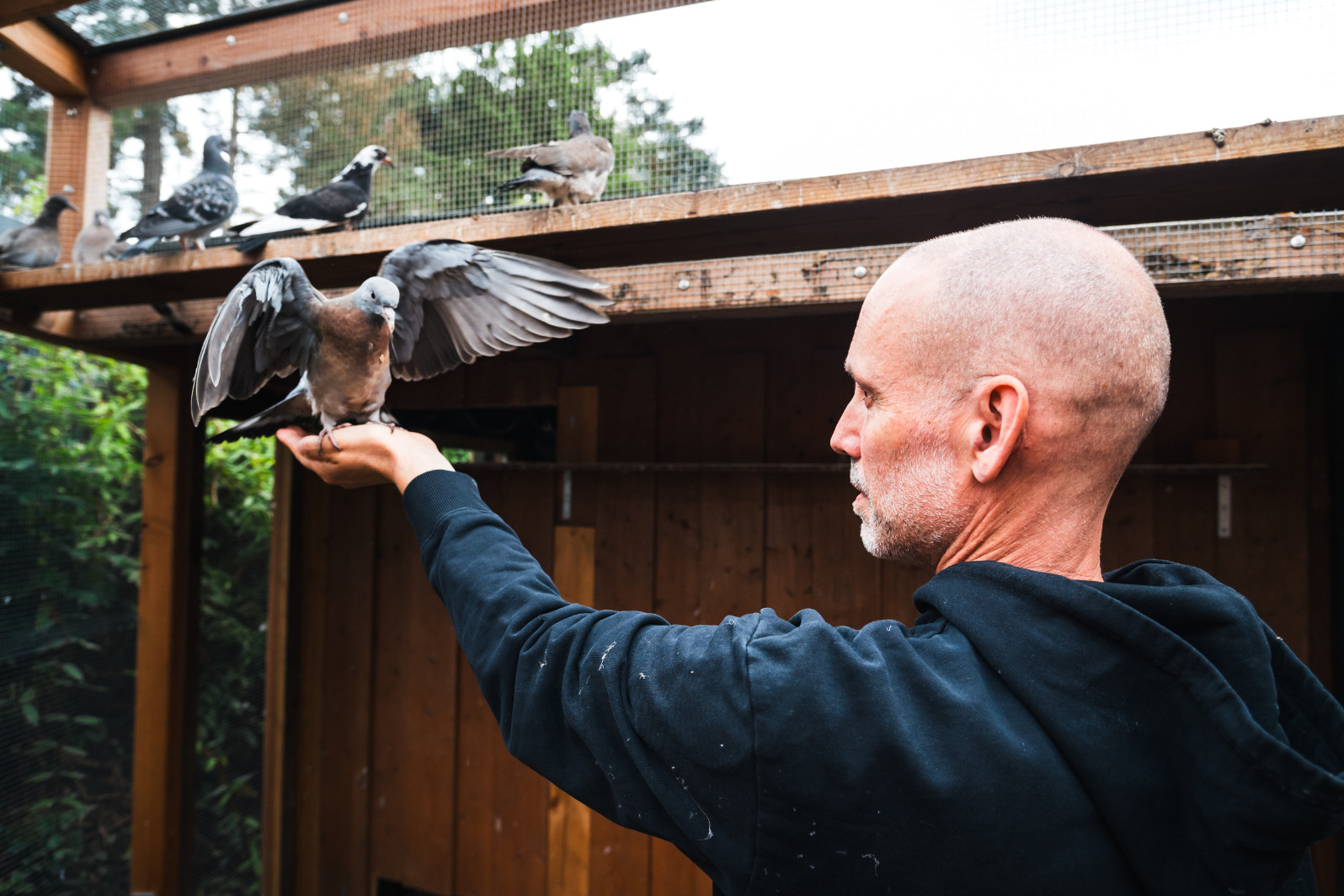
Multiple times a day he checks on the pigeons in the two aviaries, multiple times a day does he attend to the patients kept at his medical ward: six cages outside and six more inside a room solely reserved for this purpose.
It was only two years ago that he took in the first sick pigeon. Back then he was ‘really overwhelmed. I didn’t really know what to do when they were sick.’
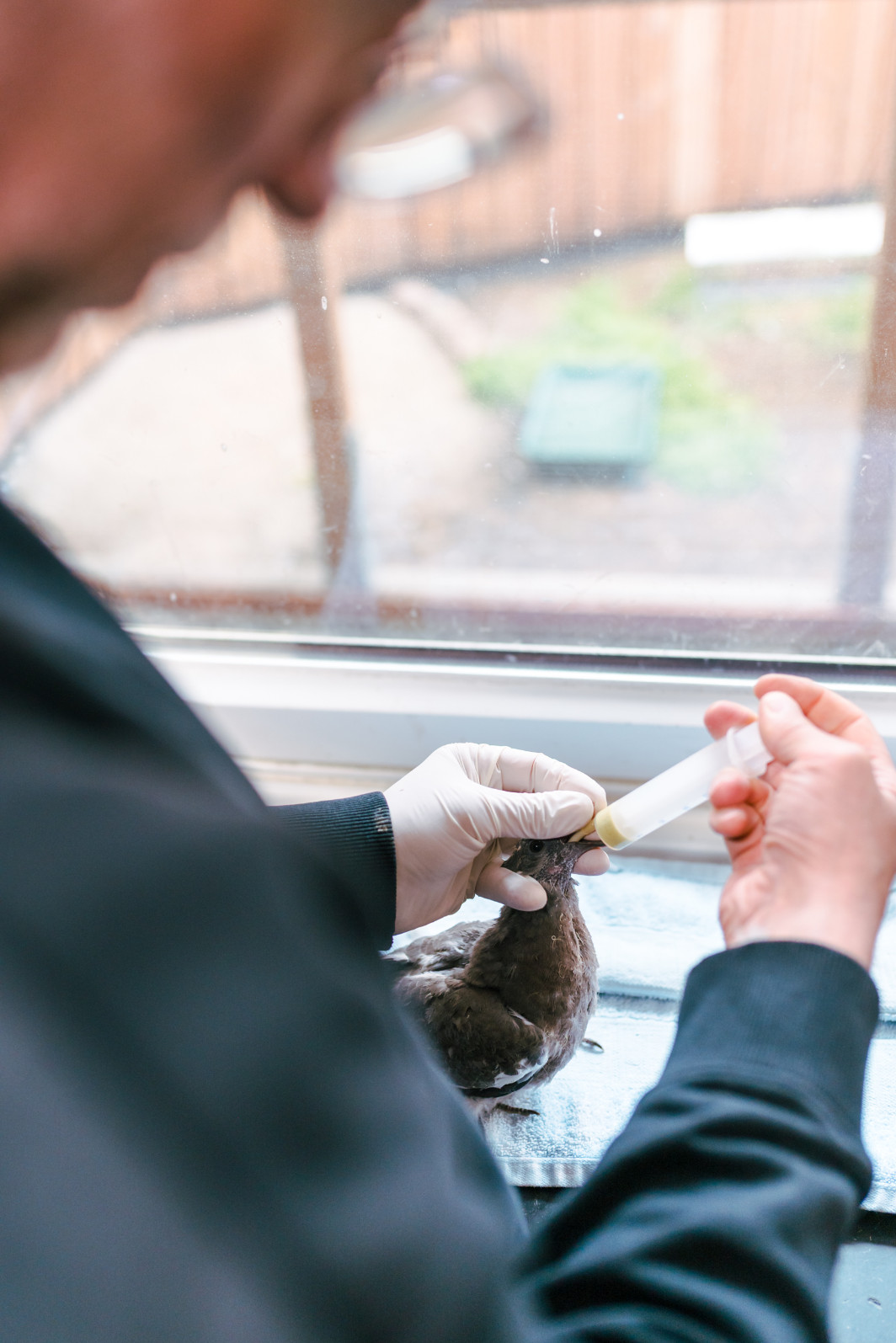
So he did some research, read a lot, asked other animal activists for advice and slowly learned how to care for ill or injured pigeons. Today, aiding these individual birds, is as much part of his daily routine as is caring for the animals permanently staying with him and the pigeon coops. ‘I just get really stressed,’ he says, ‘when I realize I can’t help an animal in need.’ So he helps the pigeons who share our cities but hardly get the space they need to survive. And definitely not the respect they deserve.
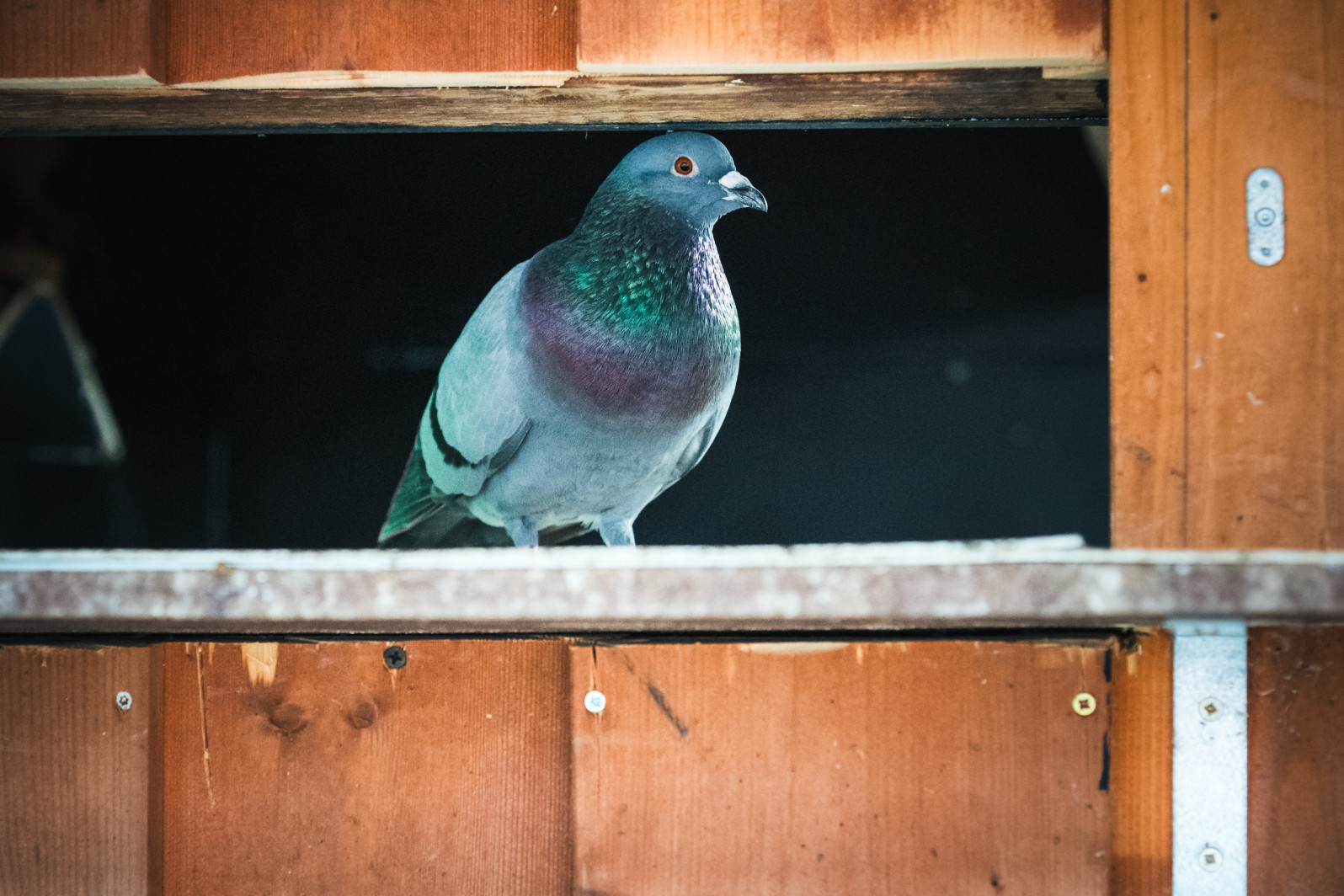
It was us humans who got the pigeons into the situation they now face. We put them into an environment where we now don’t allow them any space. They didn’t come into the cities. We released them into the cities when we no longer had any use for them.
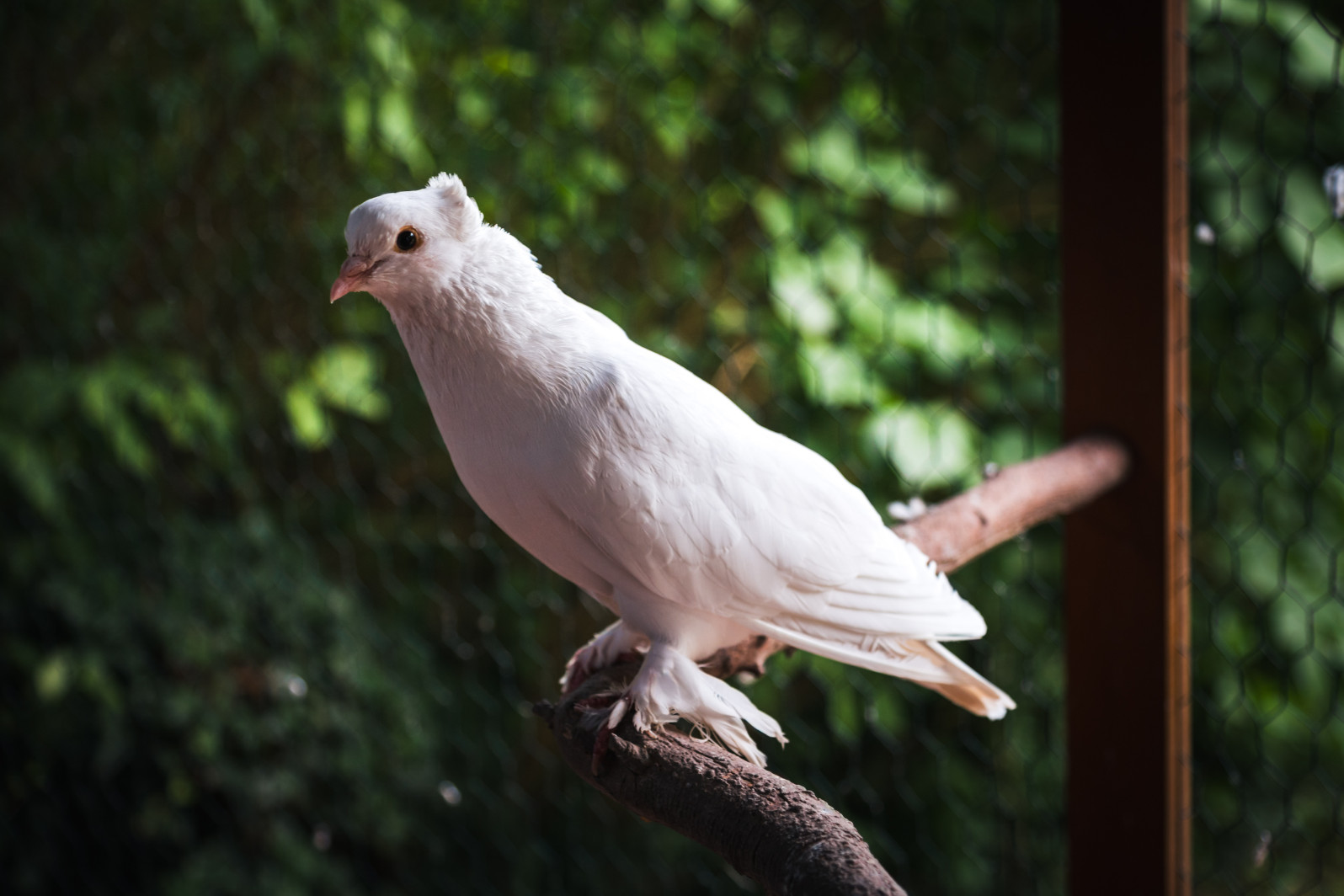
In Germany we have wood pigeons, turtle doves, stock doves and city or street pigeons, among others. NABU estimates that there are 2.6 to 3.1 million pairs of these species. But there are also fan-tailed pigeons that can grow almost as large as an eagle-owl. The common ground dove that only weighs 20 to 40 grams. Pigeons with feathered feet, and even the long-extinct Dodo was part of the pigeon family.
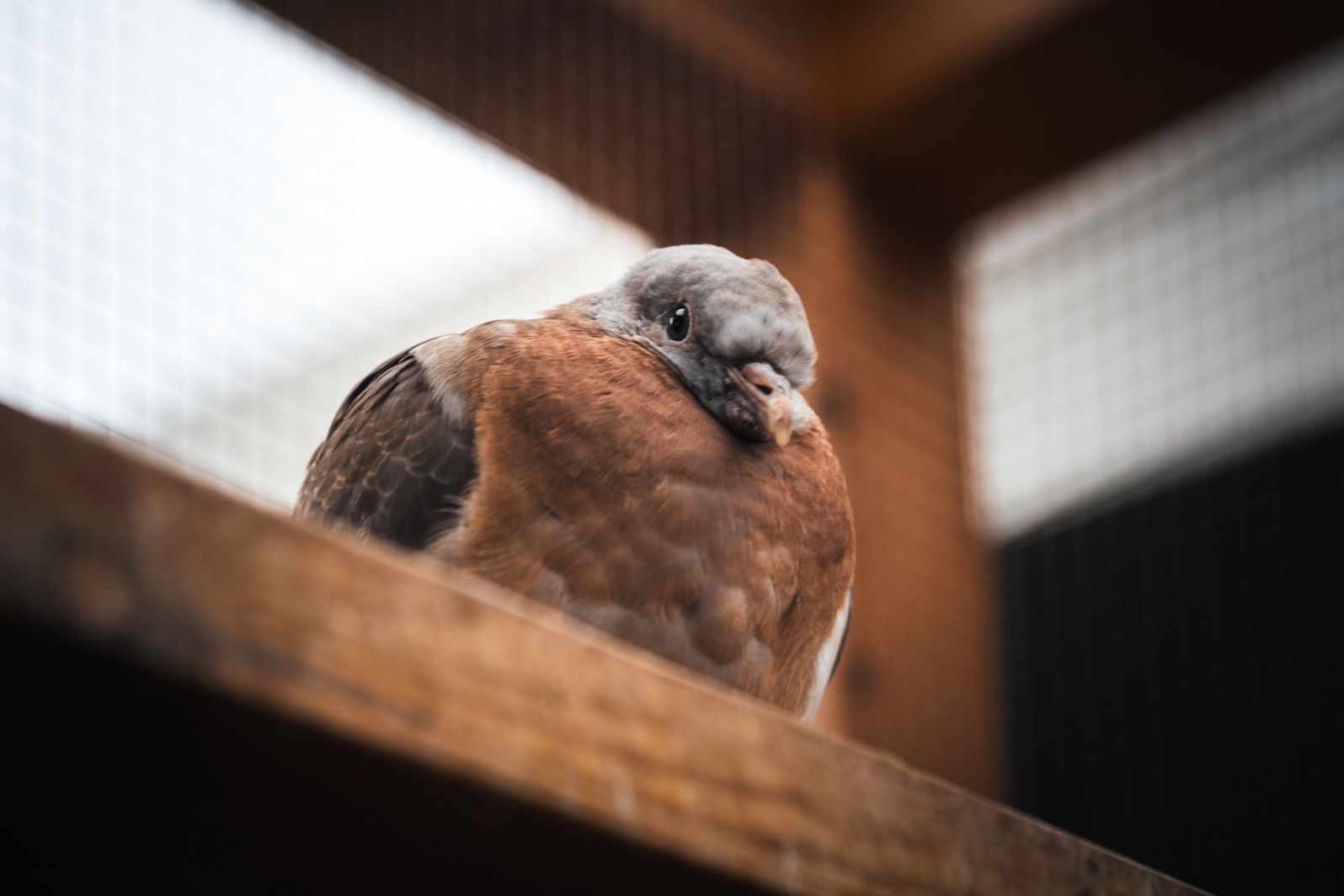
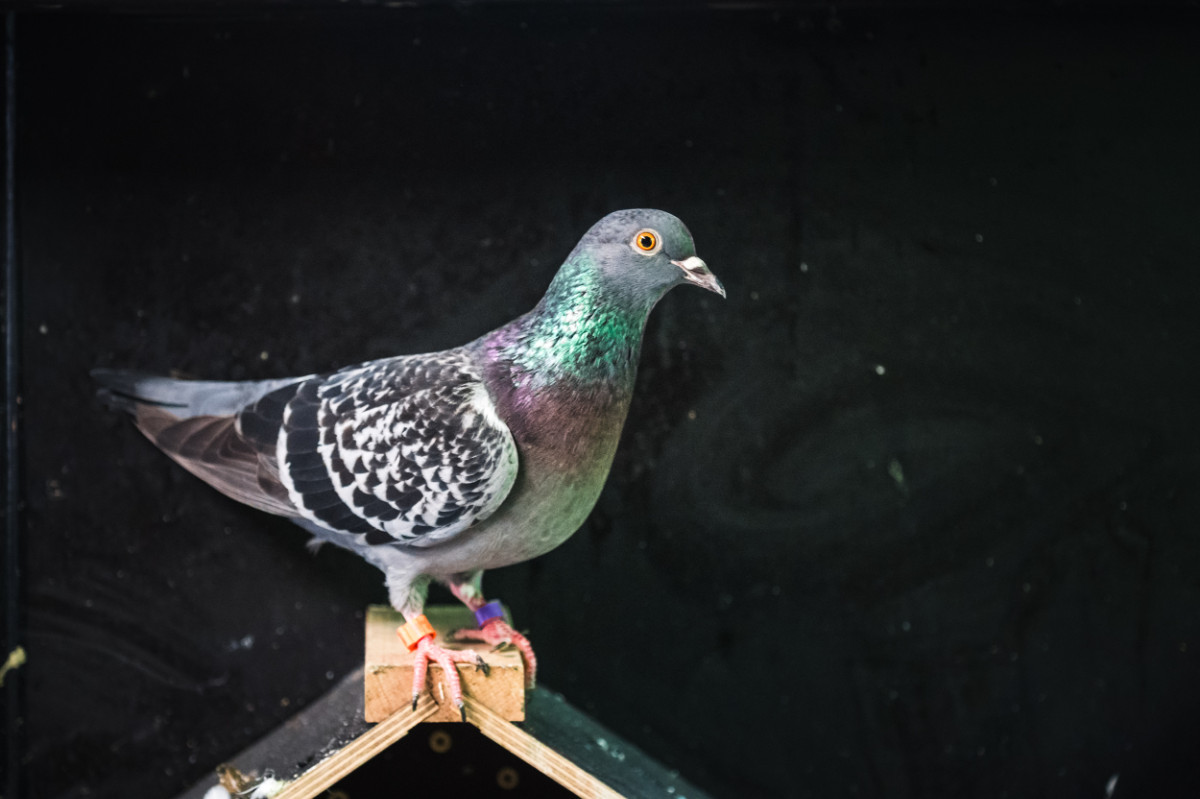
Out pigeons are descendants of rock pigeons that were kept as livestock in ancient Egypt, as long as 5000 years ago. We domesticated them, ate their eggs and the animals themselves, used their droppings as fertilizer and put their feathers into pillows. But best known is the passenger pigeon, because next to whales, they have some of the best sense of direction in the animal kingdom.
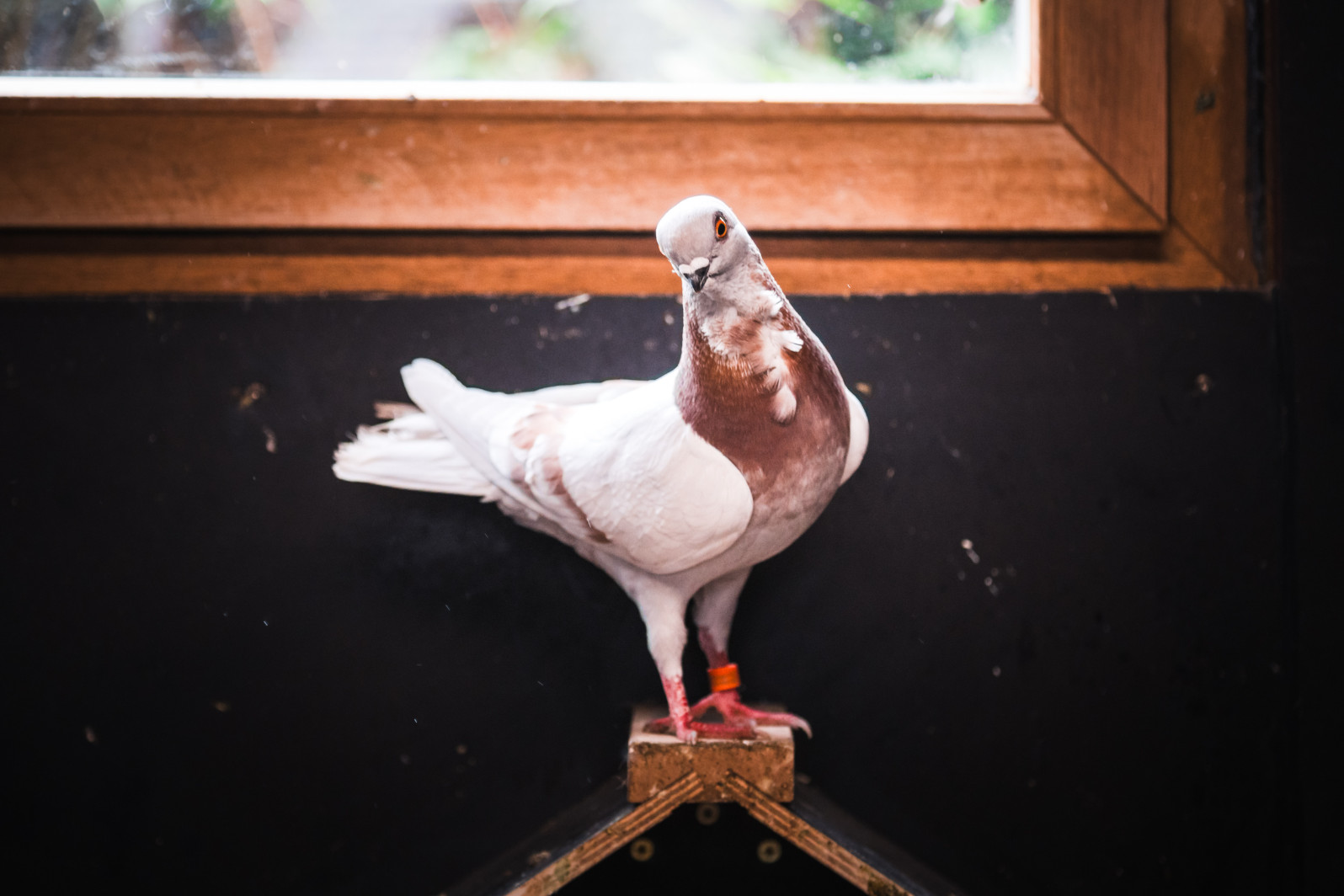
They procreate five to nine times a year, because we used to breed them for accelerated procreation. But when the attics, where most pigeons used to live, were closed and the pigeons kicked out because we preferred to eat different meat and had no more use for them, they were left with nowhere to go.
‘We caused the problem ourselves,’ said Ernst. ‘So we have to take responsibility.’
But we just ignore it. Ignore that pigeons usually mate for life and communicate with complex vocalizations, can live for twenty years but have a much shorter life expectancy in cities. When asked what a pigeon’s day in the city looks like, he has a clear answer: ‘Food, they are always looking for food.
And instead of simply taking a pragmatic approach, they are chased away everywhere.’ In train stations across Germany alone, anti-pigeon measures and cleaning costs reach eight figures. It doesn’t have to be that way.
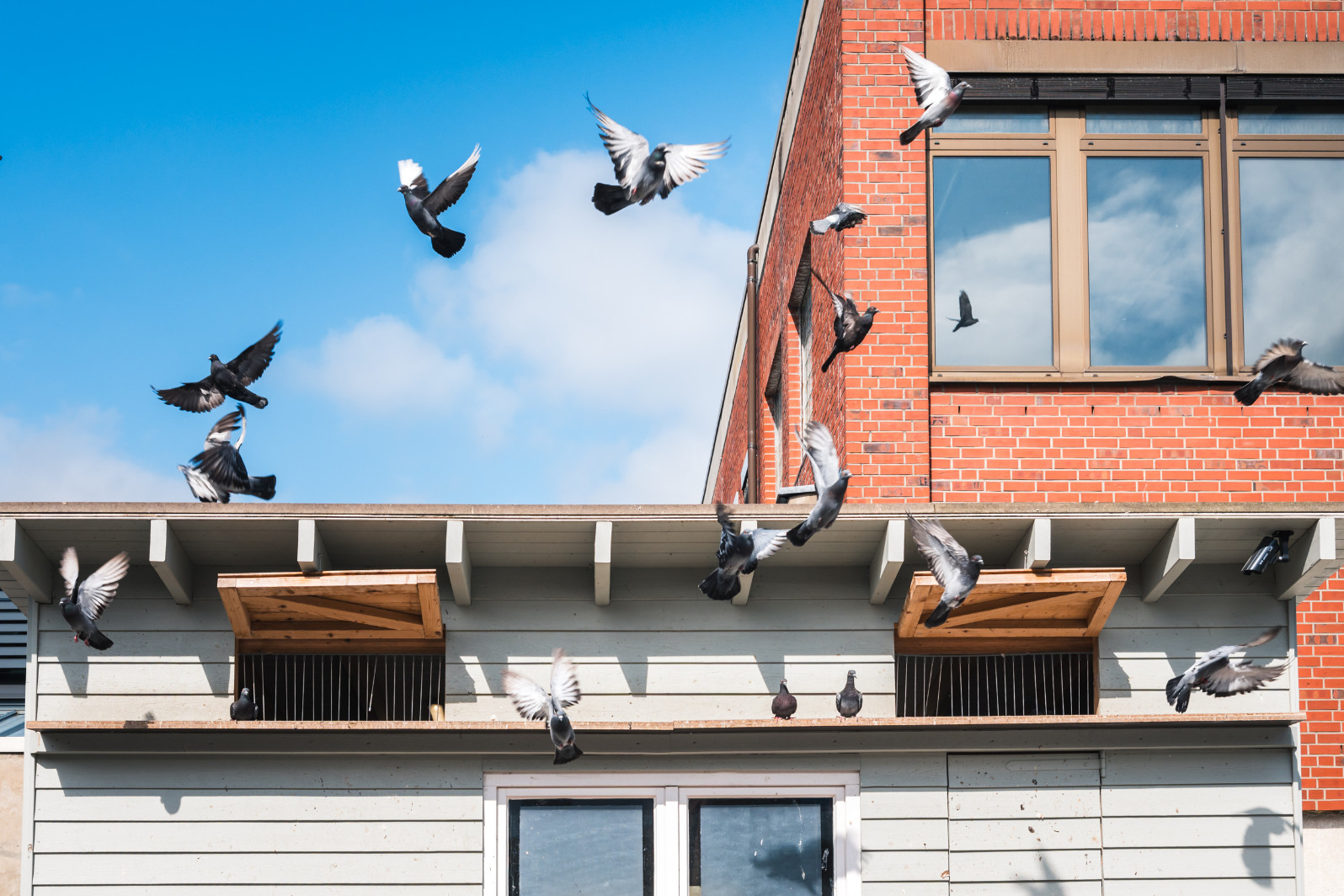
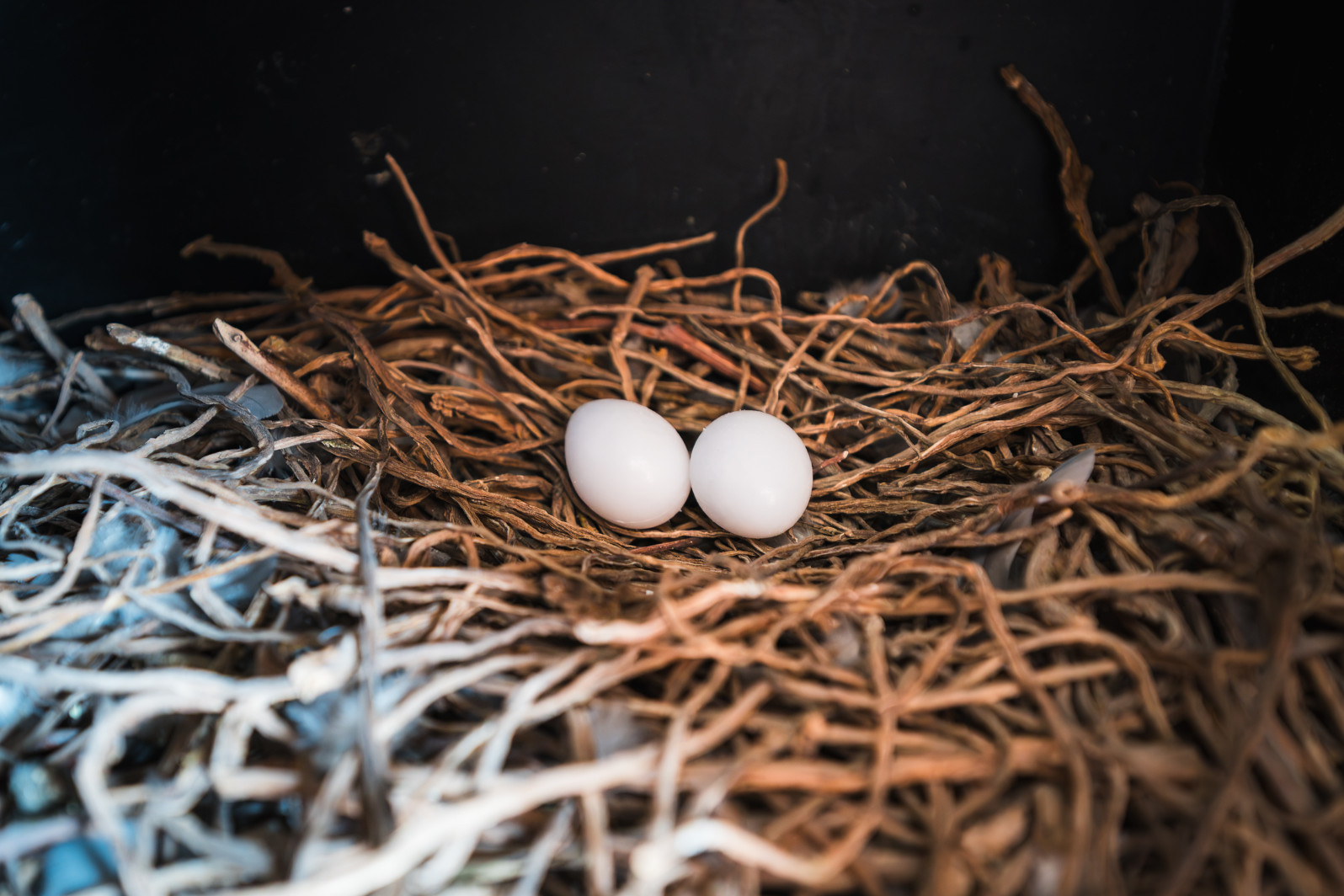
For 25 years now, the approach taken to pigeons in Augsburg has shown that it can be done differently. No chasing away, no shooting, no poisoning. But resettling them to appropriate locations, feeding them in a controlled environment, offering them places to nest and switching their eggs for dummies to control populations.
There is even a pigeon coop underneath the roof of Hamburg’s Central Station, that is kept by the Association of Hamburg Street Pigeons. Ernst volunteers his time to care for two more coops in Bahrenfeld with the Association of Hamburg Animal Helpers.
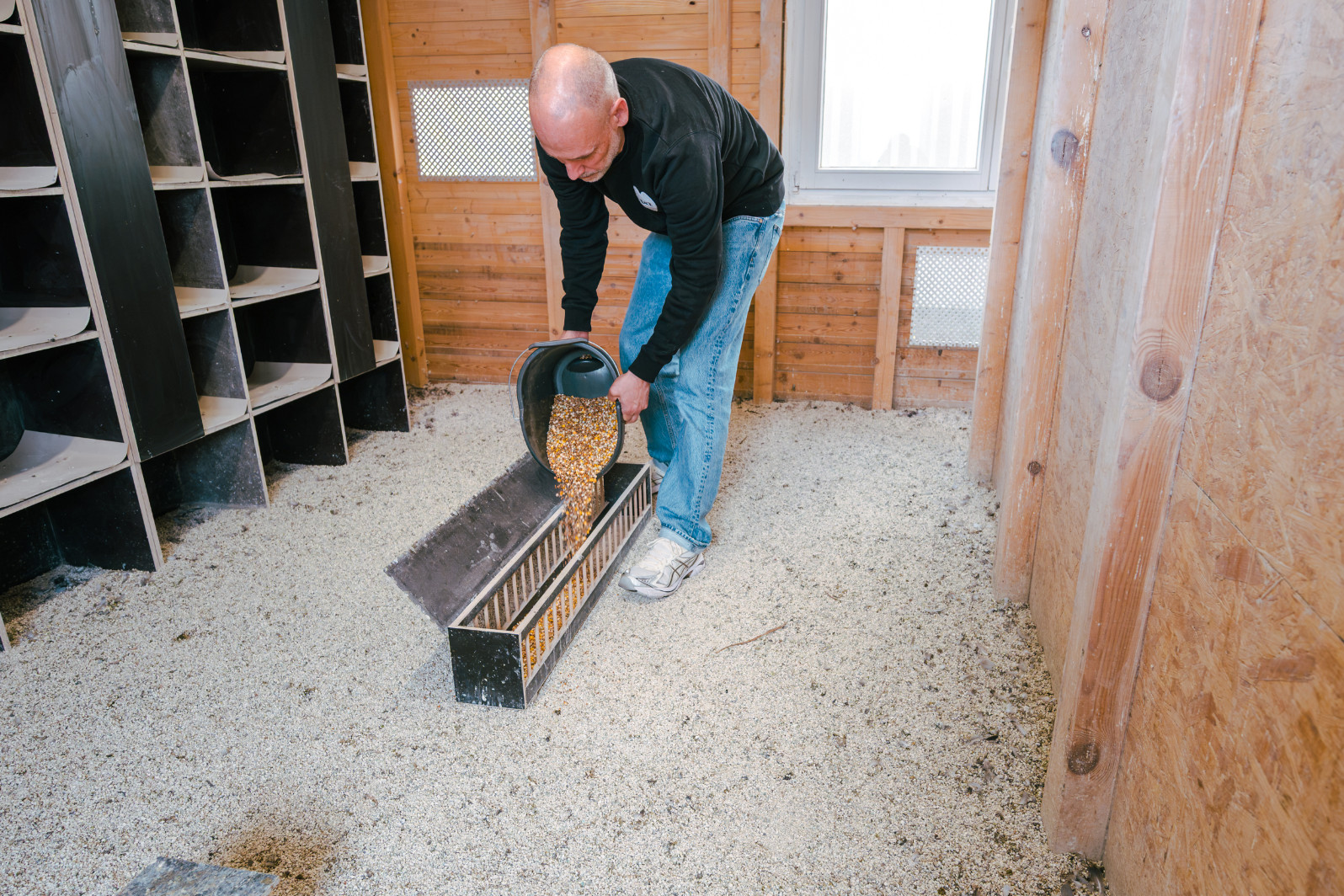
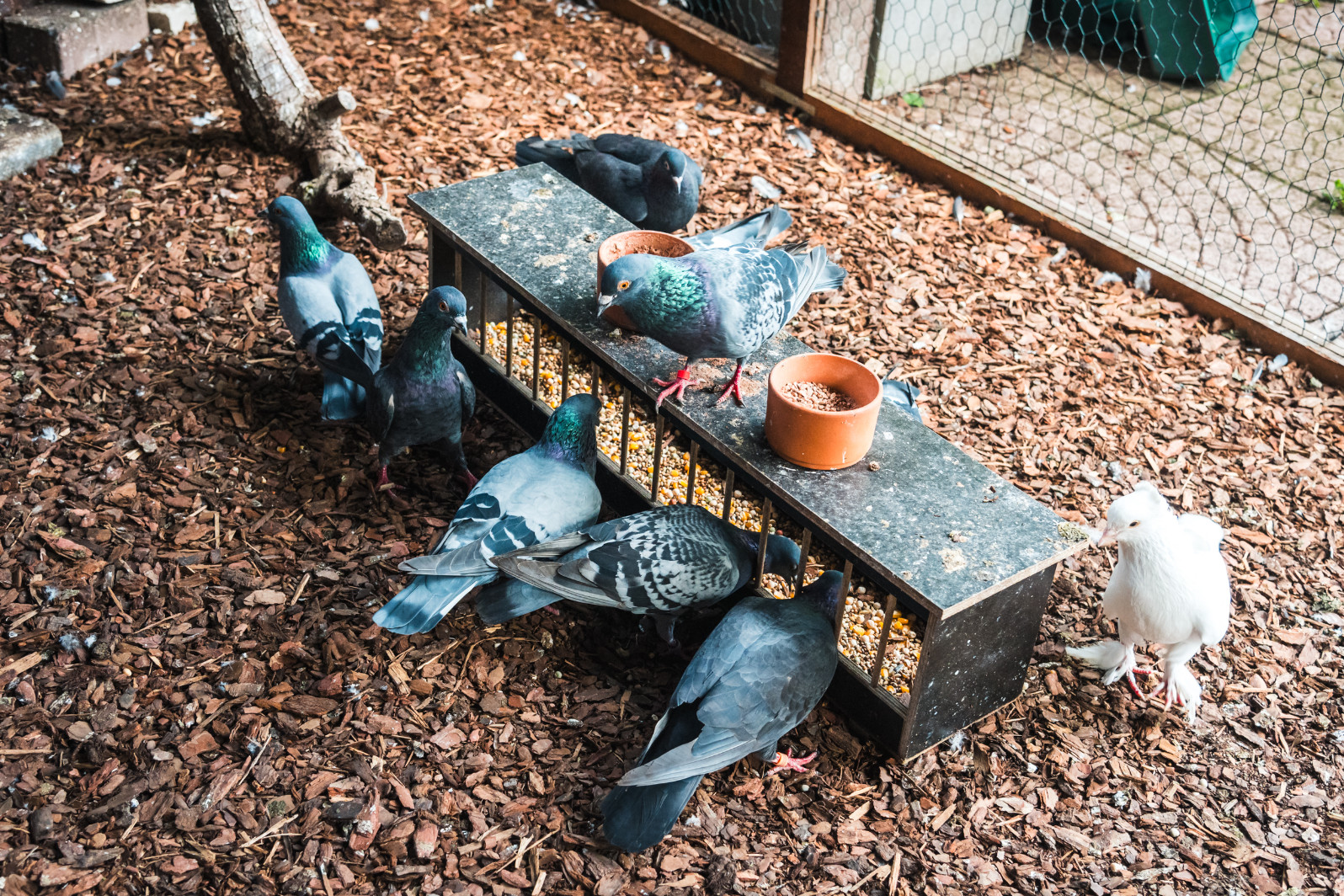
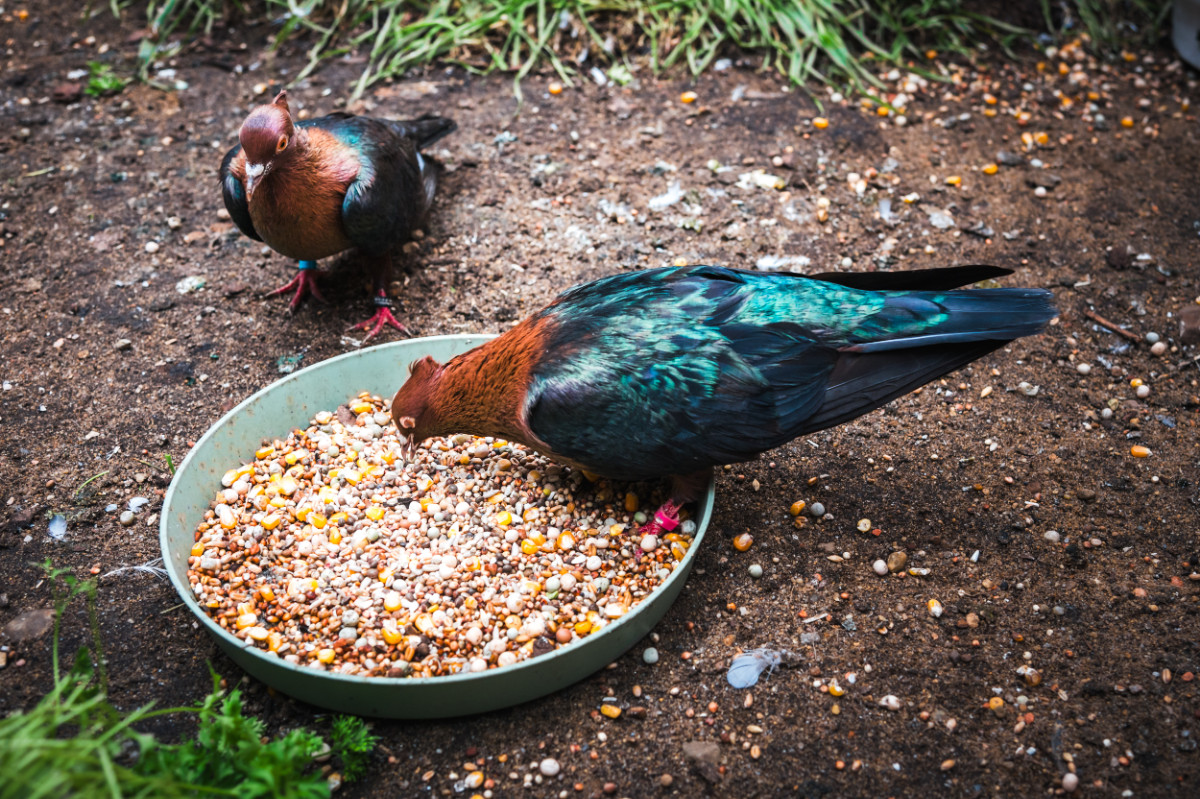
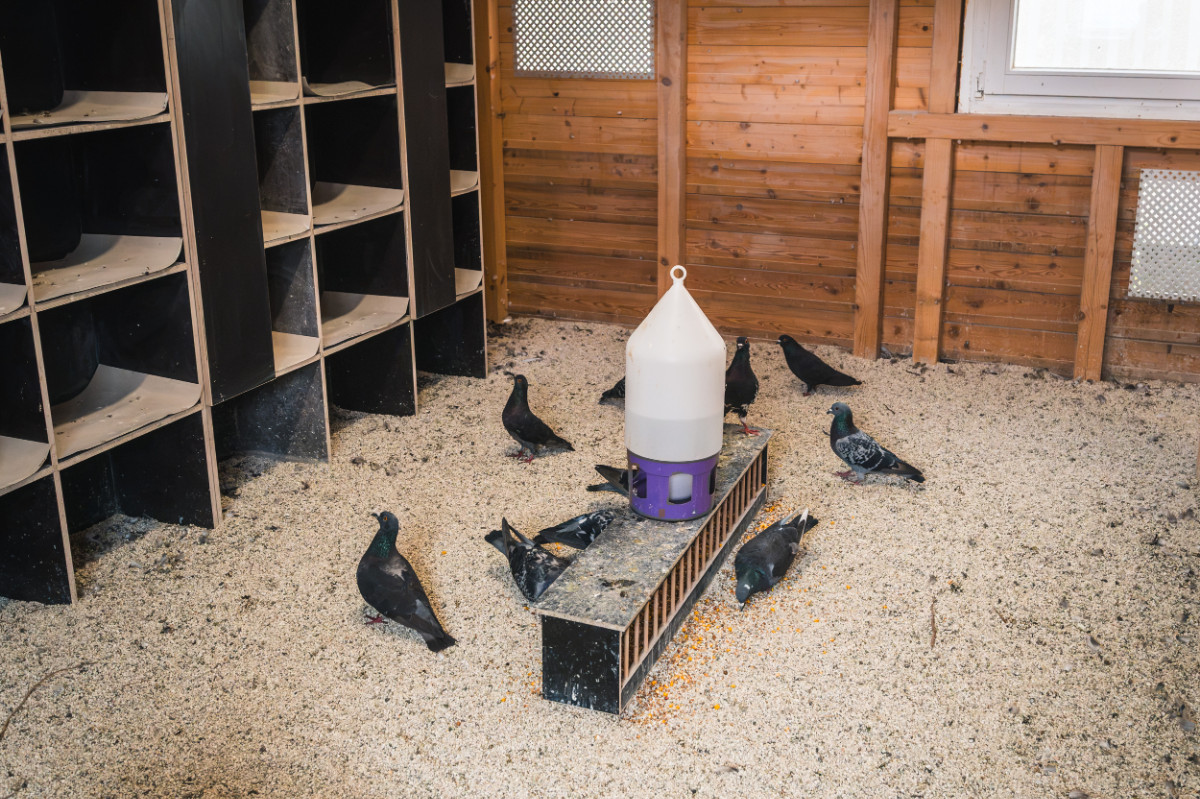
He and a small team clean the coops almost every day, switch the eggs in the nests for dummies, and bring fresh water and food. Every week they hand out 100 to 150 kilograms of pigeon food.
The pigeons in Ernst’s coops fair very well. Many others, who have to survive in the city do not. People don’t like them and refer to them as ‘flying rats’.
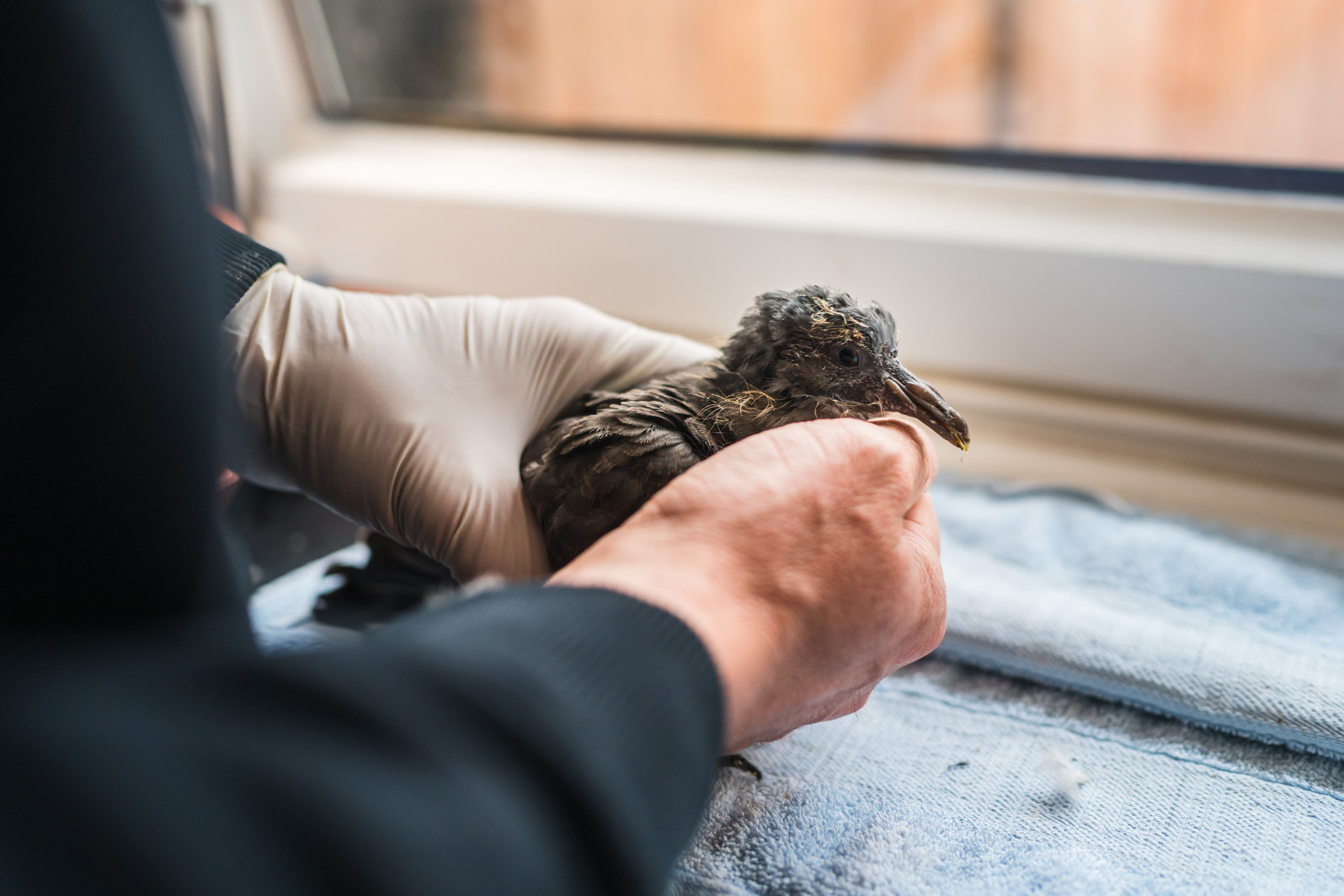
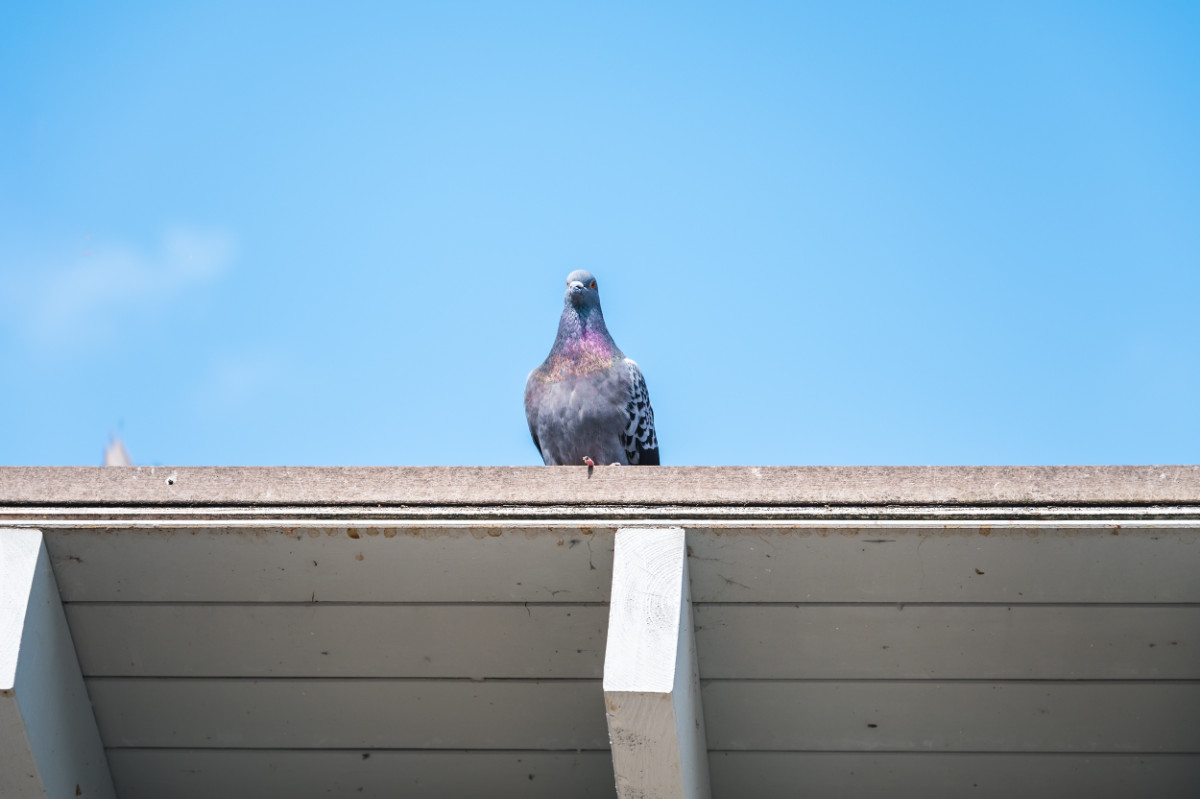
Because they have nowhere to go, they sit on awnings, windowsills, electrical wires or under bridges, and in their desperation they eat whatever they can find. Hair and fibers are always getting caught around their feet, cut into their tissue and, in the worst cases, lead to toes dying off. The animals limp, are in pain and have poor chances of surviving without help.
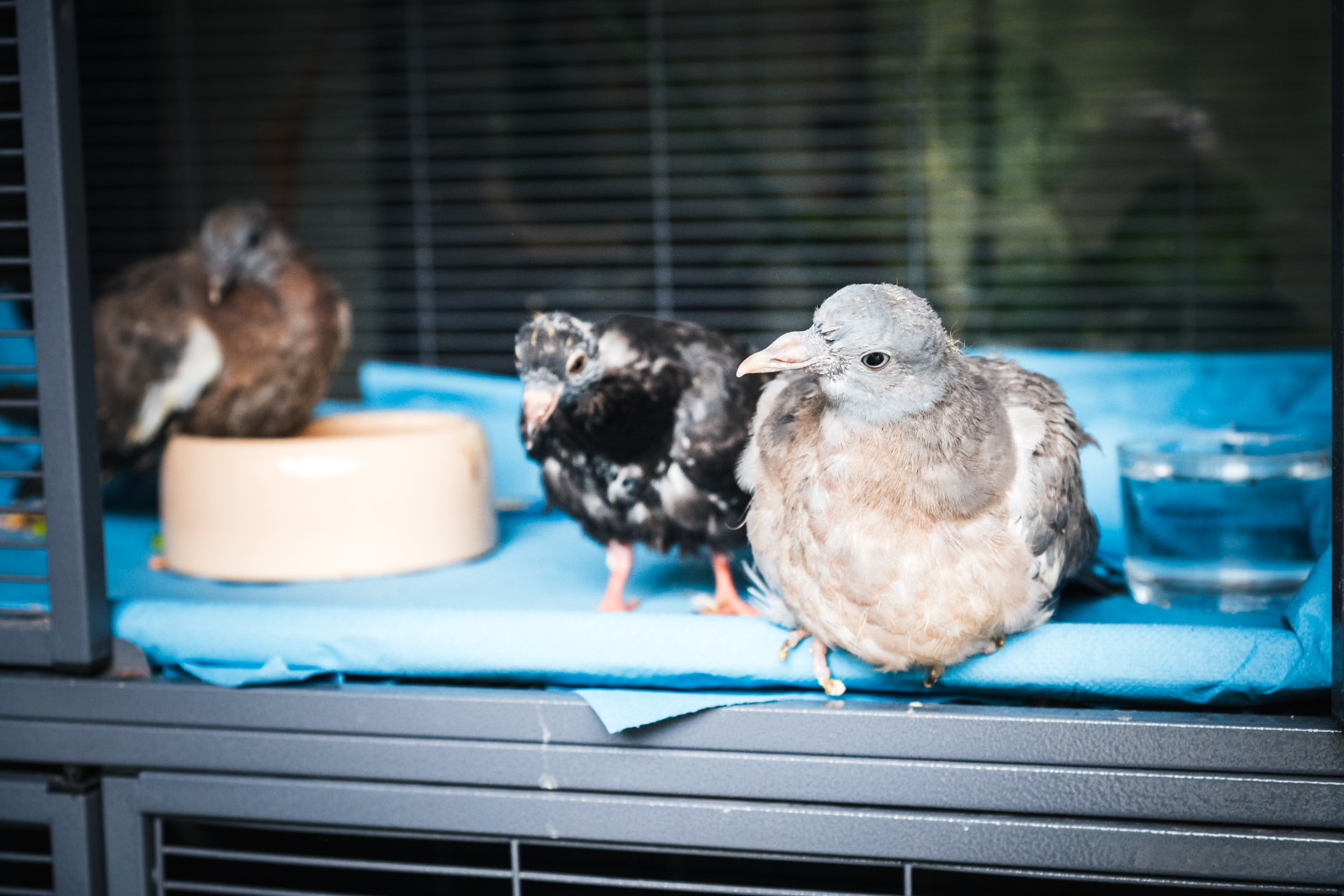
‘I’m constantly trapped in my worry-spirals. I have to get a thicker skin,’ says Ernst, ‘but how can you just look away?’ You can act. If you come across a huddled up pigeon, you’ll be able to tell if they can fly away or not. If they stay on the ground, or can’t fly properly, you should move them to safety.
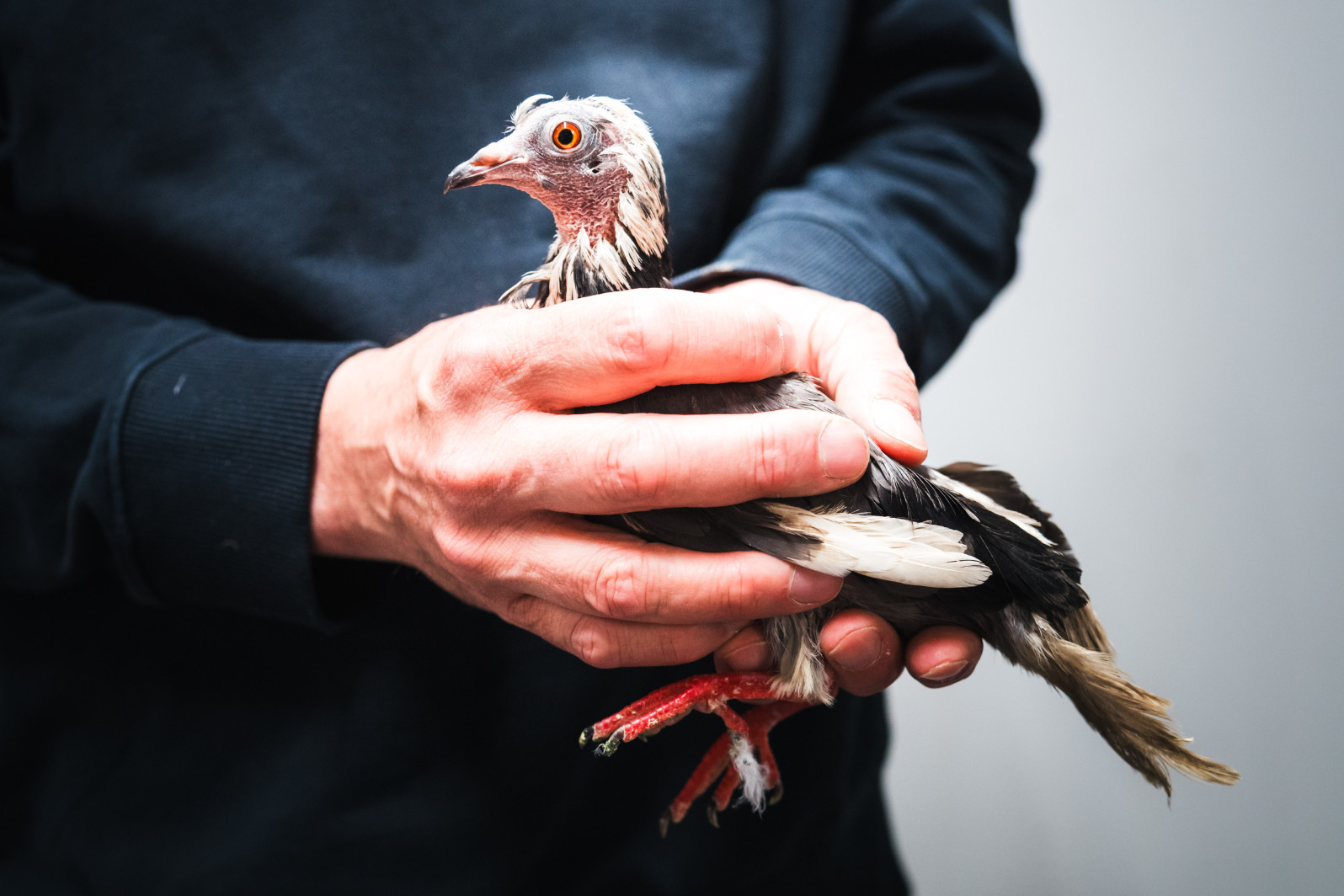
He demonstrates how to grab them, gently but firmly, by cupping both hands and placing them on either side of the bird. Then you can put the pigeon into a tote bag, loosely wrap them in a scarf or kitchen towel, or put them into a box with holes in it.
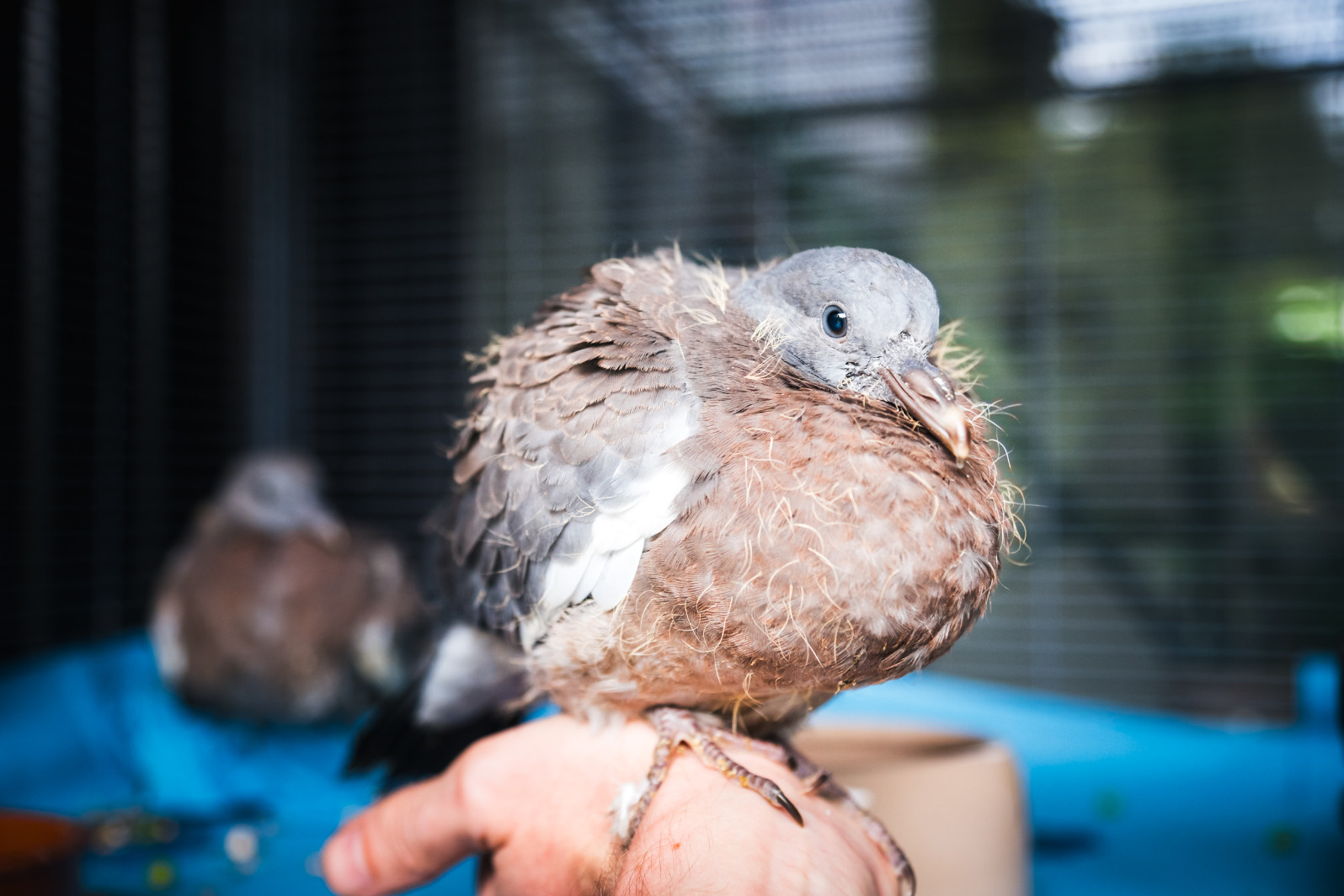
Animal protection organizations, local pigeon aid groups or an animal shelter will then able to help, either taking care of the injured pigeon or referring you to the appropriate local agencies. You can also try to care for the pigeon yourself, after discussing it with any of these qualified parties. If you can’t reach anyone, you can also take the pigeon to your local vet.
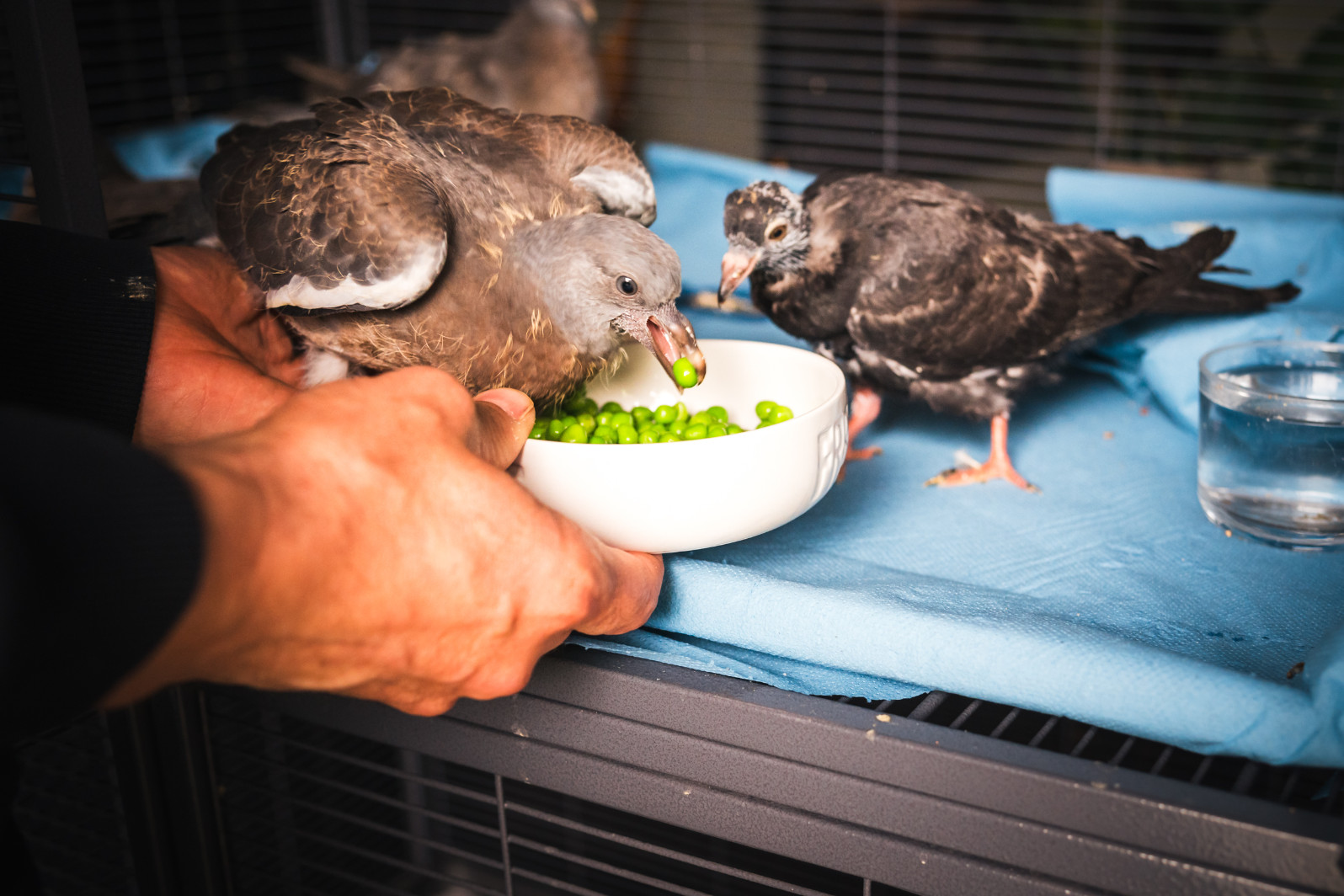
This is also how many sick or completely exhausted pigeons end up with Ernst Bamert in Hamburg: some found at construction sites or inside parking garages, subway stops or train stations. Some malnourished or underdeveloped, others with broken wings, injured crops or infected eyes.
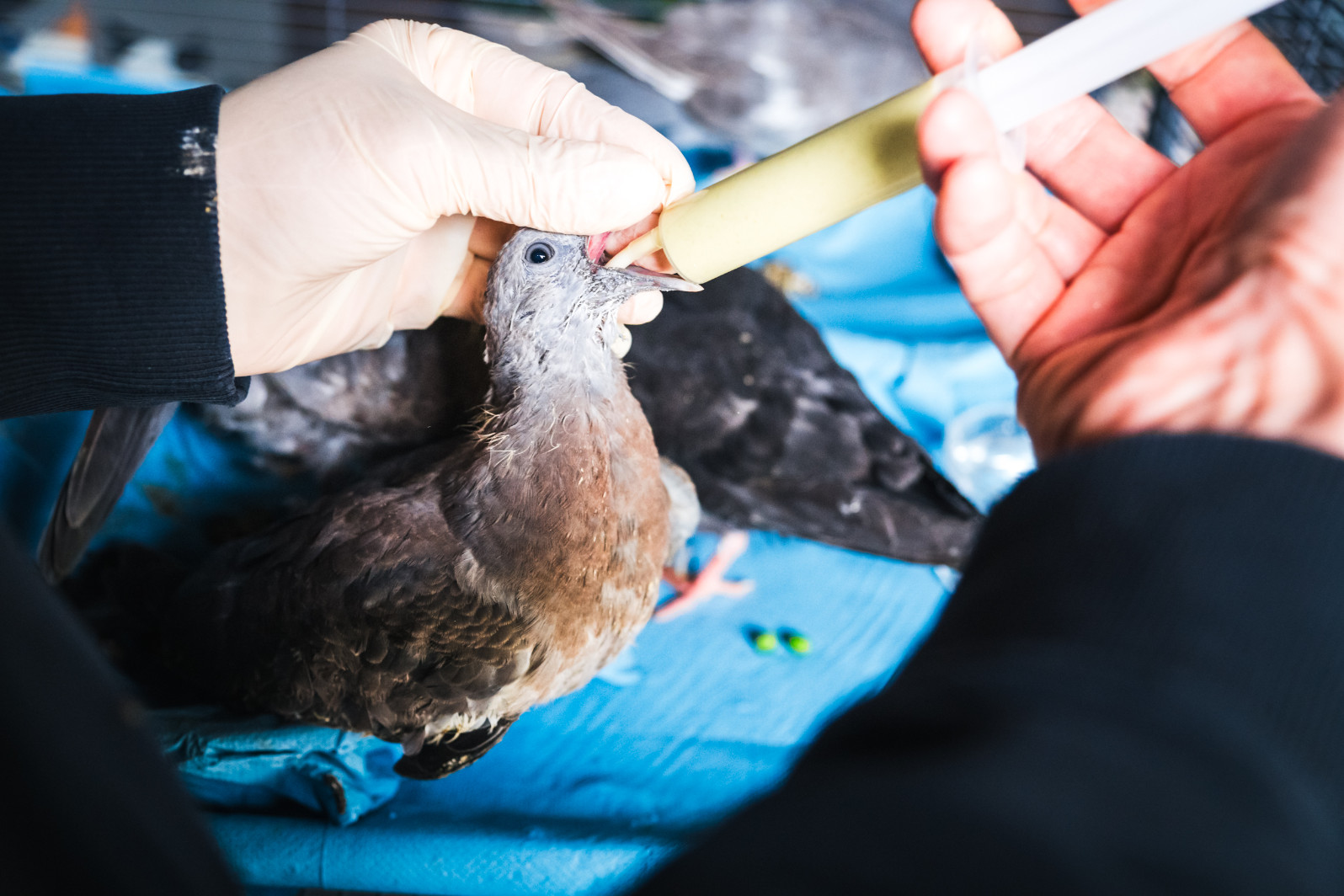
First they’ll move into the medical ward, where they will get medication or holistic treatment so they can be re-released into the wild once they are back to health. This doesn’t always work though. Not all pigeons find a safe flock or well-managed coop.
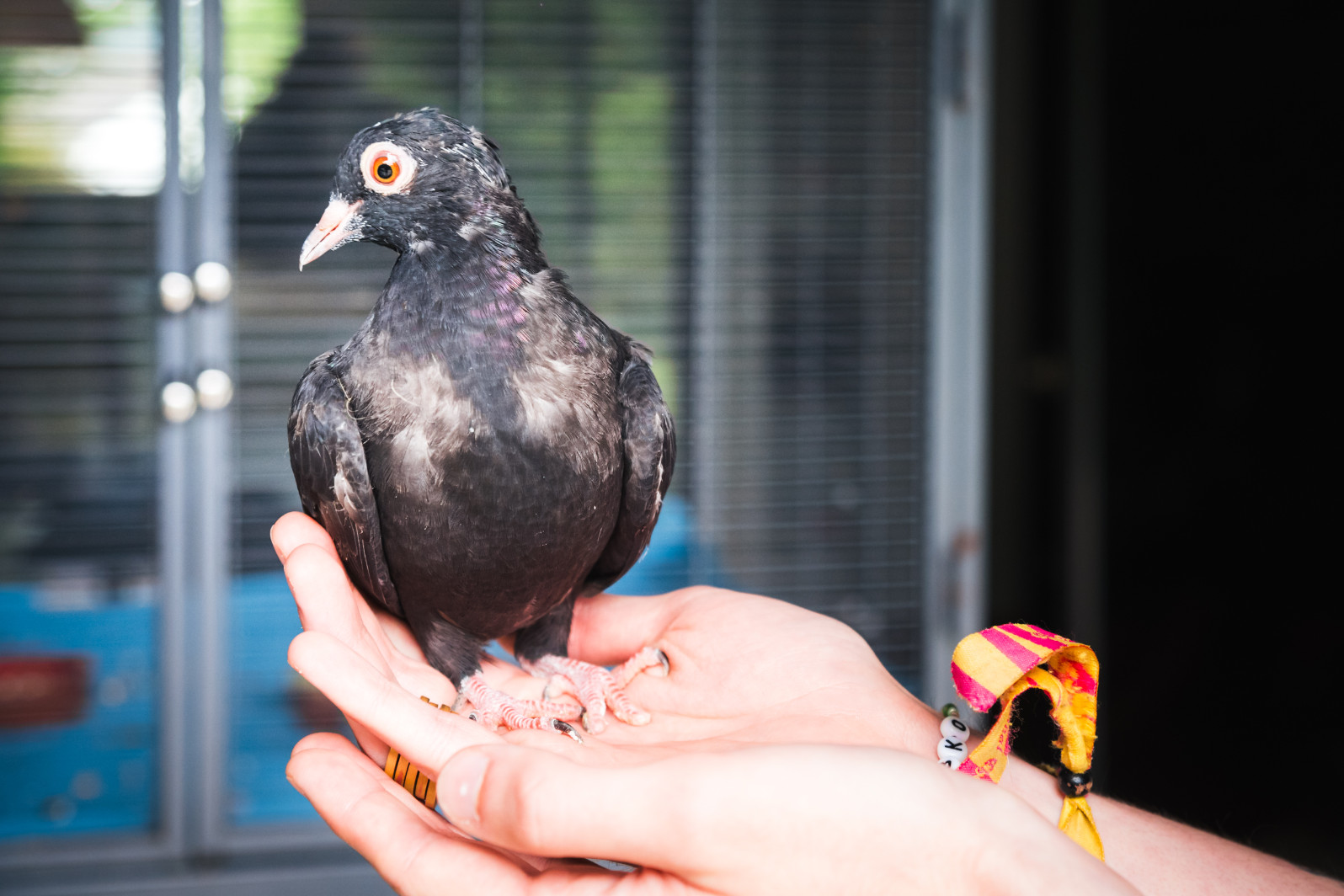
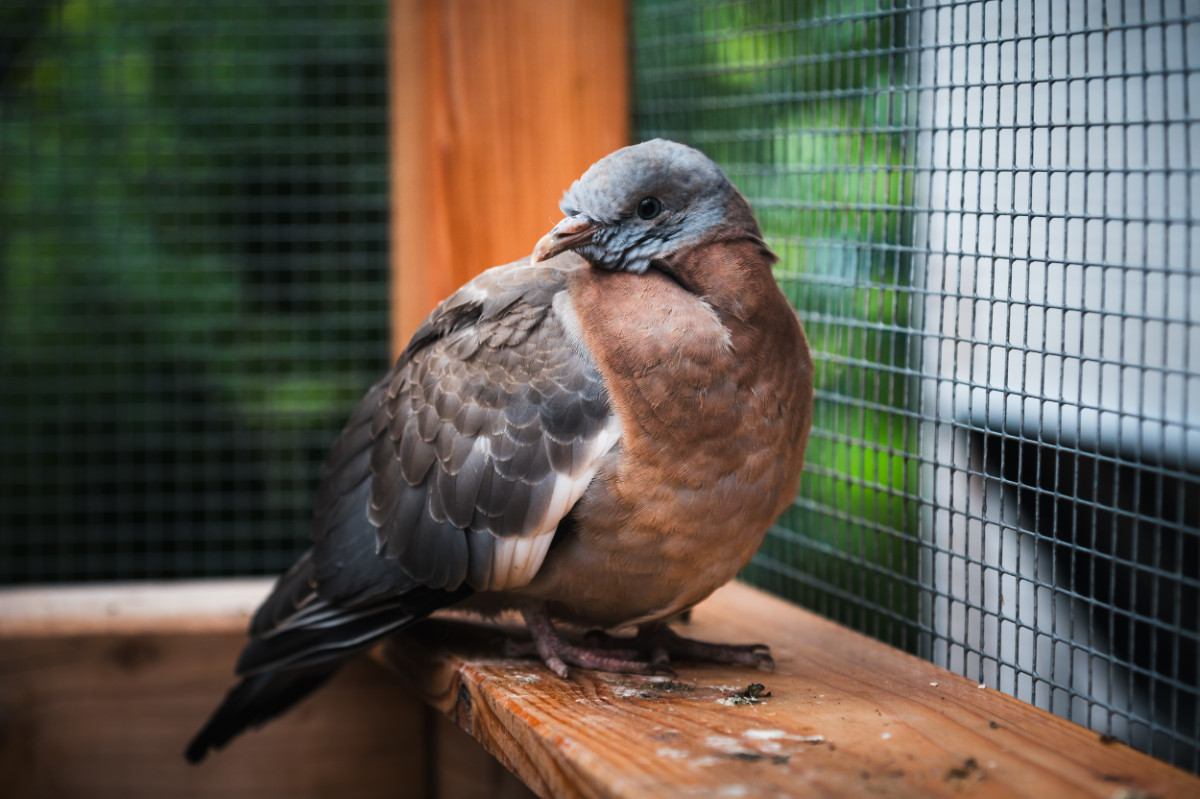
‘This is one of the most painful contradictions of pigeon protection: To have saved an animal and nurtured them back to health, meanwhile knowing that you can’t provide them with the safe habitat they would need,’ Ernst says. Those who cannot return to the wild, end up living with Hyentschi, Fipsl and the others in Ernst’s aviaries.
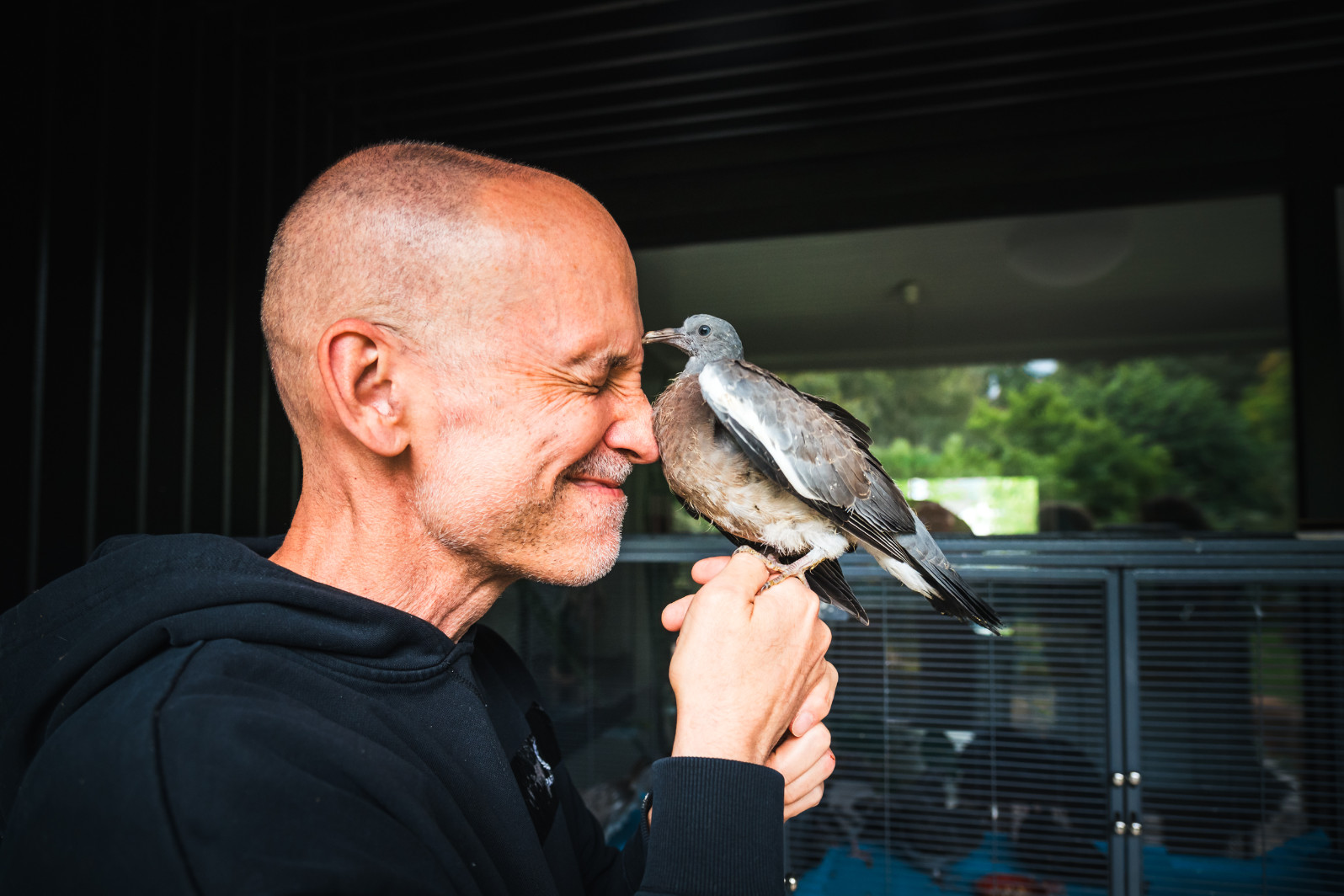
Here, Ernst is in the midst of putting out more bird food, topping up water and wishing the pigeons a good night. He’ll be back here tomorrow, with the first light of dawn.
No comments
Leave a comment