Jane Goodall's chimpanzees
On October 1st 2025, the world lost a very impressive person. Dr. Jane Goodall passed away. She was 91 years old. Her entire life she advocated for a better, more respectful co-existence between humans, animals and nature. This year our advent calendar is in memory of Dr Jane Goodall.
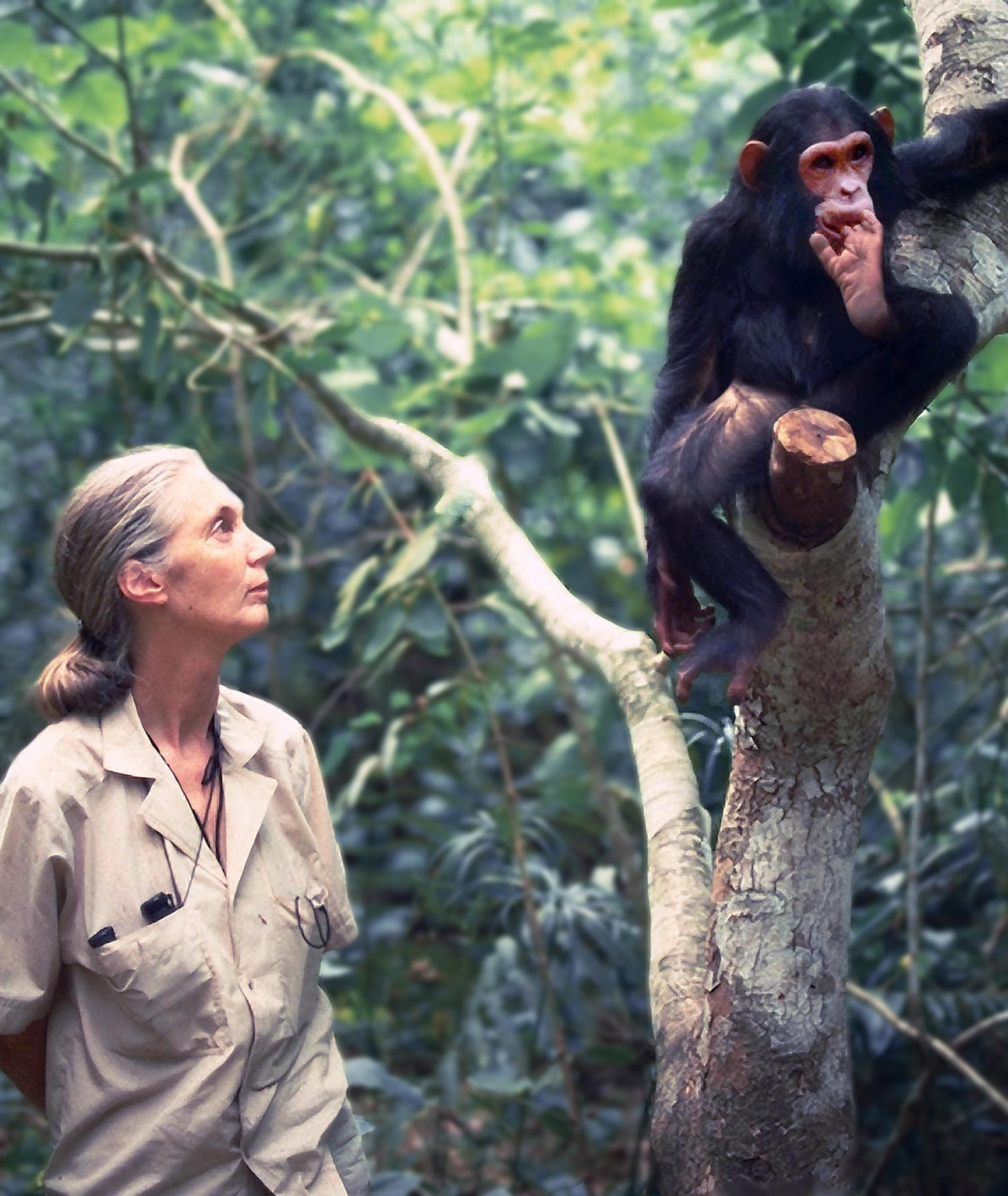
Cornelia has always admired Jane and her work. The picture top right shows Jane with one of the chimpanzees from her long-term study in Tanzania and was taken for National Geographic Magazine by Hugo von Lawick, who later became Jane’s husband. Cornelia has always loved this photo and has it up on the wall by her desk.
In the second book of Cornelia’s Dragon Rider series, The Griffin’s Feather, Barnabas Greenbloom leads a scientific institute called FREEFAB, which protects endangered fabulous creatures. One of the scientists in his employ is Jane Gridall, who pursues a scientific and respectful approach to fabulous creatures, instead of hunting and exploiting them. It doesn’t take a genius to realize that Jane Gridall is Cornelia’s homage to Jane Goodall.
The Jane Goodall Institutes continue the primatologist’s work worldwide. Since Dr Jane’s first journey to Africa, the chimpanzees were especially close to her heart, so the Jane Goodall Institute Germany will introduce you to 24 of its charges.
Meet Africa, Nani, Tumbo and many others.
Africa
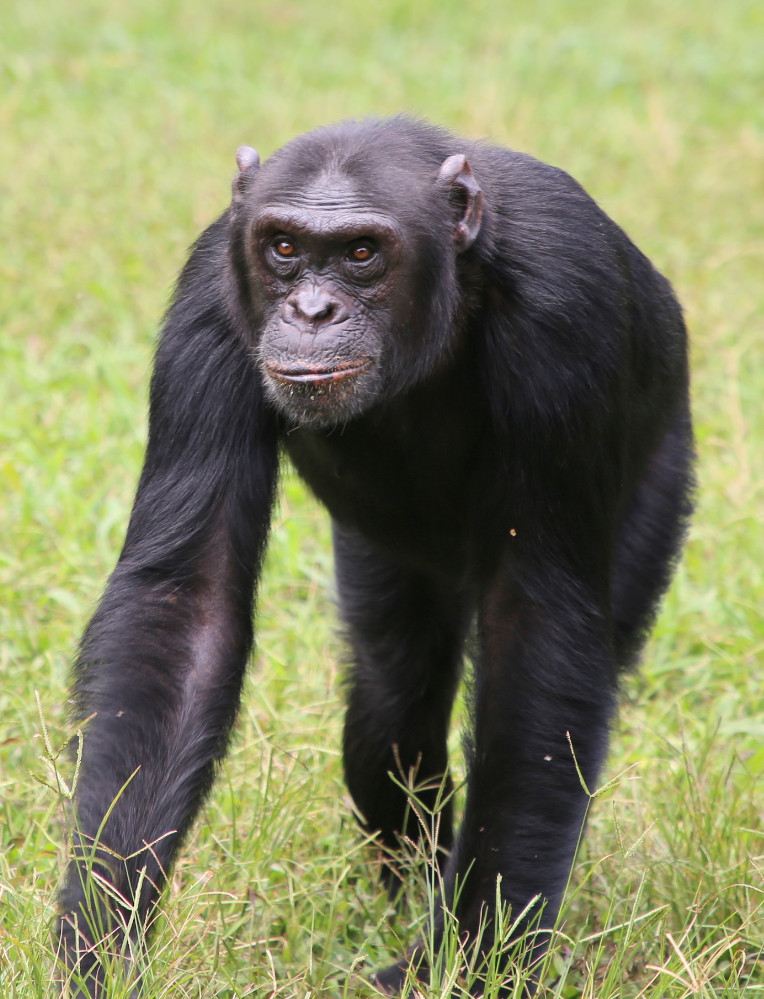
Africa, an energetic chimpanzee Lady, was kept in a small cage as a child and fed nothing but bananas and popcorn.
Since her rescue in 2008 she has been living on Ngamba Island. Despite several attempts to improve her standing in her group’s hierarchy, Africa is still of low rank. But her gentle nature makes her very popular with the younger chimpanzees. She is also a loving and attentive mother to her son Eazy.
The Ngamba Sanctuary includes a large forest, which Africa loves to explore. While most of the chimpanzees return to the shelter for the night, Africa prefer to sleep out under the stars. With great dedication and passion, she builds a sleep nest every night.
Fun Fact: The sleep nests of chimpanzees are cleaner than our beds because they are made anew every single night.
Wounda
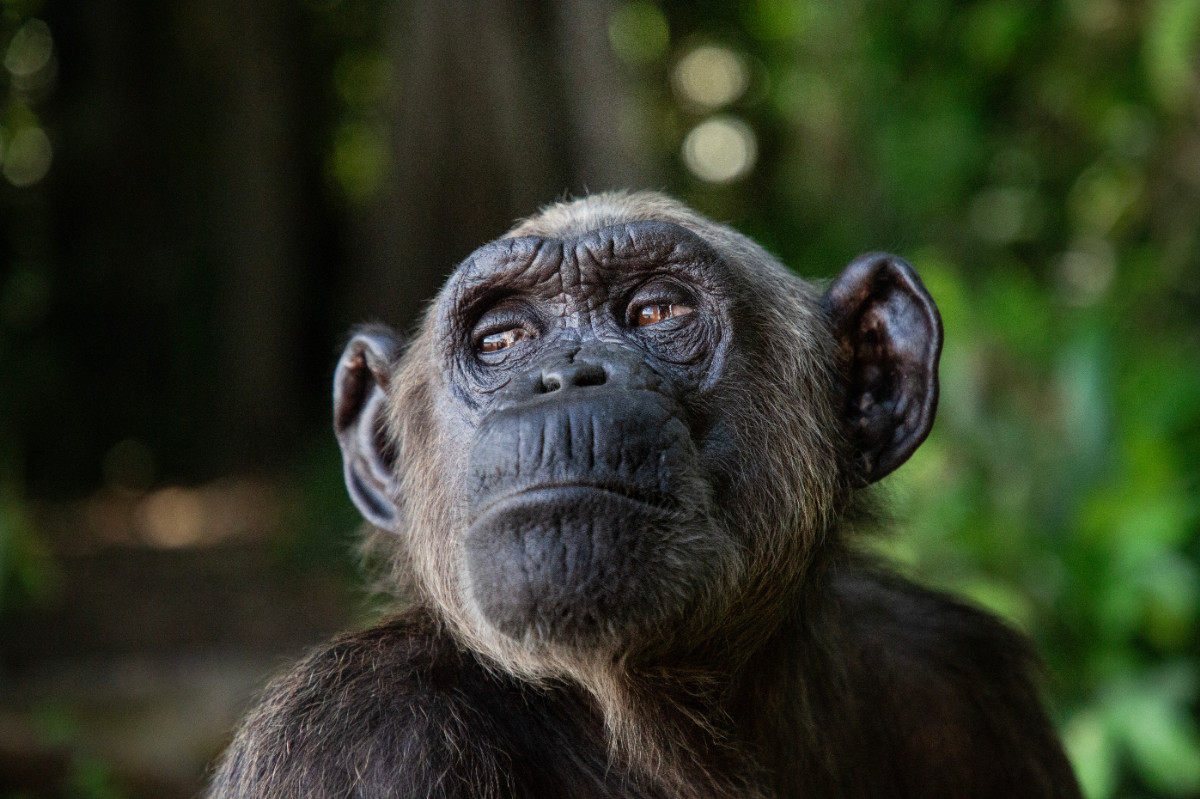
Wounda was brought to the Tchimpounga Sanctuary after being rescued from the illegal wildlife trade. She was in critical condition, emaciated and barely able to move, her days seemed numbered.
But thanks to the immediate and loving care of the team at the sanctuary – including what was probably the first chimpanzee blood transfusion in Africa, performed by Dr. Rebeca Atencia — Wounda slowly began to recover. She received round-the-clock care, until step by step she got better.
Miraculously, Wounda fully recovered (her name means ‘near death’). And as if that wasn’t enough, Wounda rose to become the most popular and highest-ranking chimpanzee of her group.
In the presence of Dr. Jane Goodall, Wounda was finally released onto one of Tchimpounga’s three sanctuary islands – a moving moment that was captured in unforgettable pictures.
Today, Wounda is fully enjoying her second chance at life. She is not only strong and free but also mother to the chimpanzee girl Hope – a name that perfectly reflects her history.
YouTube: Chimpanzee Wounda – Encounter with Dr Jane Goodall
Vienna
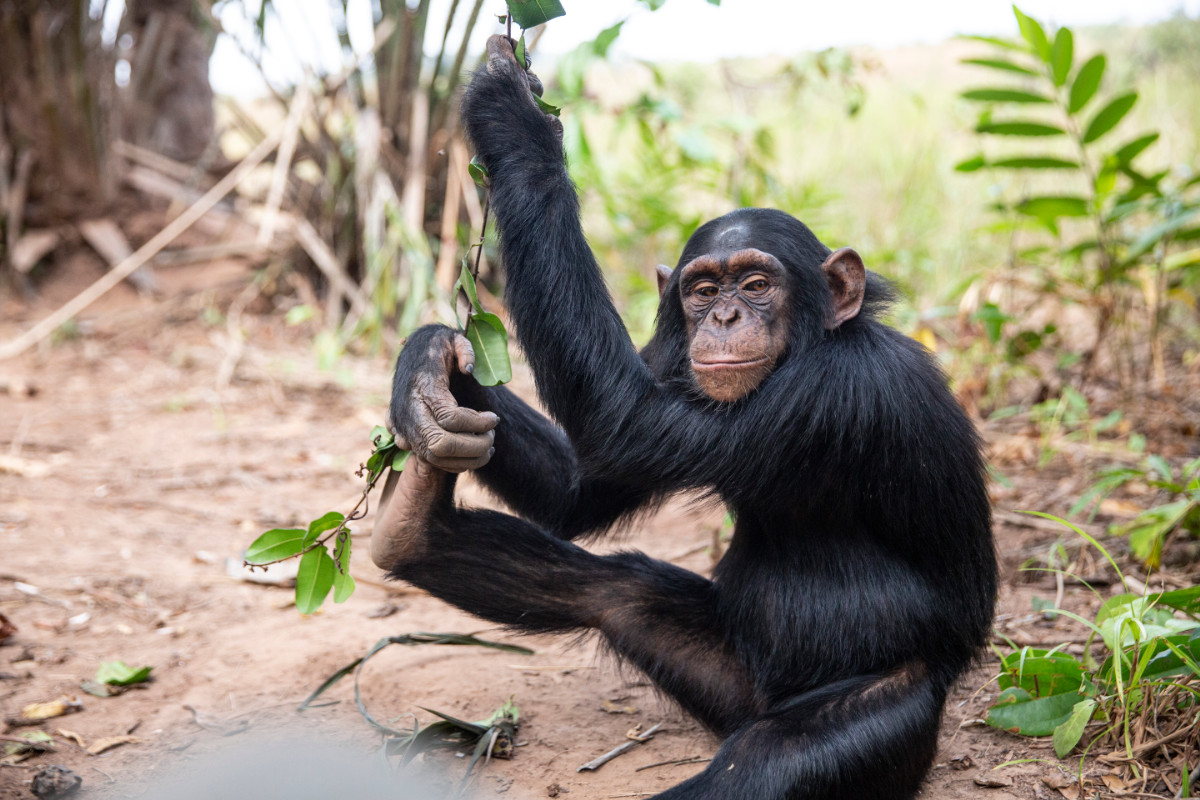
Vienna lost his mother when he was barely a year old. When poachers capture a chimpanzee child it often means the death of many of their friends and relatives – because chimpanzees will do anything to protect their children.
At Tchimpounga sanctuary, the carer Antoinette became his human foster mother. She kept him with her day and night, providing him with closeness and a sense of safety. Just like human children, young chimpanzees need 24/7 love and care.
With time, Vienna lost his fear, began to play and found friends in other chimpanzee children.
Today, Vienna is a confident, caring young chimpanzee. He often shows his loving side, comforting and protecting the weaker ones amongst the children. With his newfound strength he helps new arrivals to settle into life at the sanctuary – and passes on what he himself grew up with himself: love, protection and care.
Rambo
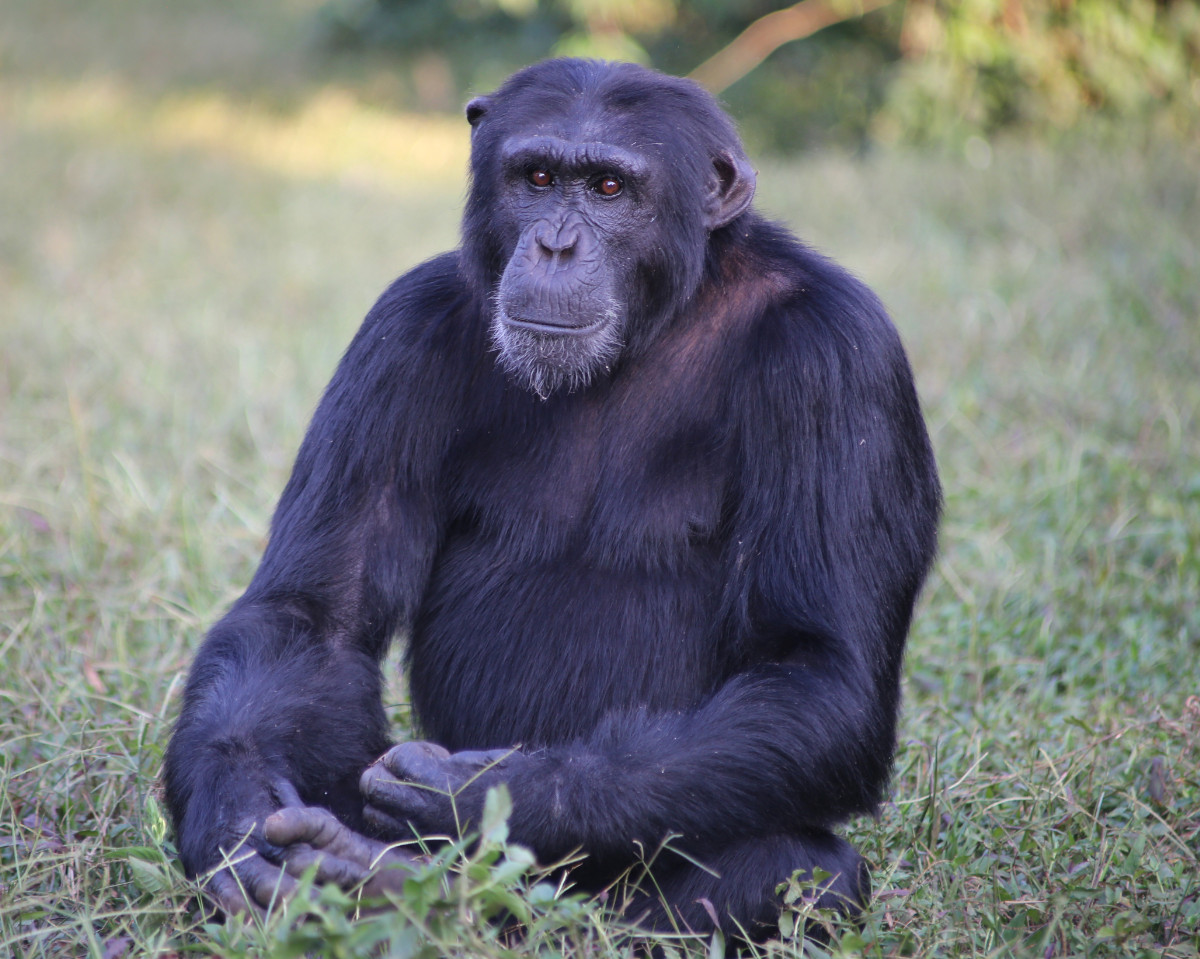
Rambo was rescued in 2006 in the northwest of Uganda when he was about 4 years old. Since then, he has been living on Ngamba Island where he has grown into a sturdy and strong chimpanzee. He rarely runs from a fight – especially when it comes to securing his position in the group hierarchy.
Due to their complex social structures, it is often difficult to release chimpanzees back into the wild. There is also a shortage of safe and plentiful habitat for them, where rescued animals can settle.
So Rambo has been living at the sanctuary for 19 years now – 19 years of nurture, care, food and safety.
Kudia
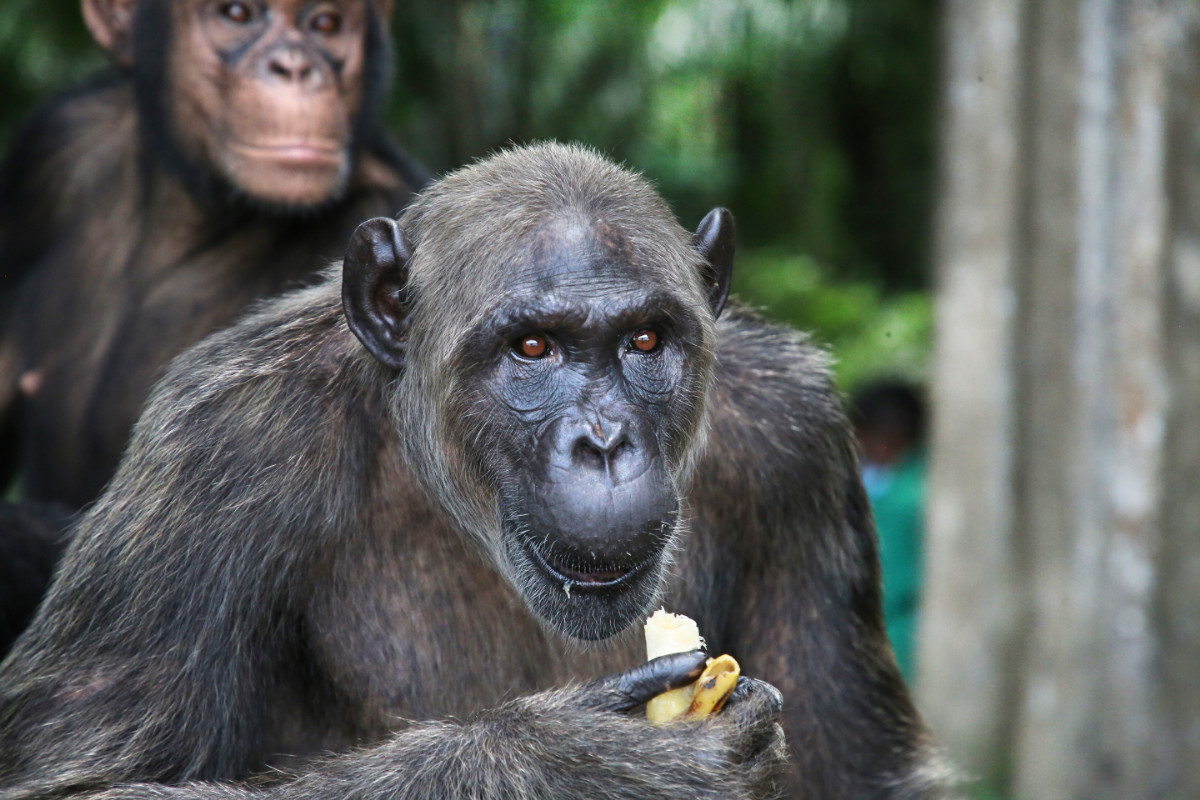
Kudia’s journey began on the rail tracks of the port town of Pointe Noire in the Republic of Congo, where people intended to sell her illegally. She came to Tchimpounga Sanctuary in 2006 – weak, scared and with a rope cut deep into her skin. Starved and injured, she received medical attention and loving care from her human foster mother Antoinette. Slowly she recovered. Her name means ‘food,’ because right from the start she threw herself at the fruit being offered to her.
Unlike popular belief, bananas are only rarely part of wild chimpanzees’ diets. They are omnivores and mostly eat fruits and leaves – occasionally even meat. At the sanctuary, special attention is paid to providing a balanced diet, and the nightly porridge is a particular favorite.
Today, Kudia is a confident and social chimpanzee, living in near freedom on one of the Sanctuary’s islands. She climbs, plays and enjoys her favorite fruits – mango and papaya – in the company of her friends Wounda and Hope.
Patricia
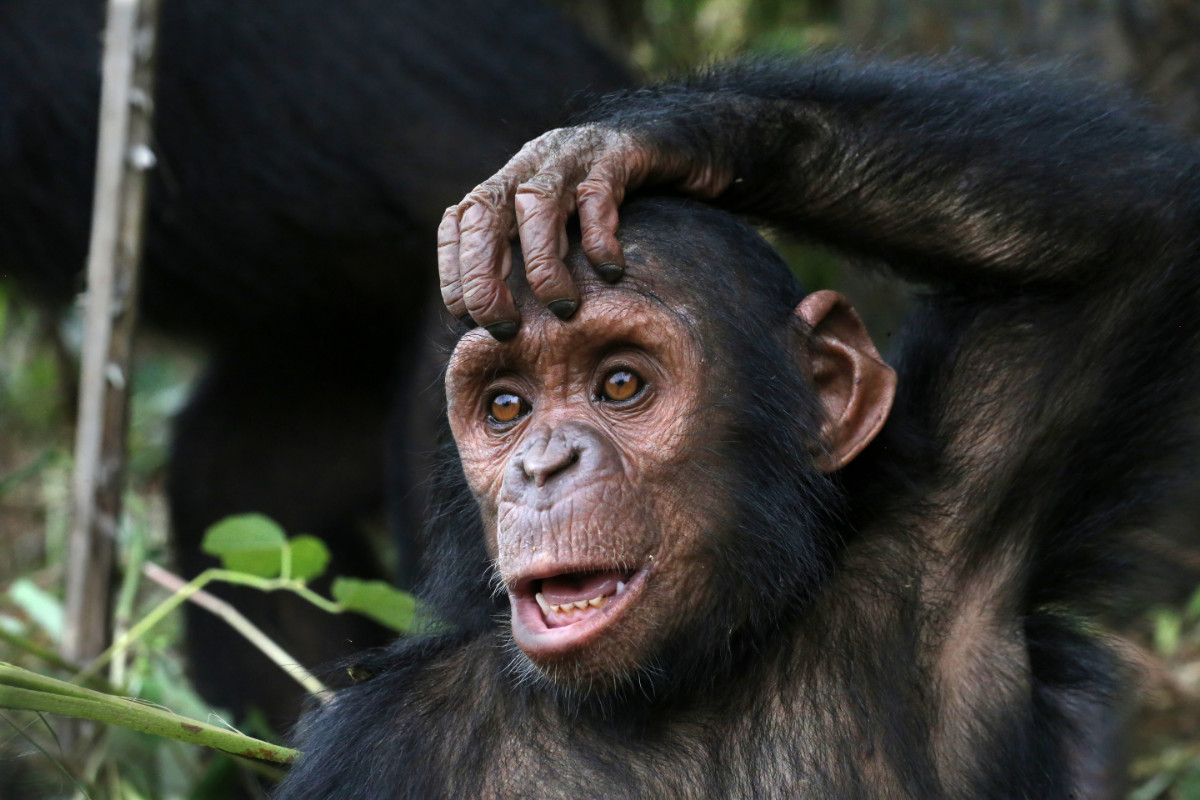
Patricia, a gentle chimpanzee child, was rescued and brought to Tchimpounga Sanctuary in 2024. Her mother likely fell victim to poachers, leaving Patricia alone and without protection.
When she first arrived she weighed a mere 4.8 kilograms, but showed no signs of serious physical or psychological damage. Thanks to the loving care of the team, Patricia quickly became more trusting and started to explore her new surroundings with a lot of curiosity.
A defining point was when she was integrated into the nursery. There she made friends with other young chimpanzees – connections that gave her a sense of safety, love and the feeling of belonging. Just like humans, chimpanzees live in complex social groups. Loneliness makes them unhappy, because social connection is indispensable for their well-being.
Anzac
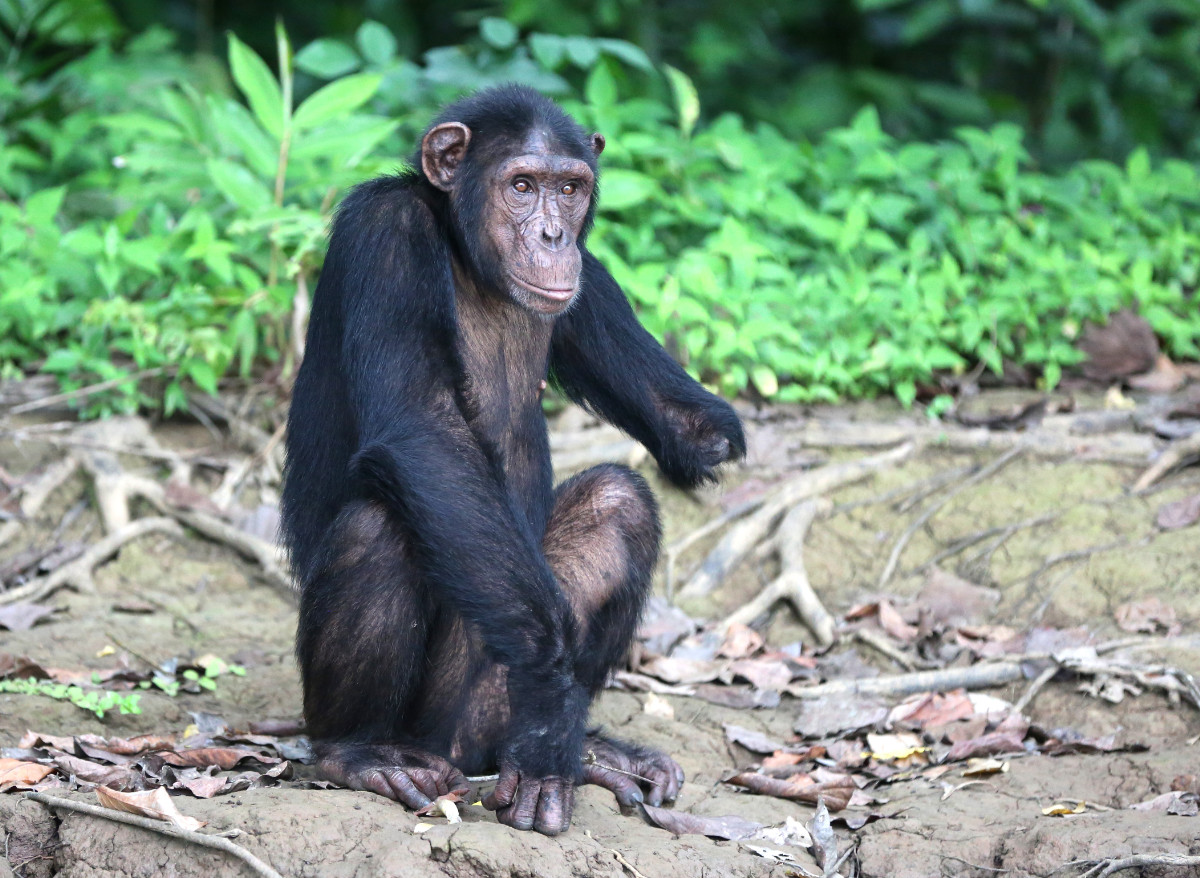
Anzac lost part of her left arm to poachers and came to Tchimpounga Sanctuary as a small child. Despite this difficult beginning, she has been brave and joyful from the start.
Despite only having one arm, Anzac learned — with lots of care and patience — how to keep up with the other children in the group and how to get by in her natural habitat. Quickly she learned not to let her handicap slow her down – she developed into a lively and independent chimpanzee.
Anzac is living proof of what Dr. Jane Goodall always said: ‘Nature has an incredible capability for regeneration – if we only give it space and time.’
Today, Anzac enjoys an almost free life on one of the Tchimpounga sanctuary islands. Here she climbs from tree to tree, plays with her friends, and enjoys life to its fullest.
Nani
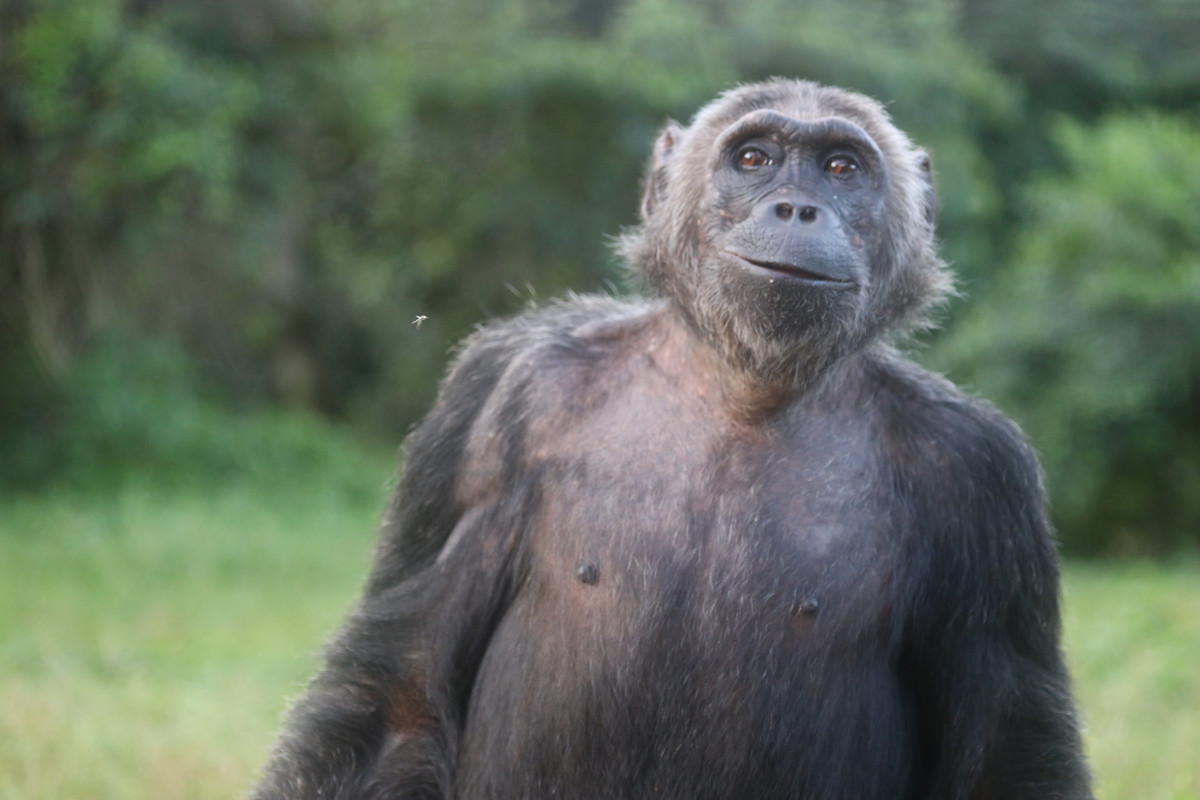
Nani came to Ngamba Island in 2002, when she was about a year old. She has a cautious and reserved nature, so she prefers to avoid conflict. But at feeding time, Nani displays a strong sense of fairness: she waits patiently for her turn, but cleverly claims her space when it comes to ensuring she gets her fair share.
Beyond this, she is also a true master of using tools. She demonstrates her skills over and over again, whenever a tasty morsel falls into a hard-to-reach place. She will patiently use a stick to work on the problem until she succeeds.
Chimpanzees’ ability to use and make tools was first documented by Dr. Jane Goodall – a discovery that revolutionized science. Before then, this ability was considered uniquely human. Today we know: many animals use tools and the clear division between humans and animals is becoming increasingly blurry.
Perrine
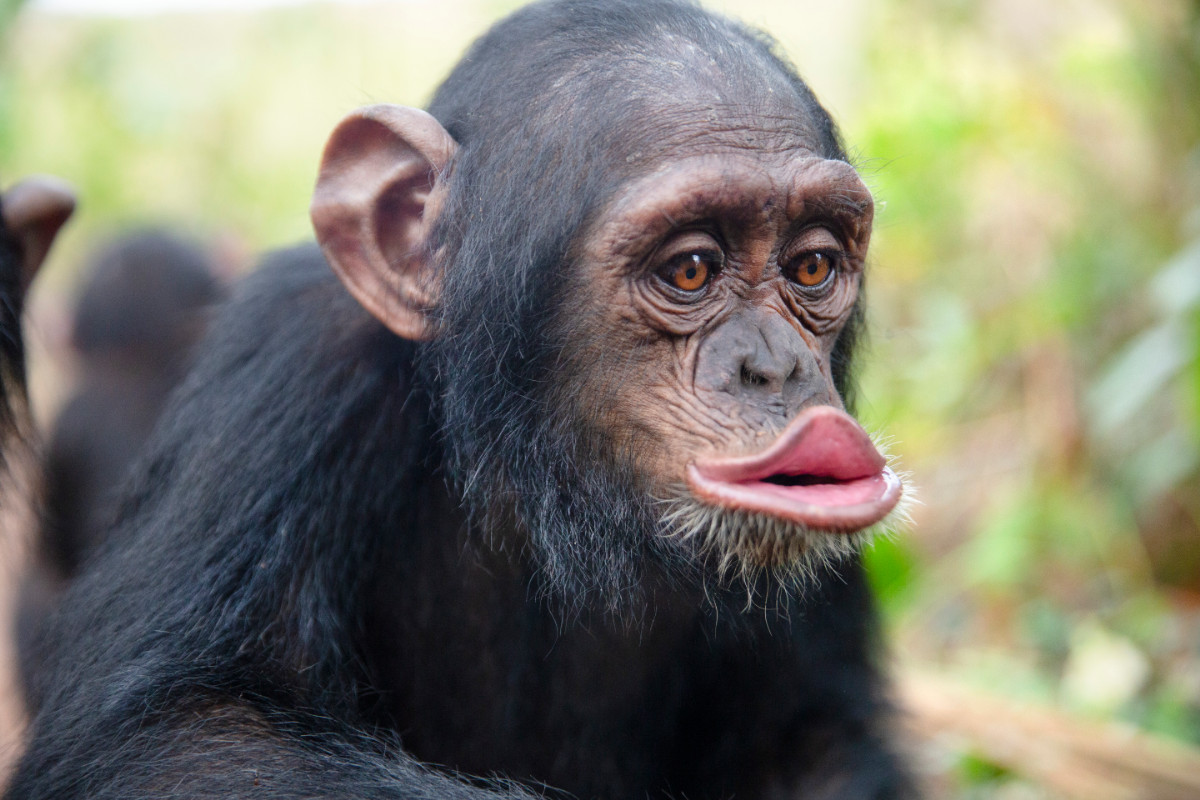
In December 2019, Perrine was narrowly saved from the illegal wildlife trade. Weighing less than 2 kilograms, with a fever, paralyzed limbs and terribly cold, her survival was uncertain.
But thanks to the loving, round-the-clock care of the vets and carers of the Tchimpounga Sanctuary, she slowly recovered. And after three months she was completely healthy again.
After this ordeal, Perrine learned to live in a community of chimpanzees. She was integrated into the nursery and developed a special friendship with Zeze.
Just like it is for humans, friendships are extremely important to chimpanzees. They strengthen this bond through extensive mutual grooming. They will remove dirt, dandruff or parasites, or just gently stroke each other’s fur.
Perrine and Zeze are still inseparable today. Together they are thriving in the safety of the sanctuary, play with their friends and explore the world around them.
Lemba
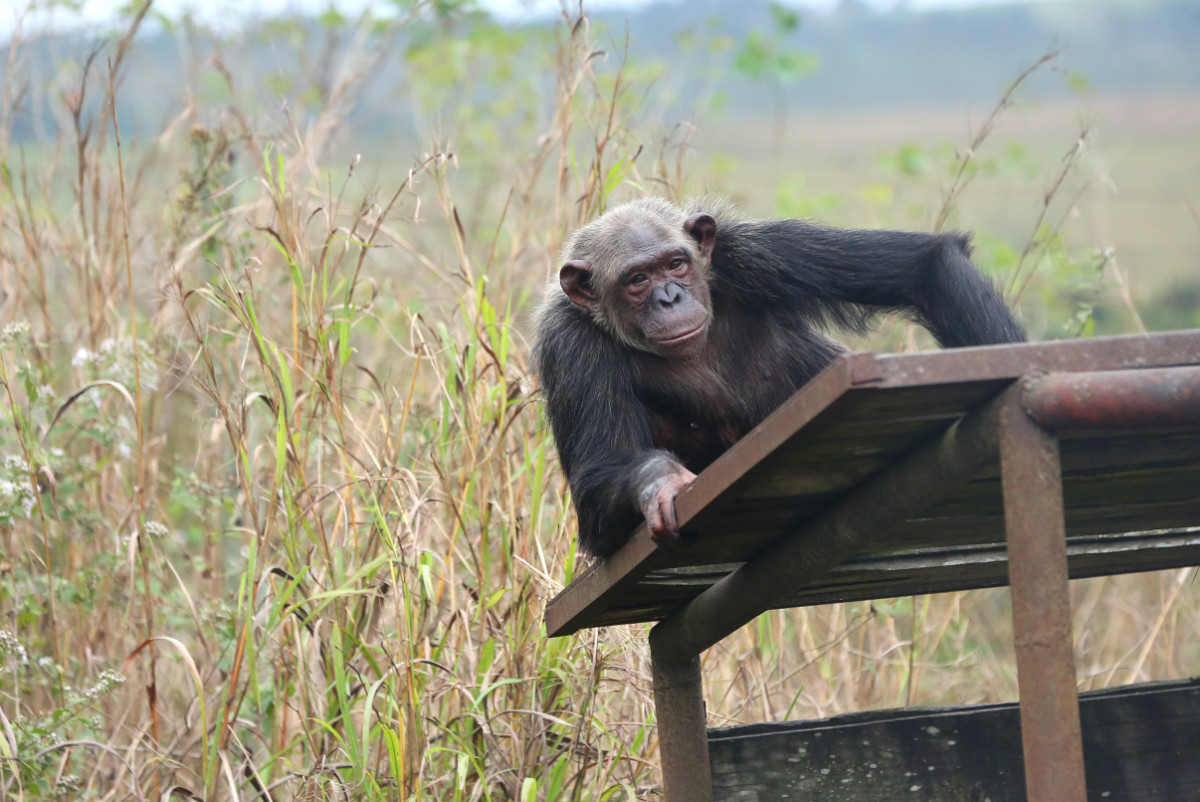
Lemba was still a baby when she came to Tchimpounga Sanctuary – underfed and weakened by parasites. At the end of 2010 she got polio, despite being vaccinated, and was almost fully paralyzed.
Thanks to years of intensive physical therapy with the Sanctuary team, Lemba has regained some movement in both her arms. But her legs remain permanently paralyzed.
But this handicap hasn’t stopped Lemba: she has developed wonderfully and impresses everyone with her strength and creative work arounds. With her muscular arms she can keep up with the other chimpanzees while climbing without a problem.
Lemba is even a minor celebrity in the Arte Documentary ‘Chimpanzees in Congo with Jane Goodall’. (https://www.arte.tv/de/videos/104824-000-A/schimpansen-im-kongo-mit-jane-goodall)
Mouyondzi

When Mouyondzi arrived at Tchimpounga Sanctuary, she was weak and sick – plagued by parasites, digestive problems and fur loss. But her will to live stayed strong. With the loving care of the veterinarian team and her human foster mother, Patricia, Mouyondzi began to recover. Her stomach normalized, her fur grew back and her energy returned.
Today Mouyondzi is curious, brave, and a natural leader. She loves apples, bananas and a warm bottle of milk. The sick, weak chimpanzee baby has turned into a lively, happy youngster, who – like all children – mostly just wants to spend time with her friends.
She loves the nursery group’s daily trips into the nearby forest. Here the young chimpanzees learn everything they need to know to survive in the wilderness – always under the careful supervision of their carers.
Mawa

Mawa has been living on Ngamba Island since 1999 and has become a real escape artist. His close friend Asega is always part of the fun. The two of them don’t just share a talent for sneaking out but also like to show off their wild sides: they roar and like to occasionally throw rocks at other groups of chimpanzees.
While chimpanzees are often very tender, they can also be aggressive and quick-tempered. Dr. Jane Goodall already documented this behavior in the 1970s, during her studies in Gombe, when she observed almost war-like behavior.
In order to keep the team at the Sanctuary as well as other chimpanzees safe, the two escape artists now live in a new, more secure facility. Here they can enjoy their days under palm trees – and are entertained with a wide range of activities.
Zeze
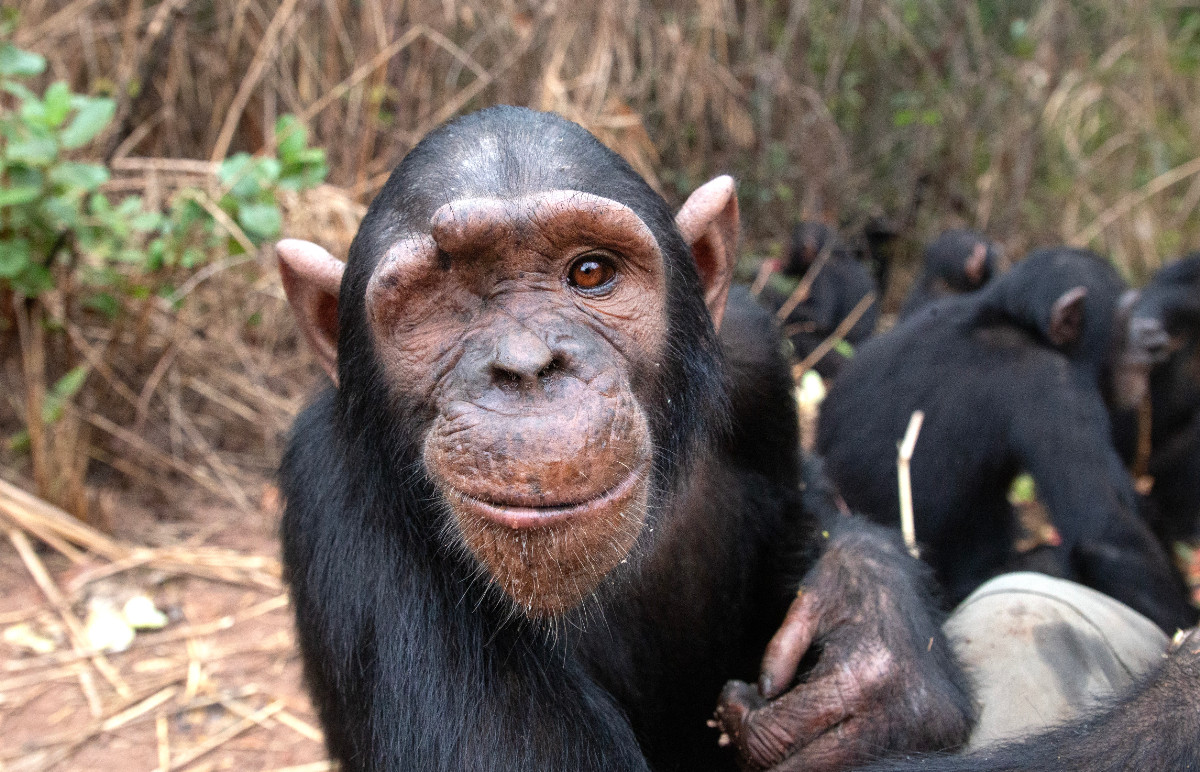
Zeze was brought to Tchimpounga Sanctuary after being saved from the illegal wildlife trade. He was four years old at the time. After a brutal machete attack, he had lost his right eye, was underfed, traumatized and scared.
One of the reasons why chimpanzees and other wild animals are captured, is the demand for ‘exotic pets’. Photos and videos on social media that are meant to be ‘cute’, further this cruel trade. So more and more animals are torn away from their natural habitat and kept in the wrong conditions. This can be prevented: don’t share or like imagery of wild animals in human captivity – instead only support depictions of them in their natural habitat.
Zeze was lucky: he found his confidence again, alongside what he needed most – a new chimpanzee family. Perrine and he have become inseparable. Slowly, Zeze made more friends and was integrated into the group of chimpanzee children.
Today, Zeze is social, energetic and fearless. Despite the loss of his eye, he gets by very well – and for many newcomers he is like a protective, older brother.
Willy
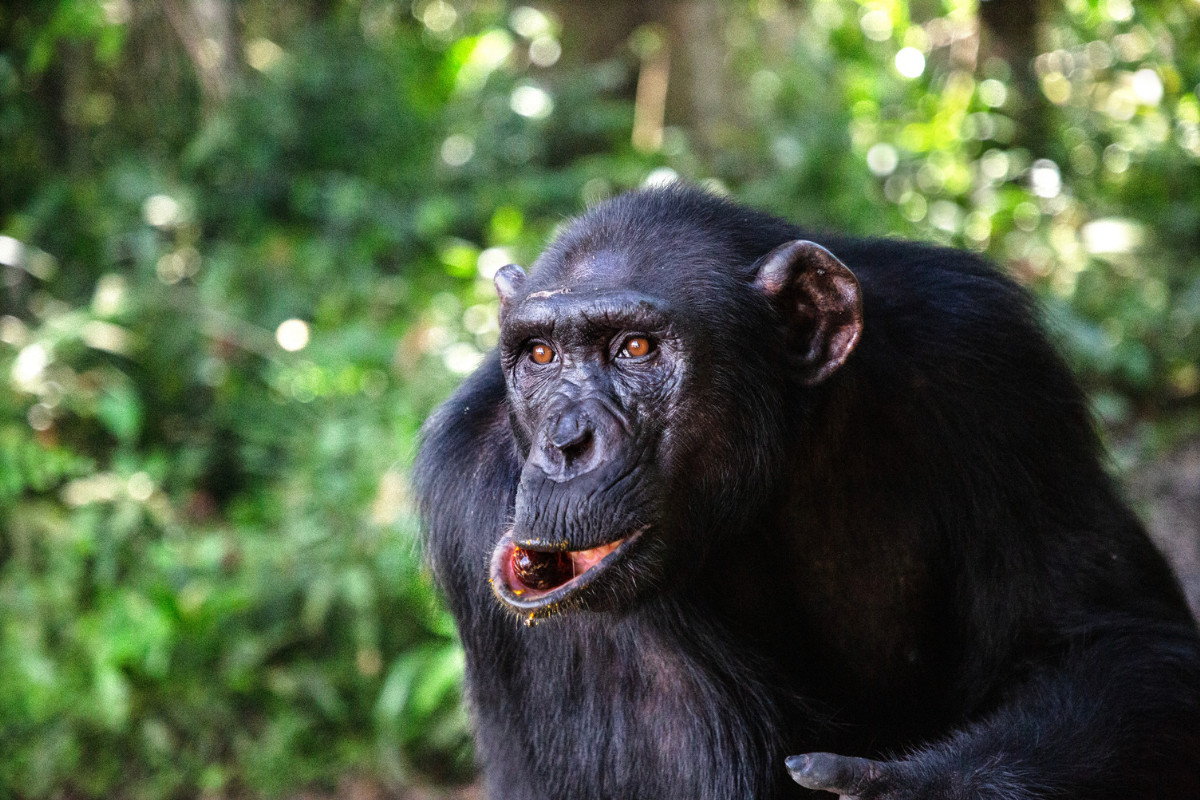
Willy was rescued in central Congo and brought to Tchimpounga Sanctuary. When he arrived, he was physically healthy but very shy and suspicious of humans. Thanks to the patience and experience of the team, he quickly became more trusting and settled into life at the sanctuary.
Little Willy made many new friends in the nursery group back then – Jeje and Anzac among them. Over time he developed into a charismatic member of his group.
Silver
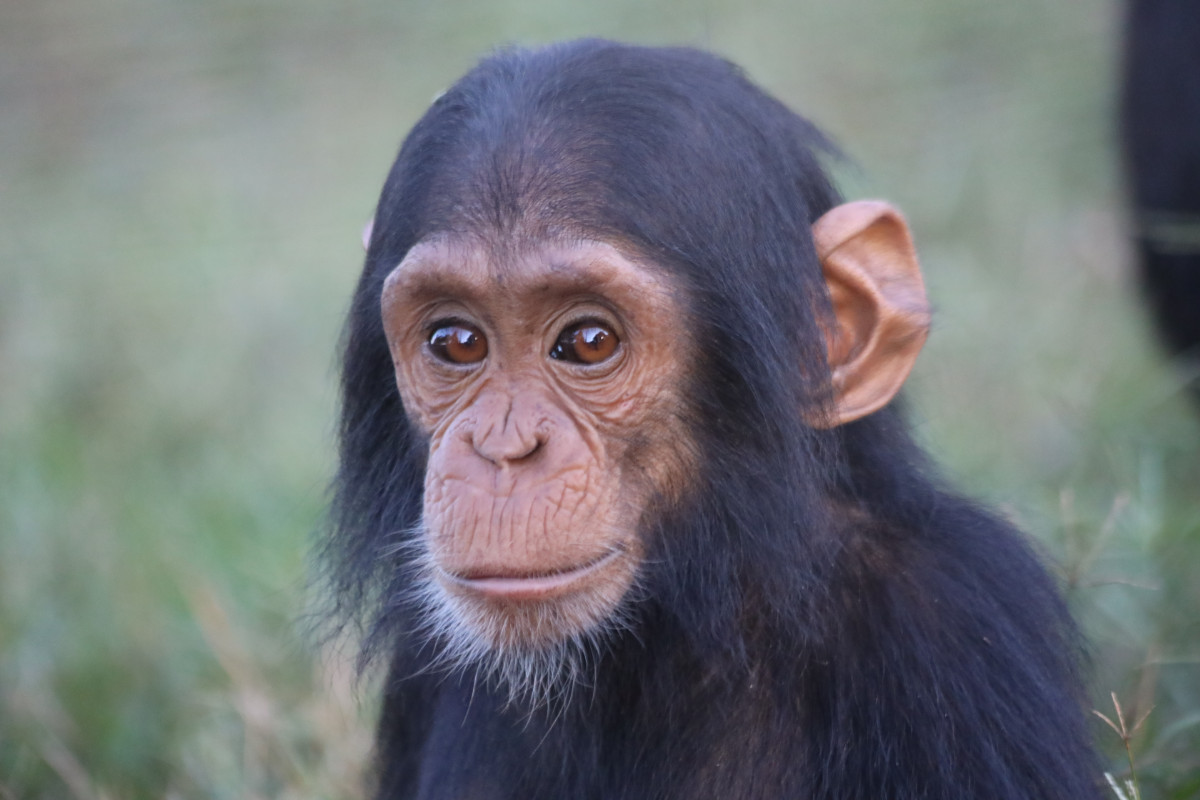
Silver was born on Ngamba Island and is one of the youngest chimpanzee children at the sanctuary. Under the protective care of his mother Cindy, he masters everyday challenges with increasing confidence.
Thanks to the groundbreaking work of Dr. Jane Goodall, we know that chimpanzees learn essential life skills from their mothers – including the ability to recognize emotional cues. Goodall observed chimpanzees hugging each other for comfort and even documented the adoption of orphaned children by other members of the group.
Cindy does an amazing job: Silver shows great interest in his surroundings, curiously examines objects and uses numerous social cues such as vocalizations for greetings.
These skills are essential for his integration into the group – a key factor for the well-being and social development of chimpanzees.
Tumbo
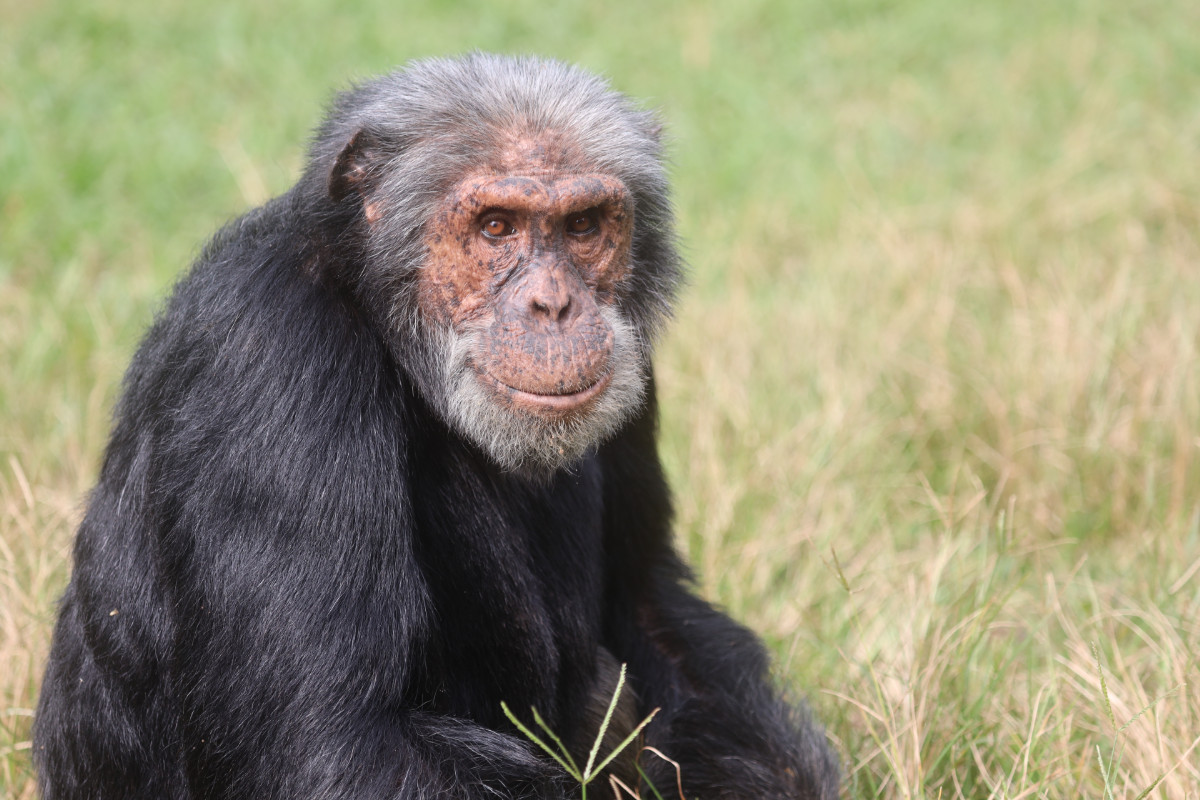
Tumbo came to Ngamba Island in October 1998 after he was rescued at Entebbe Airport in Uganda. He was very sick and had a terribly bloated belly – hence his name ‘Tumbo’ which means belly in Swahili. His silver facial hair and his calm, gentle demeanor earned him the nickname ‘the diplomat.’
Tumbo is known for his great love of eating, especially papaya. Besides mealtimes, he also enjoys relaxed grooming sessions – where he clearly prefers being groomed himself over grooming others!
So that chimpanzees like Tumbo don’t end up for sale at airports, all sanctuaries of the Jane Goodall Institute work on educating the local population about the threat to, and protection of chimpanzees.
Jeje
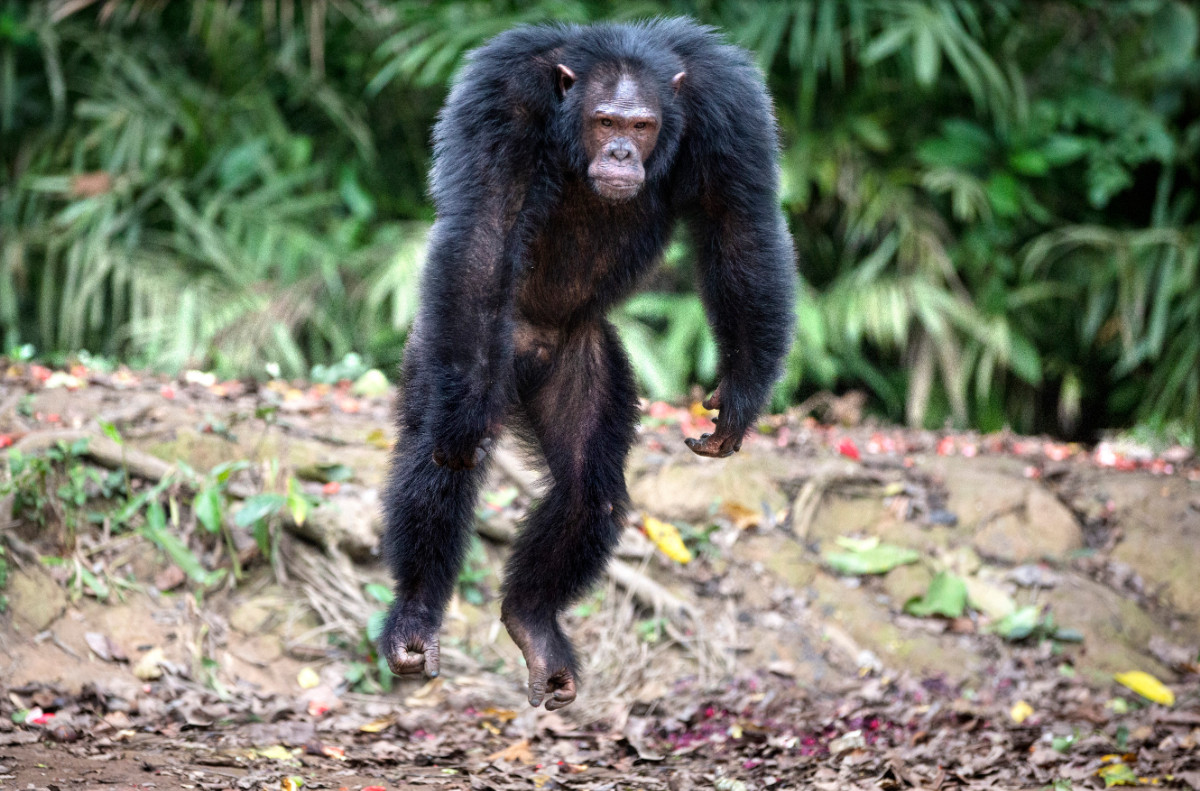
Jeje came to the Tchimpounga Sanctuary as a tiny, frightened infant, in 2012. After he had been kept as an illegal pet. At the beginning he was very mistrustful of humans and aggressively defensive – but with patience and loving care he became more trusting.
He very much improved when he made close friends with chimpanzees in his nursery group, such as Anzac and Zola, who are all the same age.
Today, Jeje lives on one of the Sanctuary’s islands. The shy chimpanzee child has grown into a strong, confident young chimpanzee, who performs wild stunts in the treetops.
The team is convinced that Jeje might one day become the alpha-male of his group.
Becky
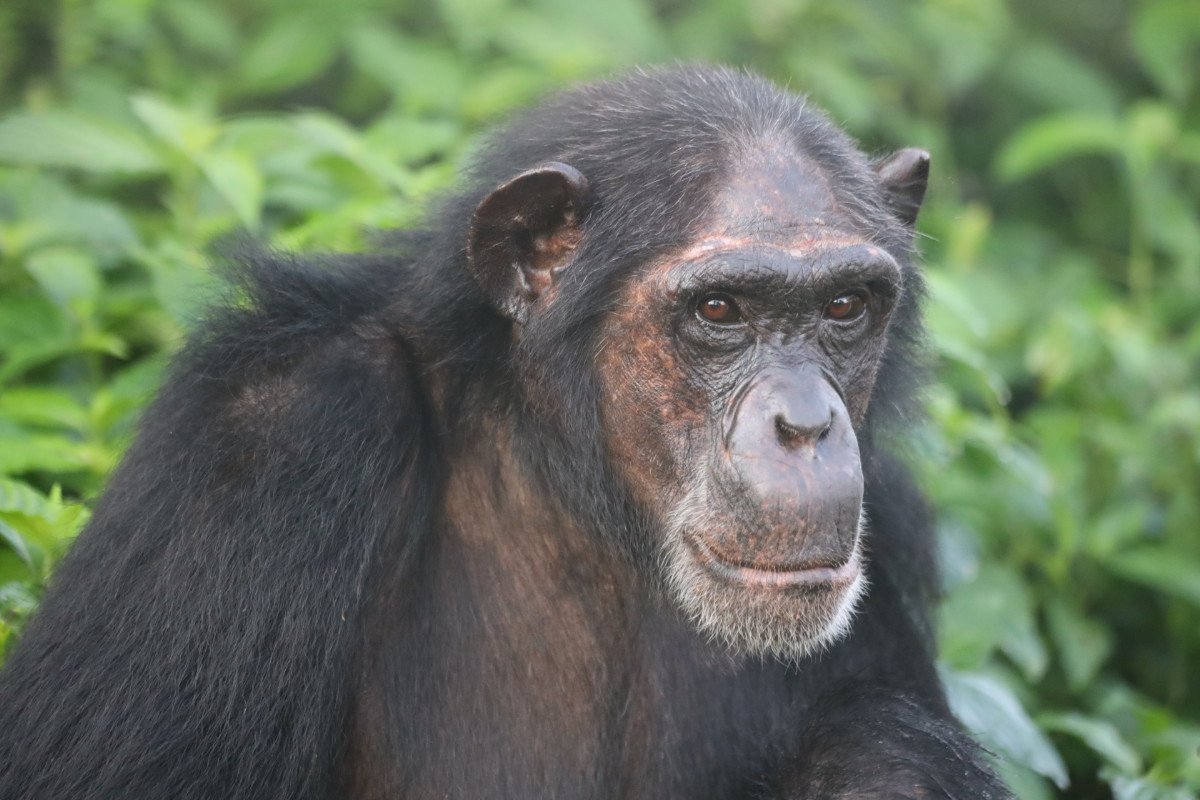
Becky came to Ngamba Island in 1998, after she was torn from her family as a child, and sold as a pet.
Her life fundamentally changed at the sanctuary. She formed a friendship with the chimpanzee Sally, which is still going strong today. Sally was Becky’s greatest support in the first few, difficult days when she suffered from panic attacks – and Sally would sooth and comfort her.
The two lady chimpanzees have been inseparable ever since. Together they give loving care to younger chimpanzees and always belong to the ‘welcome committee’ for new arrivals.
Long before she started her research on chimpanzees, Dr. Jane Goodall recognized that humans are by no means the only beings with consciousness, personality, and complex emotions. Her first dog, Rusty, showed her these qualities every single day.
Bolly
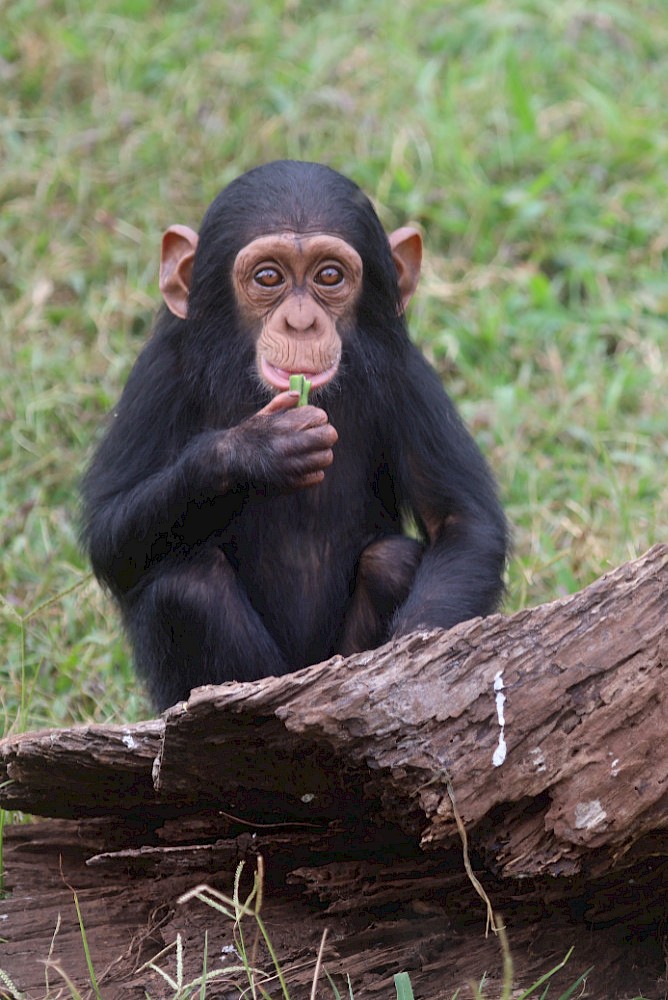
Bolly was born in 2021 so he is still a chimpanzee child. His Mom, Becky, keeps a close eye on him because Bolly is very playful and still has to learn to hold his own. His favorite things are to climb around on bushes and roll around the ground enthusiastically.
Bolly only knows life at the sanctuary because he was born there. And he loves it! His friends Tamtam, Themba and Silver also live here and they love frolicking around together. Although they do sometimes fight about the best morsels of food.
The chimpanzees get four meals a day at the sanctuary. Besides local fruits and vegetables, they especially love Posho – a firm porridge that is a particular favorite with all chimpanzees.
Ada
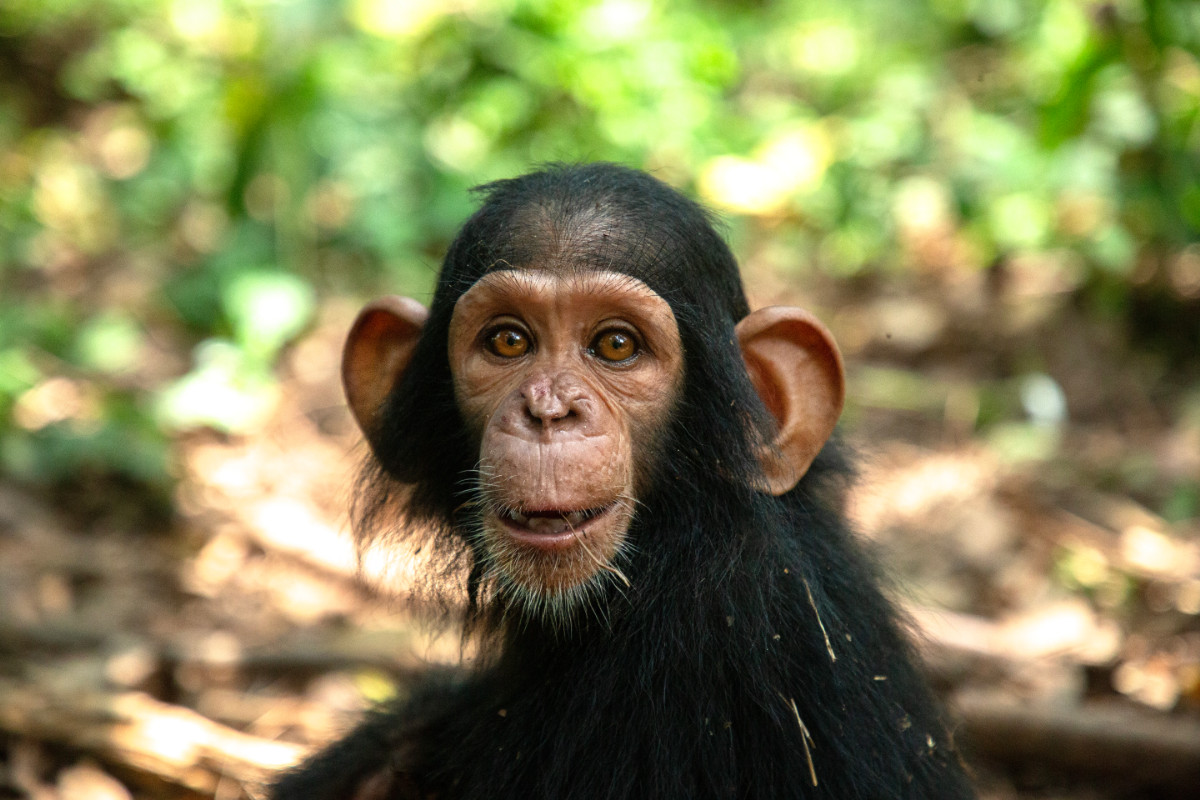
Ada has not been living at Tchimpounga Sanctuary for long. She arrived in February 2024 after her mother was hit by a car.
Unfortunately, car accidents involving chimpanzees are becoming more and more common. The reason for this is primarily the ever increasing loss of their habitat. Deforestation progresses at an alarming rate while human settlements and streets are expanding.
Despite her young age and difficult experience, Ada has a strong will to live. Thanks to the loving care of her human foster mother, Chantal, she learned to feel safe, loved and free again.
Today, Ada spends her days with her best friends Djambala and Mouyondzi, plays in the grass and explores the world. She loves mangos, likes to cuddle with her friends, and takes small and courageous steps towards independence every day.
Kefan
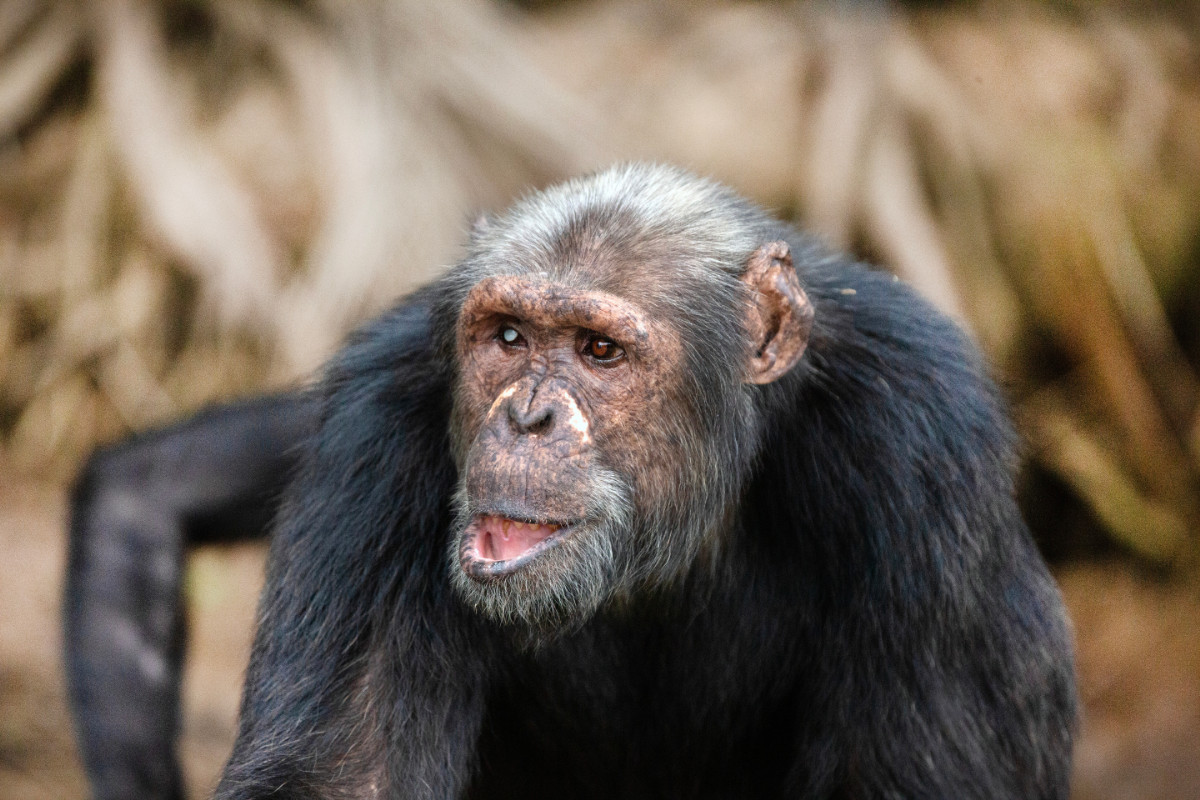
Almost 20 years ago, Kefan was rescued from poor conditions at a zoo in Brazzaville, the capitol city of the Republic of Congo.
He was one of the first inhabitants of Tchimpounga sanctuary’s protected islands, where he thrived: Kefan likes to play with other chimpanzees, grooms their fur and turns out to be great at conflict resolution. These qualities have helped him to rise to be the alpha-male of his group.
The social structures of chimpanzee groups are complex and very hierarchical – defined by close bonds, alliances, and clear pecking orders.
Kefan is noble and well-natured. He is highly respected on the island because he leads his chimpanzee family to a second life full of hope.
Tamtam
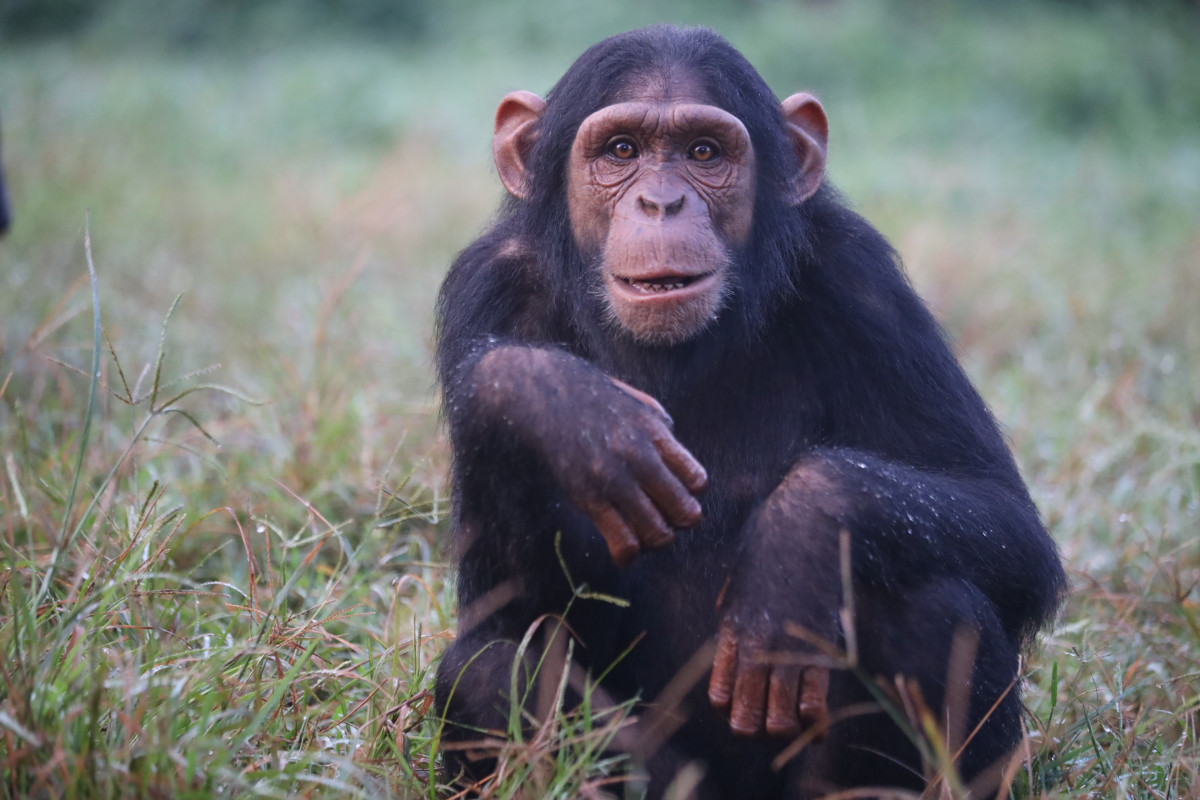
Tamtam was born on Ngamba Island and is developing brilliantly – despite the fact that her mother, Natasha, is not very nurturing. This would be a great challenge for other chimpanzee children, but Tamtam proved herself to be very smart and independent right from the start.
She is a real daredevil, always surrounded by friends and a real climbing champion.
Birth control is an important part of the sanctuary to ensure that there is always space available for chimpanzees in need. But nevertheless, sometimes unplanned pregnancies happen – just as they do for humans. The birth of Tamtam and other chimpanzee babies at the sanctuary is always cause for great joy and very special for the team.
Kevin
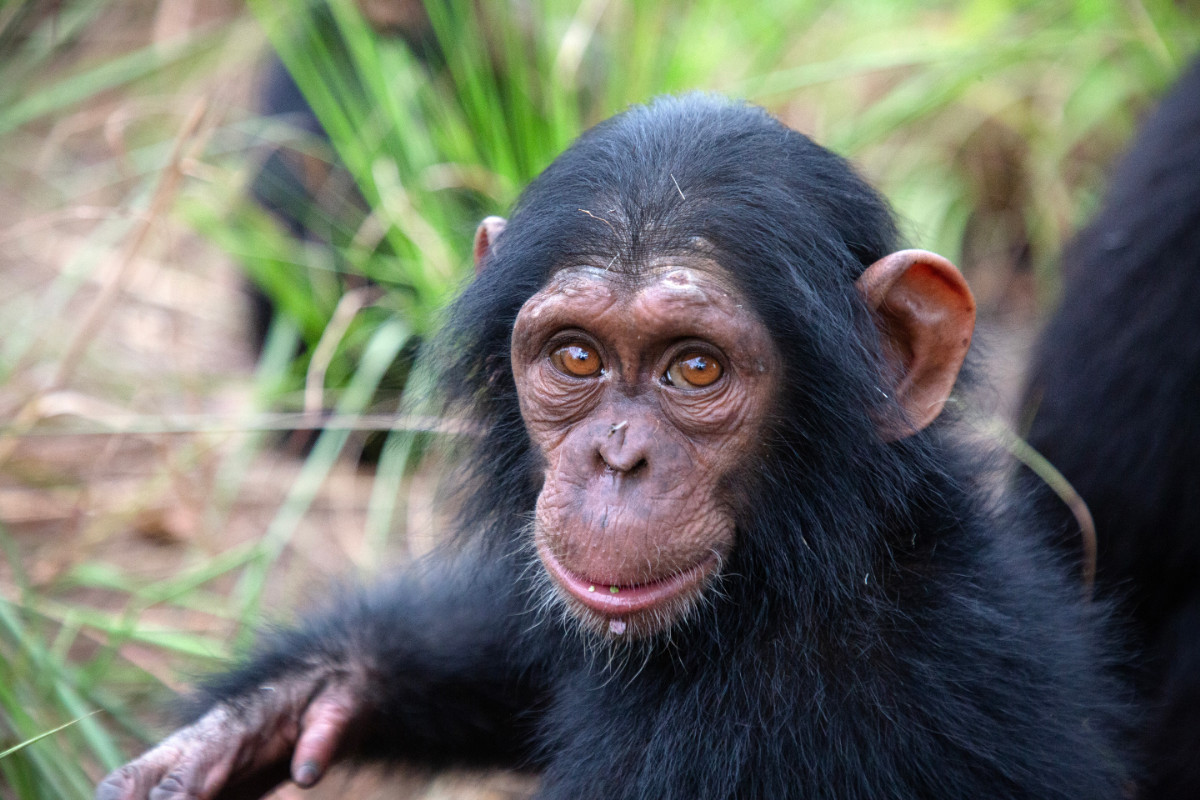
In September 2023 Kevin’s screams alerted people to his presence. He was rescued from a house in northern Congo and brought to Tchimpounga Sanctuary. When he arrived, he weighed a mere 2.8 kilograms, but showed no signs of psychological trauma – evidence of his innate fortitude.
With the loving care of the other chimpanzee children, Kevin quickly integrated into the nursery group. He formed a special bond with Patricia, who is the same age as him. His playful and social nature was on full display, and he found comfort and safety with Perrine, his chosen chimpanzee foster mother.
It was a chimpanzee child just like Kevin, who inspired Dr. Jane Goodall to open a sanctuary for orphaned chimpanzees. In 1990 she discovered a chained-up chimpanzee baby at a market in the Democratic Republic of Congo. The tragic sight inspired Jane Goodall to help the small orphan – and added to the founding of Tchimpounga Sanctuary.
Mr H
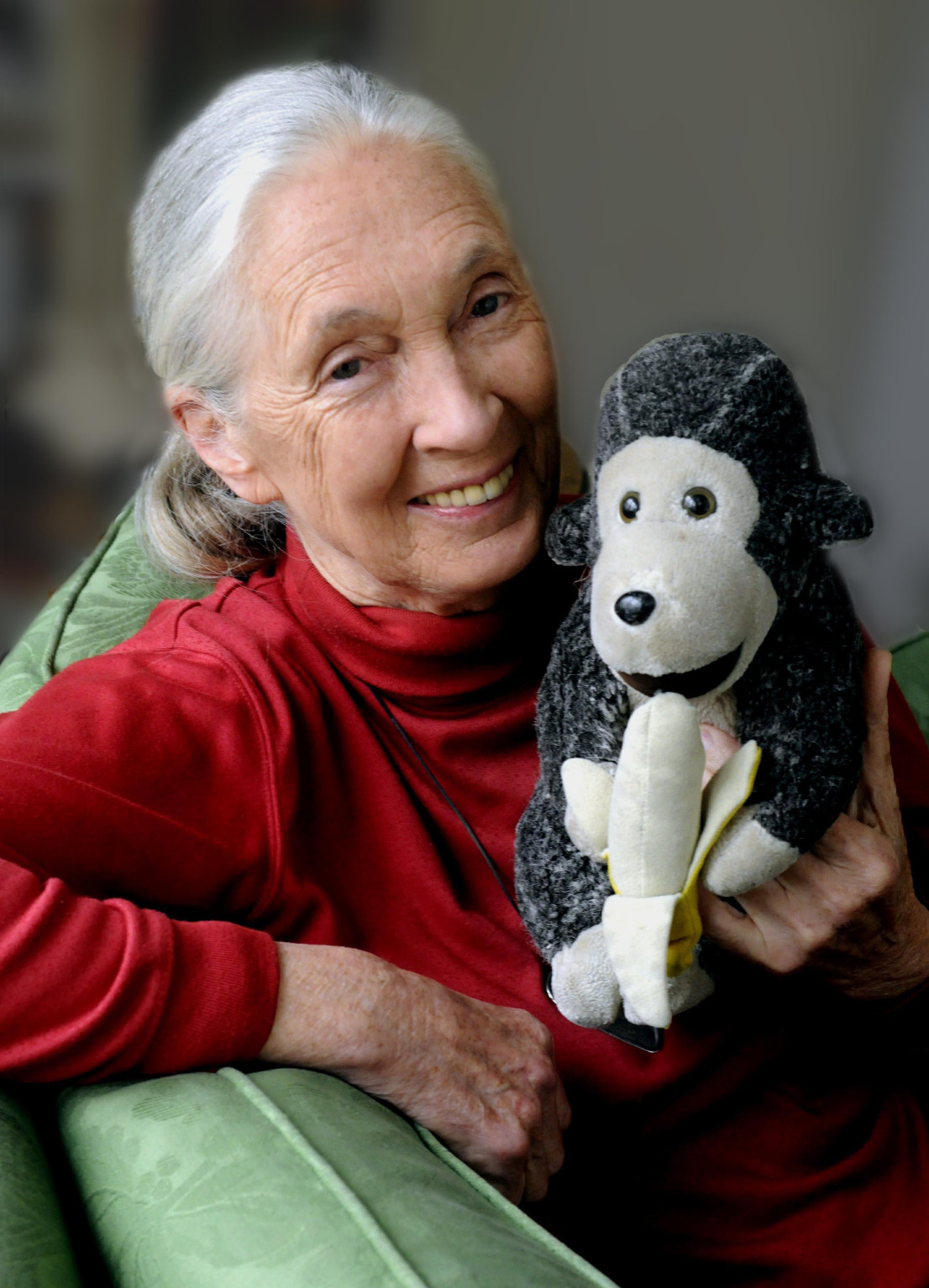
Have you met Mr. H yet? For over thirty years, this small companion was at Jane Goodall’s side during both small and big adventures.
Mr. H tells a special story: He was given to Jane by Gary Haun, a man who lost his eyesight at 21. Despite this, Gary pursued an unusual dream – he wanted to becom a magician.
And he did! Today Gary is a successful magician, whose performances are so perfect that nobody notices that he is blind.
Jane felt deeply inspired by Gary’s story. Because of this, Mr. H always accompanied her. As a symbol of the unbendable human spirit – one of her primary sources of hope.
No comments
Leave a comment